VDNKh is the largest exhibition complex in Moscow, opened in 1939 as a symbol of the achievements of the Soviet people. Today, on a territory of more than 300 hectares, there are historical pavilions, park areas and the famous fountain "Friendship of Nations". We call all this the museum of the great communist utopia.
Articles about VDNKh
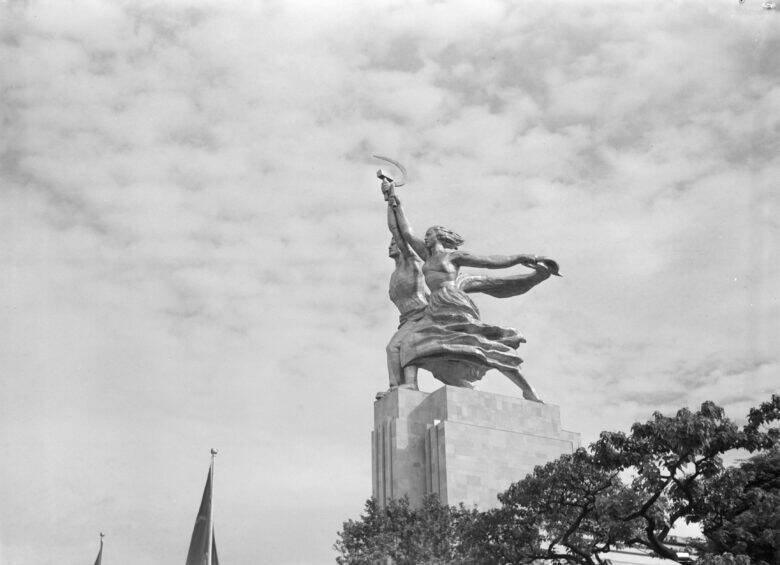
‘Worker and Kolkhoz Woman’: How the Image Became Mosfilm’s Emblem
The Mosfilm emblem first appeared in Grigori Alexandrov’s Spring in 1947. It was based on Vera Mukhina’s sculpture Worker and Kolkhoz Woman, created for the 1937 exhibition in Paris. But several years separate the emblem’s screen debut from the making of a special copy for the studio: the document commissioning a plaster model dates from 1950, and its acceptance certificate from 29 May 1951. Thi…
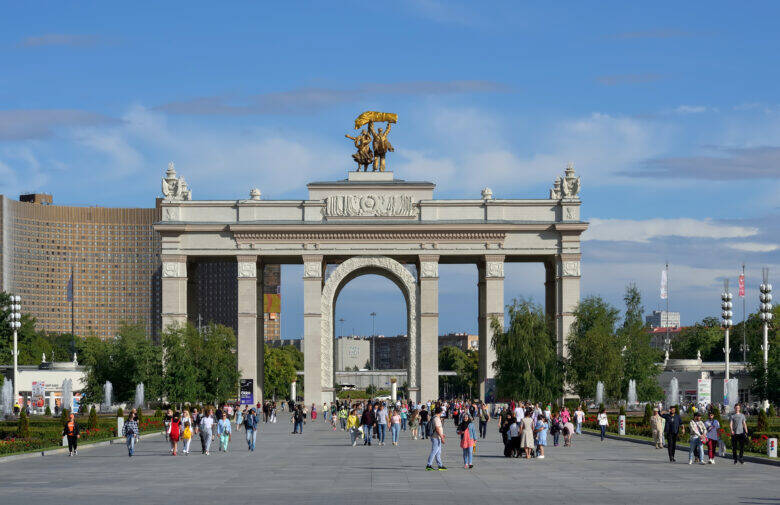
Foreign Guests at VSKhV and VDNKh: What the Archives Reveal
In the mid-1950s, foreign visitors to the All-Union Agricultural Exhibition were shown tractors, experimental plots and the republics’ pavilions. By the early 1960s, museum records also document exhibits related to space. The displays changed gradually: a model of the Vostok spacecraft appeared in Pavilion No. 34 in 1965, while the name ‘Cosmos’ was adopted in 1967. These conclusions are based on dated photographs, documentary film catalogues and the history…
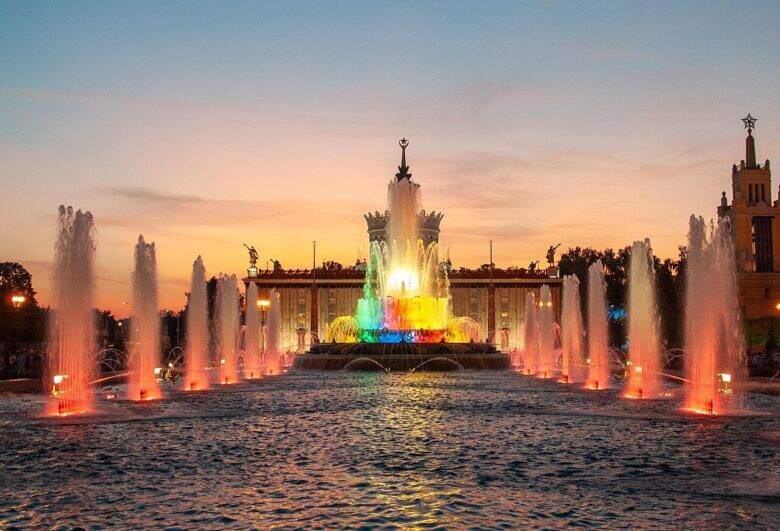
The Stone Flower at VDNKh: the tale, the film and the vision behind the fountain
The name of the Stone Flower Fountain at VDNKh refers to Pavel Bazhov’s tale of the same name. The project’s connection with Aleksandr Ptushko’s 1946 film, also called The Stone Flower, is explicitly noted in an official publication. Created for the opening of the renovated All-Union Agricultural Exhibition in 1954, the fountain had a composition of its own: a flower amid crystals, jets of water and sixteen bronze still lifes depicting the bounty of the republics.
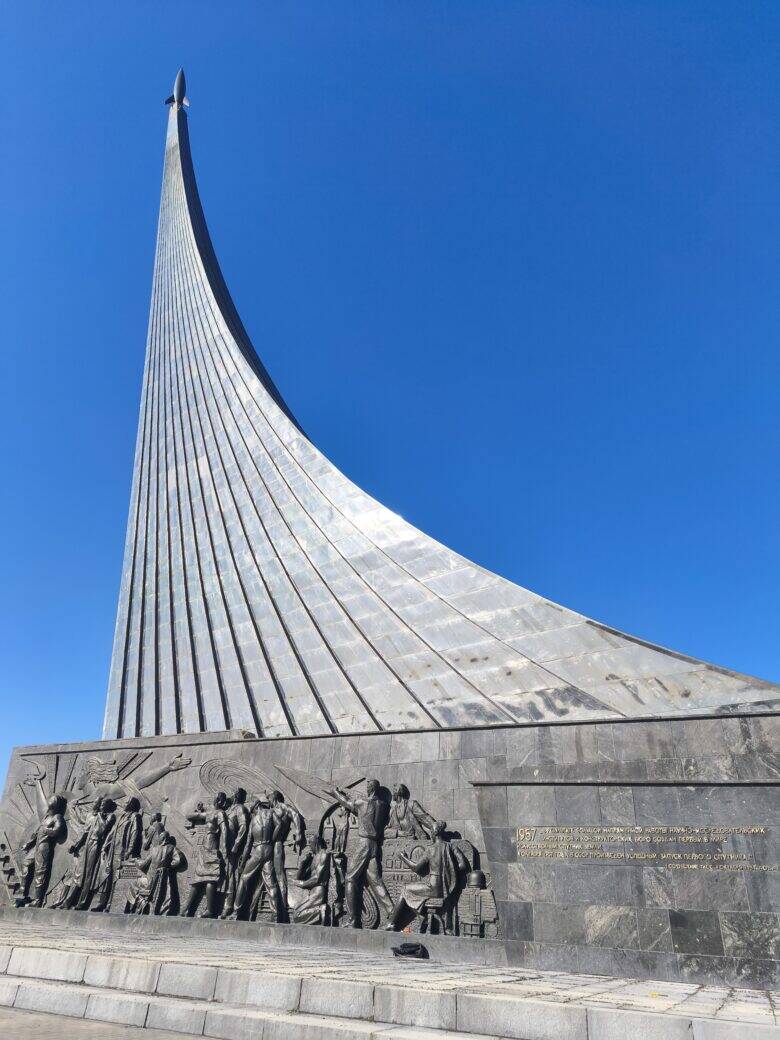
The people at the base of the rocket: who is depicted on the Monument to the Conquerors of Space
The Monument to the Conquerors of Space near VDNKh honours the people whose work made spaceflight possible, rather than a single crew or spacecraft. The rocket is visible from afar; the answer to who is depicted lies at its base. Bronze high reliefs depicting scientists, designers and workers adorn two sides of the granite pedestal. The approved description of the monument’s protected features specifies their number: 29. A separate sculptur…
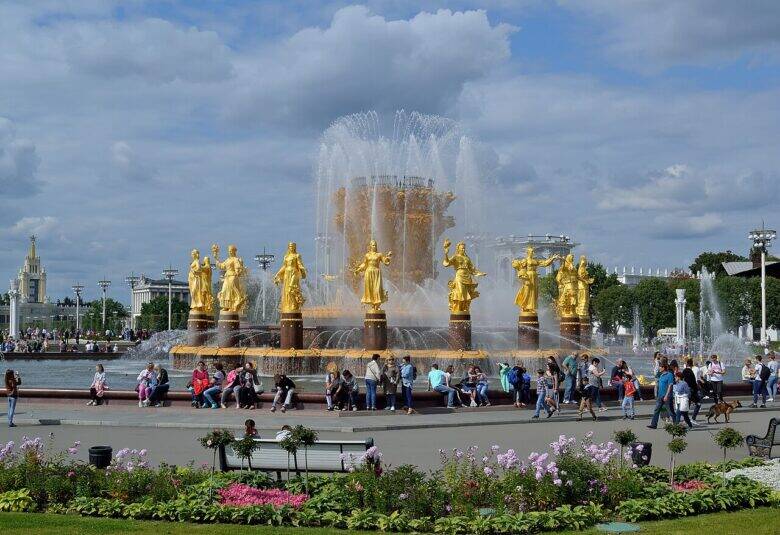
The 16th figure of the Friendship of Peoples Fountain: why it remained
The Friendship of Peoples Fountain has 16 gilded sculptures of women: when it opened on 1 August 1954, the USSR had sixteen union republics. The sixteenth figure represented the Karelo-Finnish SSR. A law passed on 16 July 1956 transformed it into the Karelian Autonomous Republic within the Russian SFSR; the sculptural ensemble retained the arrangement conceived for the 1954 exhibition. The difference between the familiar figure of…
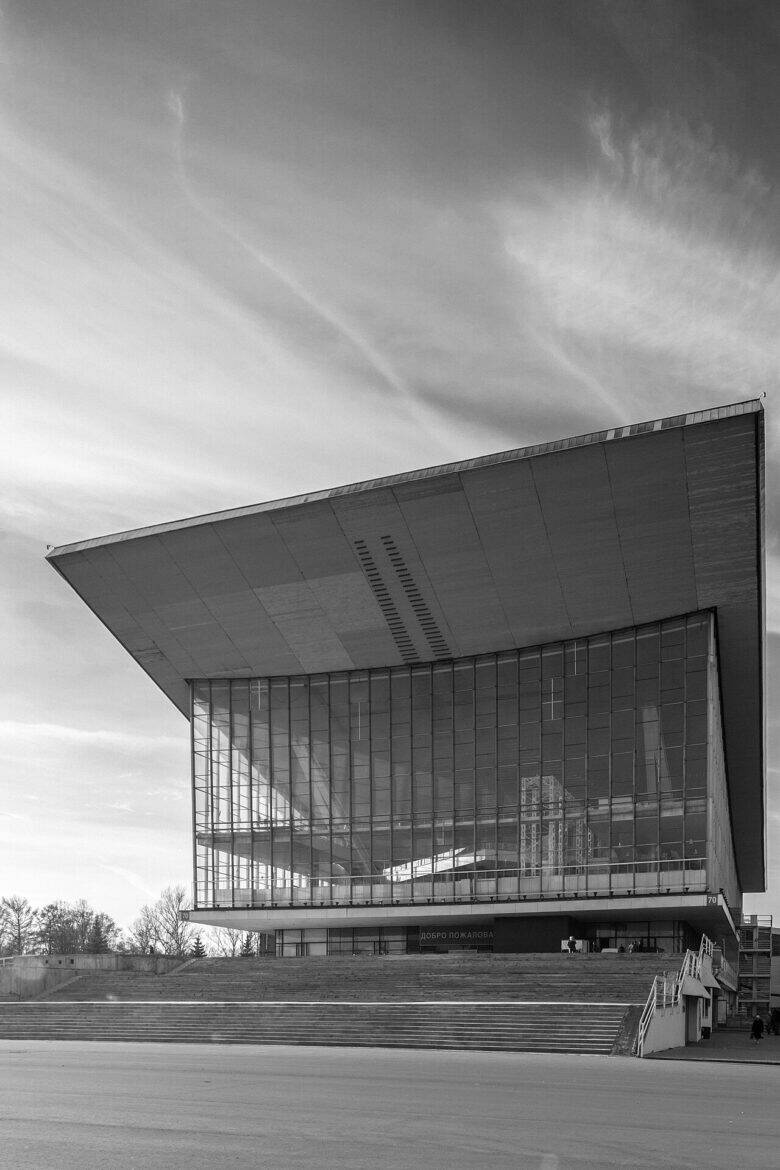
How the Montreal Pavilion Was Moved to VDNKh and Why It Became a Different Building
The Montreal Pavilion at VDNKh is the Moscow incarnation of the USSR Pavilion, which was dismantled in Canada after the 1967 World Expo and reassembled in Moscow. Its striking steel structure and roof were shipped over for reassembly, while the foundations, stylobate, additional levels, grand staircase and engineering systems were created for the new site. As a result, Pavilion No. 70 combines two architectural histories: the 1967 Montreal d…
Theatricality in Academic Painting: How the Artist Directs the Viewer’s Gaze
The theatricality of academic painting is evident in the arrangement of the figures: the artist selects a moment in the action and directs the viewer’s attention through gestures and gazes. The painting therefore resembles a scene frozen in time. From the characters’ poses and the distances between them, the viewer can reconstruct the conflict even without knowing the full story. A canvas captures a single moment, while a theatrical performance unfolds the action over time; this distinct…
From the ISS to VDNKh: The Journey of Sergey Ryazansky’s Photographs
Sergey Ryazansky photographed the Earth with a handheld camera during two expeditions aboard the International Space Station. After his flights, he selected images for books and exhibitions, while editors and curators presented them in a range of public settings — from the Fundamental Library of Moscow State University to the science and technology venue at VDNKh. They determined the viewing sequence and prepared the…
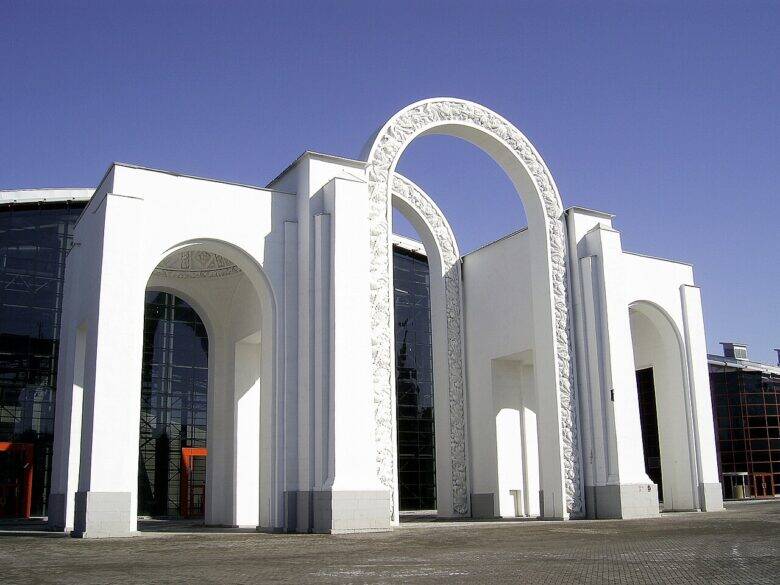
Three Eras of VDNKh: Why the Pavilions Changed Their Names and Appearance
The history of the VDNKh pavilions is revealed through their changing names, exhibitions and façades. The state repeatedly revised what was to be displayed and the order in which visitors were meant to encounter the country’s achievements. In 1939, the All-Union Agricultural Exhibition showcased agriculture, the Soviet republics and the regions; for its reopening in 1954, architects created a monumental image of the post-war Soviet Union; and in the 1960s, the buildings came to sh…
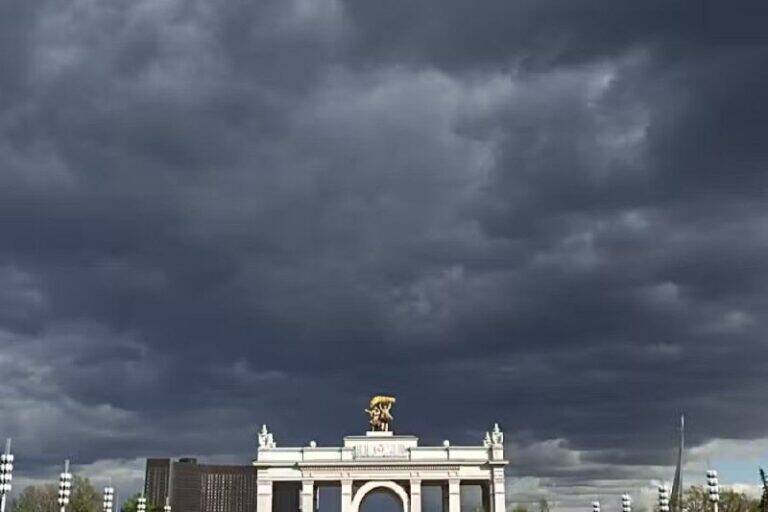
VDNKh as a grand route: museums, space, and walks around the area
A tour of VDNKh in Moscow has long since transcended the confines of a stroll through a single historical site. In 2026, this place is more conveniently perceived as a sprawling cultural district, merging Soviet architecture, museums, space themes, children's and adult spaces, landscaped areas, and adjacent locations. Therefore, the most reasonable question is not "what to see here in an hour," but "which…
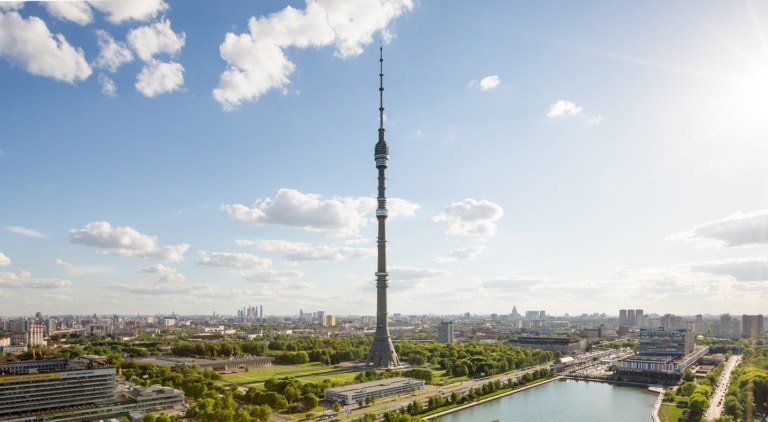
North-East of Moscow: Unexpected routes for lovers of history and nature
If you want to spend a day richly and educationally, but not in the banal and hackneyed locations of the capital, then the North-Eastern Administrative District of Moscow (SVAO) is an excellent choice. Here you will find unique parks, historical sites and modern cultural centers that will not leave anyone indifferent.
Advantages of individual excursions over group ones
- Individual guide remembers you, and you remember him. Such moments remain in memory.
- There is less strain on your hearing and attention, since the guide is literally right next to you and speaks only for you.
- An atmosphere of tranquility and privacy.
- Without loud laughter and inappropriate jokes from other tour participants.
- The guide doesn't make stops at points of sale (at least we certainly don't).
- Take a break when needed - to rest or take photos.
- You hear everything the tour guide says.
- No one is in a hurry. Take a good look at the sights - they won't leave without you.
- Opportunity to gain insight or exclusive information.
- We pay special attention to the places that interest you.
- Your photos will not be crowded with other participants.
- All attention is on you. Answers to all your questions.
- Possibility of adapting the route to your preferences and interests.
- The excursion can be either educational or easy, depending on your wishes.
- You don't have to get up early or come at an inconvenient time. You choose when.
- The opportunity to discuss personal impressions and emotions with the guide during the process.
- Possibility to visit places closed to large groups.
- On a private tour you go deeper.
- Absence of outside pressure.
How much more expensive are personal tours than mass tours?
If you are alone or in pairs, then a sum of several thousand for a walking tour of the city or twenty thousand for a car excursion is significant.
But if you're going for a walk with family or friends, the cost for an individual participant approaches one or two thousand - the amount that each person would pay for a group excursion with strangers.
For your group of 8 or more people, the price becomes even lower when calculated per person, making a private tour truly attractive.
***
A mass excursion is tourism, an individual excursion is a journey through the city’s secrets with a personal guide.
The Radius excursion bureau offers a variety of cultural and historical programs in Moscow, including excursions to VDNKh. Our guides are stylish professionals who are ready to take you along original routes in Russian and foreign languages. We organize both walking tours and trips by car, bicycle or scooter, as well as excursions on the Radisson Royal ship along the Moscow River.
Our services are in demand among both individual clients and corporate customers, such as Yandex, Faberlic and Russian Railways. We offer original gift certificates for excursions, which will be a great gift for your friends and family. By contacting us, you will receive a lively speech and a unique approach that will please even the most demanding guests.