Russian theatre is a unique combination of drama, directing and rich cultural traditions. From classic productions of Chekhov and Ostrovsky to modern experiments, Russian theatre continues to inspire and amaze audiences around the world.
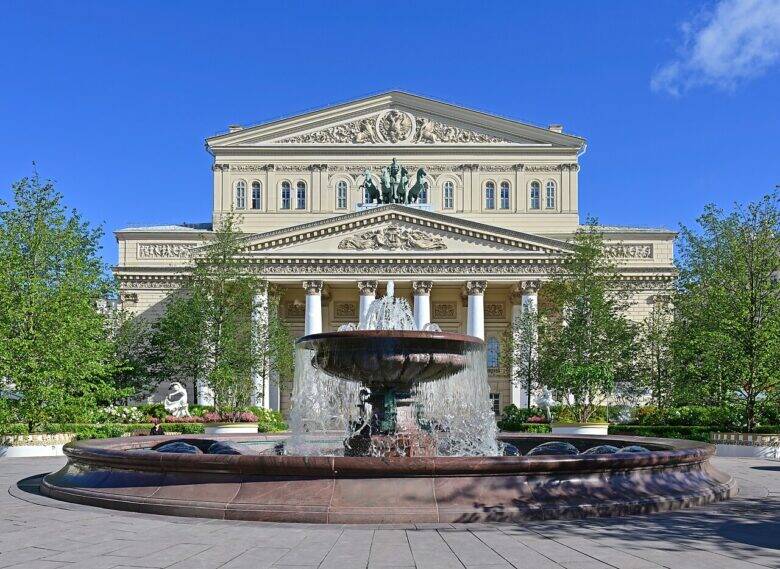
The Bolshoi Theatre after the fire of 1853: what remained of Bove’s design and what Kavos changed
After the fire of 1853, the Bolshoi Theatre retained the load-bearing walls and portico structures of the building erected in 1825 on Theatre Square with the involvement of Osip Bove. Albert Cavos incorporated these elements into the reconstruction, raised the height of the building, rebuilt the auditorium and altered the façades. The building’s apparent continuity does not, therefore, mean that every detail belongs to the same perio…
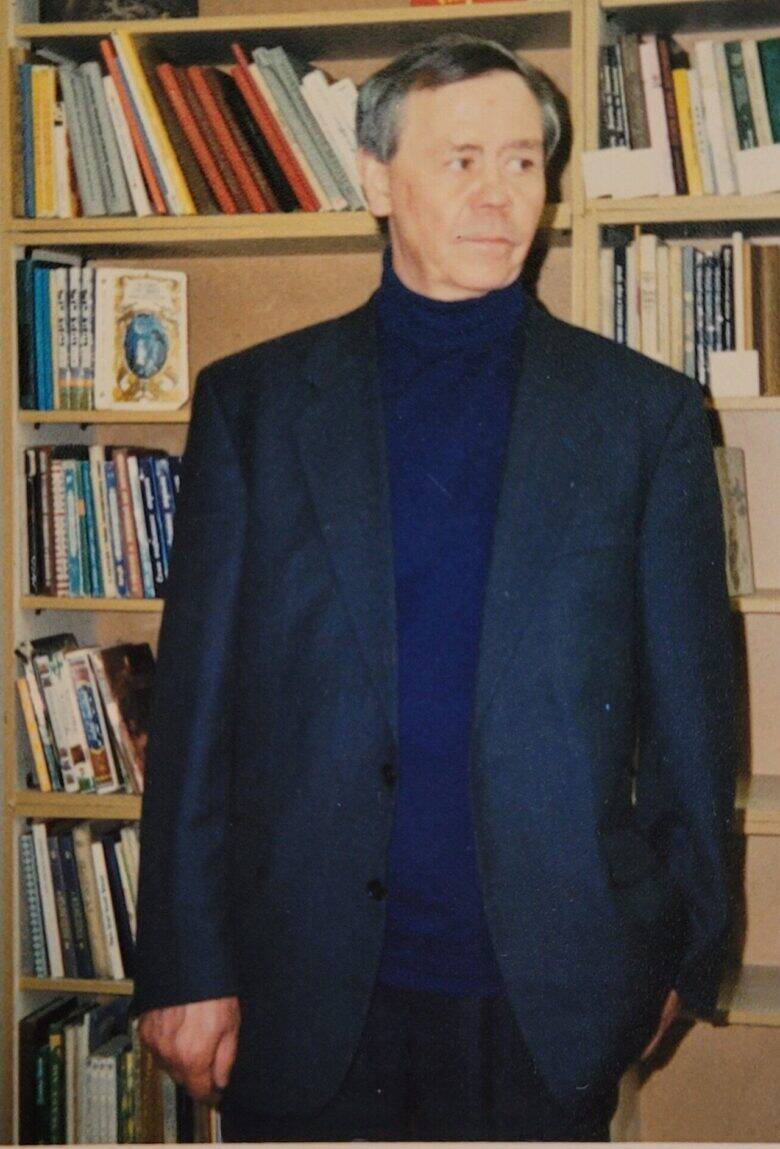
‘French Lessons’: What Really Happened and What Rasputin Invented
Valentin Rasputin’s biography helps establish what really happened in the story ‘French Lessons’: in 1948, an eleven-year-old boy left Atalanka to study in Ust-Uda, lived away from his family and had too little to eat. Lidia Mikhailovna was a real person too. Rasputin invented the teacher’s games for money with her pupil; in the story, they help the boy accept the support he had previously refused.
Theatricality in Academic Painting: How the Artist Directs the Viewer’s Gaze
The theatricality of academic painting is evident in the arrangement of the figures: the artist selects a moment in the action and directs the viewer’s attention through gestures and gazes. The painting therefore resembles a scene frozen in time. From the characters’ poses and the distances between them, the viewer can reconstruct the conflict even without knowing the full story. A canvas captures a single moment, while a theatrical performance unfolds the action over time; this distinct…
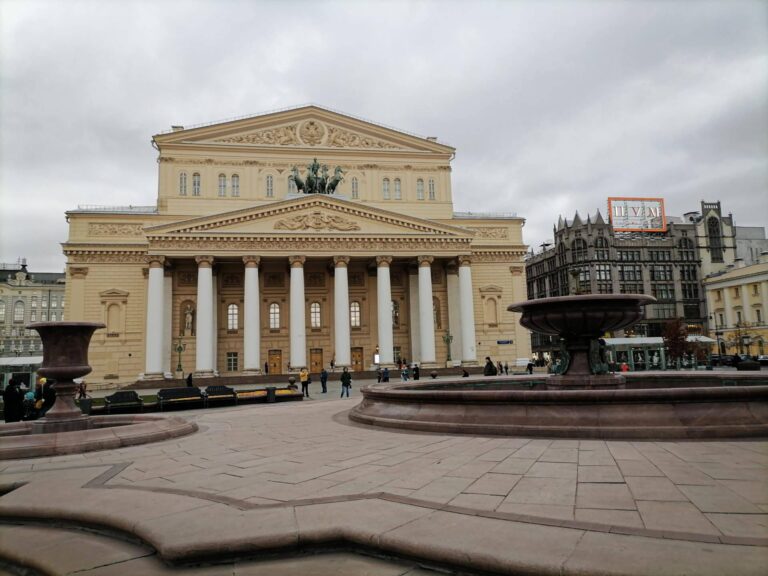
Theatrical Moscow: the addresses of Stanislavsky, Meyerhold, Vakhtangov, and Tairov
The theatrical heart of Moscow lies within a few central districts between Theatre Square, Kamergersky and Leontievsky Lanes, and the Arbat. Here you will find the Bolshoi Theatre, the Moscow Art Theatre, Stanislavsky’s house, and places associated with Meyerhold, Vakhtangov and Tairov. This guide brings them together into a coherent walking route and explains precisely what changed on each of these stages.
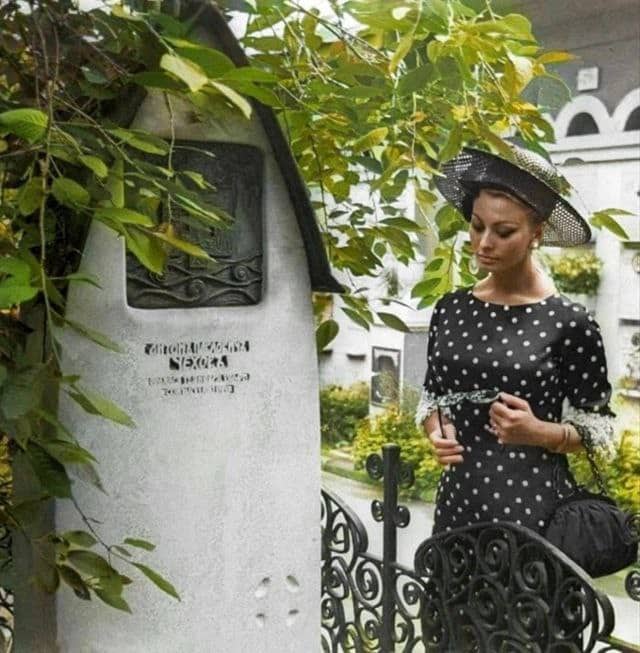
Thoughts on Chekhov and Shakespeare after a photo with Sophia Loren
Radius does not have tours of Chekhov's Moscow, much less Shakespeare's Moscow. But today, seeing a photograph of Sophia Loren on Anton Pavlovich's grave, the idea came to mind of comparing the works of these two pillars of world drama.
Benefits of individual excursions
- The guide doesn't make stops at retail outlets (at least we certainly don't).
- We pay attention only to those places that interest you, be it a tour of Stanislavsky, Vakhtangov, Meyerhold and Tairov in Moscow.
- You hear everything the guide says. Less strain on your ears and attention.
- You don't have to get up early or come at an inconvenient time. You choose when.
- Take a good look at the sights - they won't leave without you.
- Possibility of adapting the route to your interests, for example, a tour of Moscow theaters.
- Without loud laughter and inappropriate jokes from other tour participants.
- Take a break when needed - to rest or take photos.
- All attention is on you. Answers to all your questions.
- At individual excursion you dive deeper.
- Possibility to visit places closed to large groups.
- Your photos will not be crowded with other participants.
- The opportunity to discuss personal impressions and emotions with the guide during the process.
- A personal guide remembers you, and you remember him. Such moments remain in memory.
- No outside pressure. An atmosphere of calm and privacy.
- The excursion can be either educational or easy, depending on your wishes.
- Opportunity to gain insight or exclusive information.
How much more expensive are personal tours than mass tours?
If you are alone or in pairs, then a sum of several thousand for a walking tour of the city or twenty thousand for a car excursion is significant.
But if you're going for a walk with family or friends, the cost for an individual participant approaches one or two thousand - the amount that each person would pay for a group excursion with strangers.
For your group of 8 or more people, the price becomes even lower when calculated per person, making a private tour truly attractive.
***
A mass excursion is tourism, an individual excursion is a journey through the city’s secrets with a personal guide.
Bureau Radius offers cultural, historical and sightseeing tours of Moscow in Russian, English, German, Spanish and Hebrew. We organize walking tours, car tours and even on the Radisson Royal ship. Our stylish guides provide lively speech without cliches. Among our programs is a tour of Moscow theaters, including unique routes about Stanislavsky, Vakhtangov, Meyerhold and Tairov. We work with private and corporate clients, including Yandex, Faberlic and Uniqlo. Individual routes are available for everyone, from foreign guests to experts in the capital. Our tours are for two, friends or demanding guests.