History of Moscow’s Districts
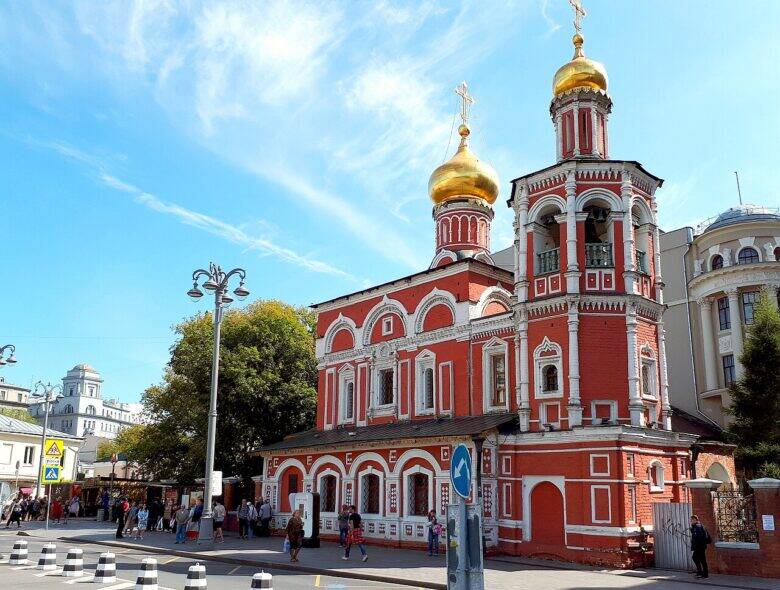
‘In the middle of nowhere’: what we know about a Moscow legend
The Russian expression ‘u chyorta na kulichkakh’ means a remote, inaccessible or unknown place. Moscow’s Kulishki is a real place name, and a story about a demon was being offered as an explanation of the phrase as early as the 19th century. Yet lexicographical and historical sources do not prove that the saying originated in this particular urban legend. Literary examples from the 19th century and heritage protection documents he…
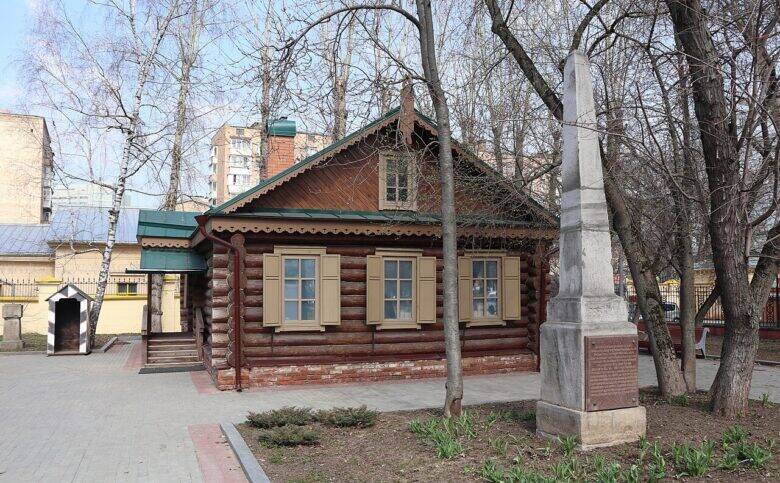
Kutuzov’s Hut in Fili: Why the Memorial Was Recreated in 1887
Kutuzov's Hut in Fili stands on the site of the Council of War held on 1 (13) September 1812. The peasant Frolov's house burnt down in 1868, and a memorial was built here in 1887. What is historically authentic here is the location of the meeting and the documented history of efforts to preserve it. The age of the timber structure of the present house requires separate investigation.
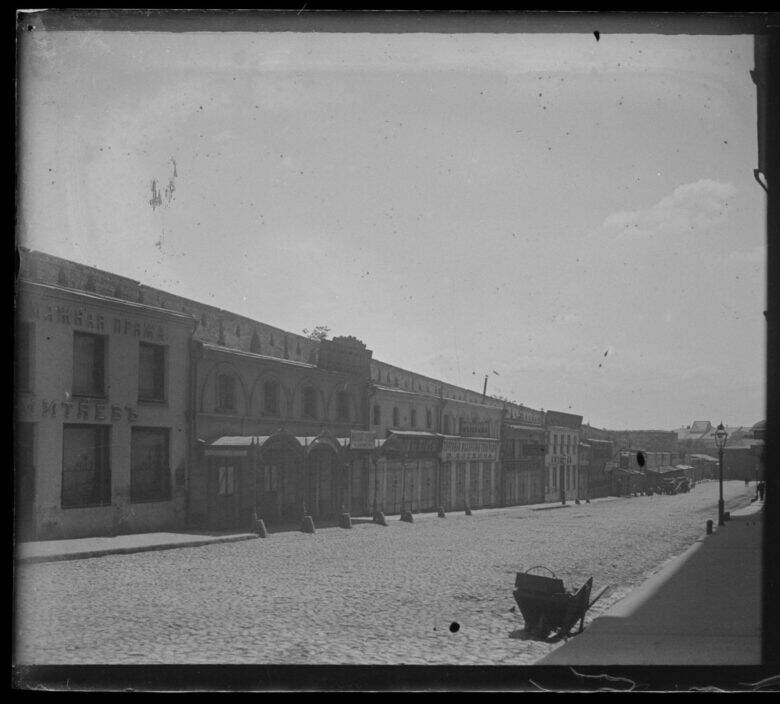
Tolkuchy Market: why the fire of 1881 did not put an end to trade
The fire of 1881 almost completely destroyed Pashkov Courtyard on what is now Novaya Square, but Tolkuchy Market beside the Kitay-Gorod wall continued to operate. Vladimir Gilyarovsky recalled lively trading in the mid-1880s, while the historian Pyotr Sytin dated its move to Sadovniki to 1899. The fire, the redevelopment of one property and the relocation of the entire second-hand market were separate events: 1881 cannot be describe…
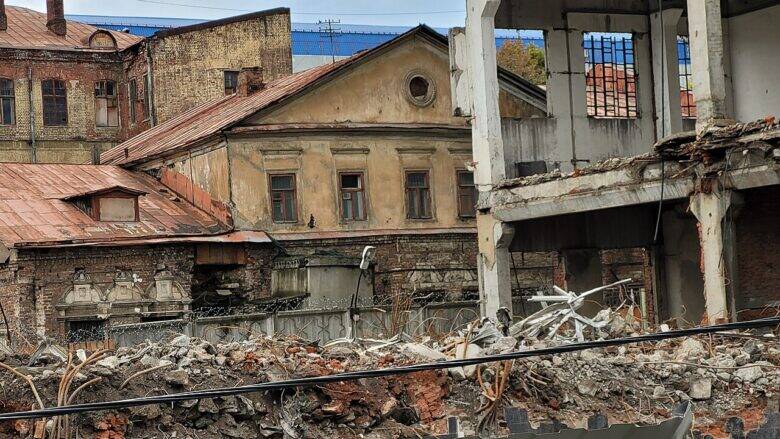
Anna Mons House: what we know about the owners of the chambers
Anna Mons’s House in the German Quarter is the familiar name of the chambers, enshrined in the official designation ‘Chambers (Anna Mons’s House)’. There is no documentary evidence that she owned or lived in the building. In the 2024 state historical and cultural expert assessment report the house’s connection with Peter I’s mistress is explicitly described as an unsubstantiated legend. The earliest documented owner identified by the experts…
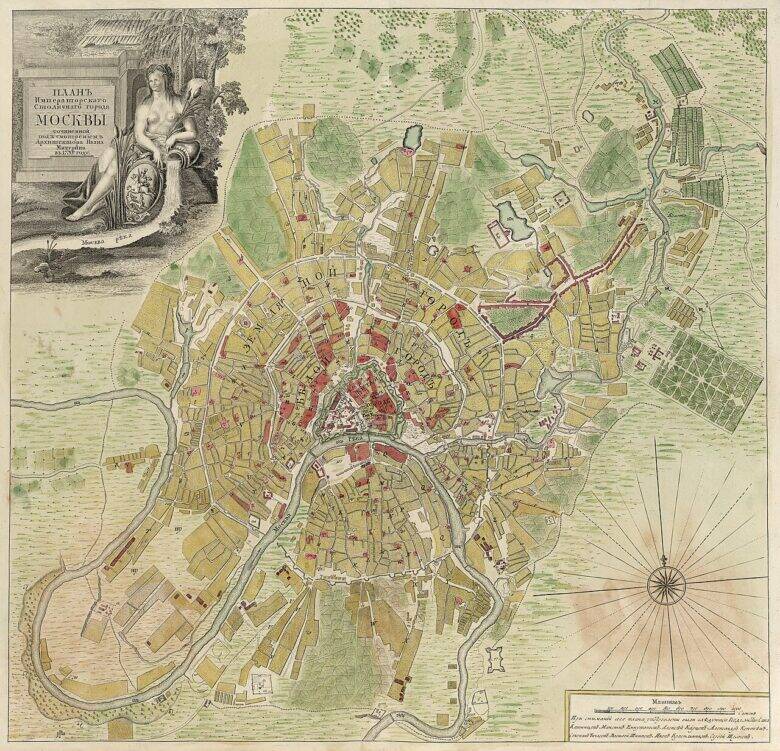
Michurin’s Map of Moscow: How to Read the Numbers, Letters and Zodiac Signs
Michurin’s 1739 plan of Moscow comes with a separate index: numbers, letters and zodiac signs refer to its sections. Together, they show which streets and places the mapmakers marked; this source cannot establish the history of each building or its exact present-day address.
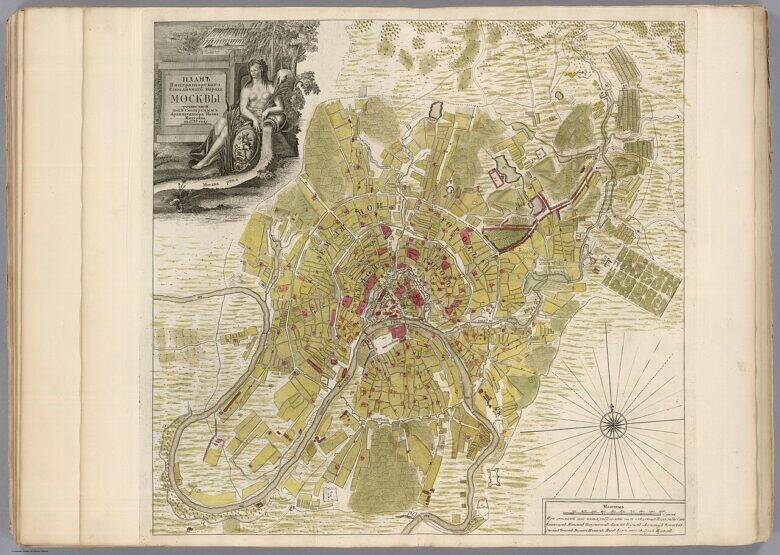
Moscow, Part by Part: How Ruban’s and Maksimovich’s Guidebooks Differ
The earliest guidebooks to Moscow — Vasily Ruban’s book of 1782 and Lev Maksimovich’s work of 1792–1793 — presented different ways of describing the city. The 1782 edition arranges information by fourteen police districts, while the 1792–1793 work follows four historic areas: the Kremlin, Kitay-Gorod, Bely Gorod and Zemlyanoy Gorod. Their different structures show how the authors addressed different questions r…
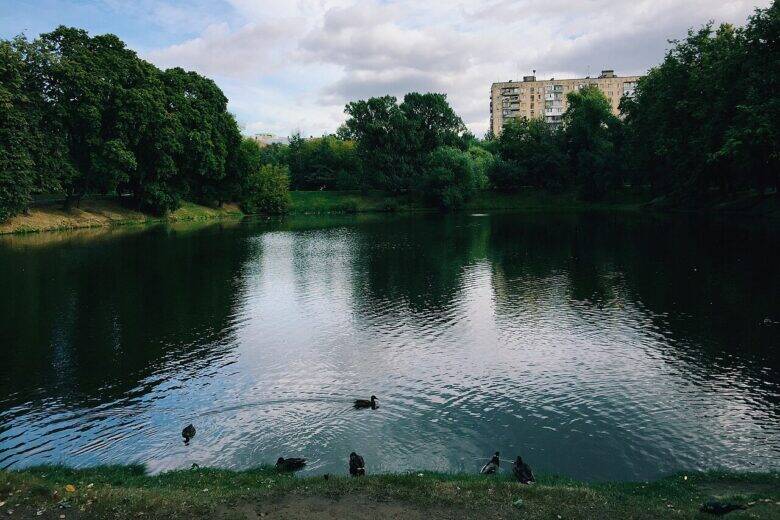
Five, seven or nine ponds: how Lefortovo Park is laid out
Sources give different counts for the ponds in Lefortovo Park. An account of the work carried out in 1722–1724 mentions five new ponds, a published reconstruction of the water system and a 1733 inventory of the Annenhof Garden give nine, while the current official page lists seven. These records refer to different periods and areas. It is therefore impossible to locate ‘Bidloo’s two vanished ponds’ on a modern plan by simple subtraction…
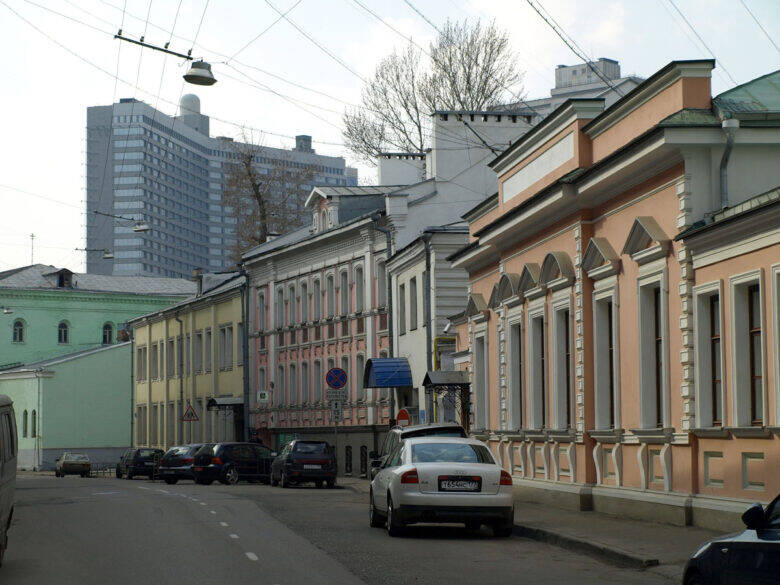
Why Novy Arbat was built through the old lanes
Novy Arbat was laid out north of Stary Arbat as a broad route west out of the city centre. The older street, lined with substantial buildings, was considered difficult to widen, while traffic heading west was increasing. The route was proposed in the 1935 General Plan, but the avenue itself was built mainly in the 1960s. It cut through existing blocks and replaced some of the lanes and Sobachya Ploshchadka.

Why the German Quarter Was Not Only German
Moscow’s German Quarter brought together Western foreigners of various nationalities. In the 17th century, the word «German» was used for anyone whose speech seemed unintelligible, so people from the German lands, the Netherlands, England, Scotland, Sweden, France and Italy all lived along the Yauza under this common designation. They were united by their service to Russia, their Western European origins and the settlement’s special legal status; the name should no…

Polenov’s 1878 painting ‘A Moscow Courtyard’: what remains on the Arbat
Vasily Polenov’s ‘A Moscow Courtyard’ is linked to a real property in the Arbat district, near the junction of Durnovsky and Trubnikovsky Lanes. The painting was based on a view from a window, which the artist broadened horizontally while working on the canvas in 1878. A letter by Polenov, old maps and the original version make it possible to identify with confidence the direction of the view, the Church of the Transfiguration of the Saviour on the Sands and…

When Red Square Was a Shopping District: From the Trading Rows to GUM
The trading rows on Red Square primarily occupied its eastern side, between the Kremlin, Nikolskaya Street, Ilyinka and Varvarka. Temporary trading took place in the open square, while permanent shops gradually became concentrated in the Upper, Middle and Lower Trading Rows, with the arrangement of goods determining the layout of each block.

The Rachka River: How Its Valley Shaped Ivanovskaya Gorka
The Rachka River has vanished from the surface of Moscow, but its valley remains embedded in the fabric of the city. The changes in elevation across Ivanovskaya Gorka and the routes of Khokhlovsky, Podkopayevsky, Kolpachny and Maly Ivanovsky Lanes largely follow the terrain on either side of the former riverbed. This watercourse remains a hidden element of Moscow’s urban plan.

Preobrazhenskoye and Sokolniki: From a Royal Estate and Mock Regiments to an Urban Park
Preobrazhenskoye and Sokolniki lie side by side in eastern Moscow, yet belong to distinct historical territories. Preobrazhenskoye developed as a palatial, military and administrative centre, associated with Alexei Mikhailovich and the young Peter I. The Sokolniki grove served as a royal falconry ground before eventually becoming a public city park with avenues radiating out in a fan.