Историко-культурные публикации о Москве помогают подготовиться к прогулке с гидом и выбрать индивидуальные экскурсии по интересующей теме.
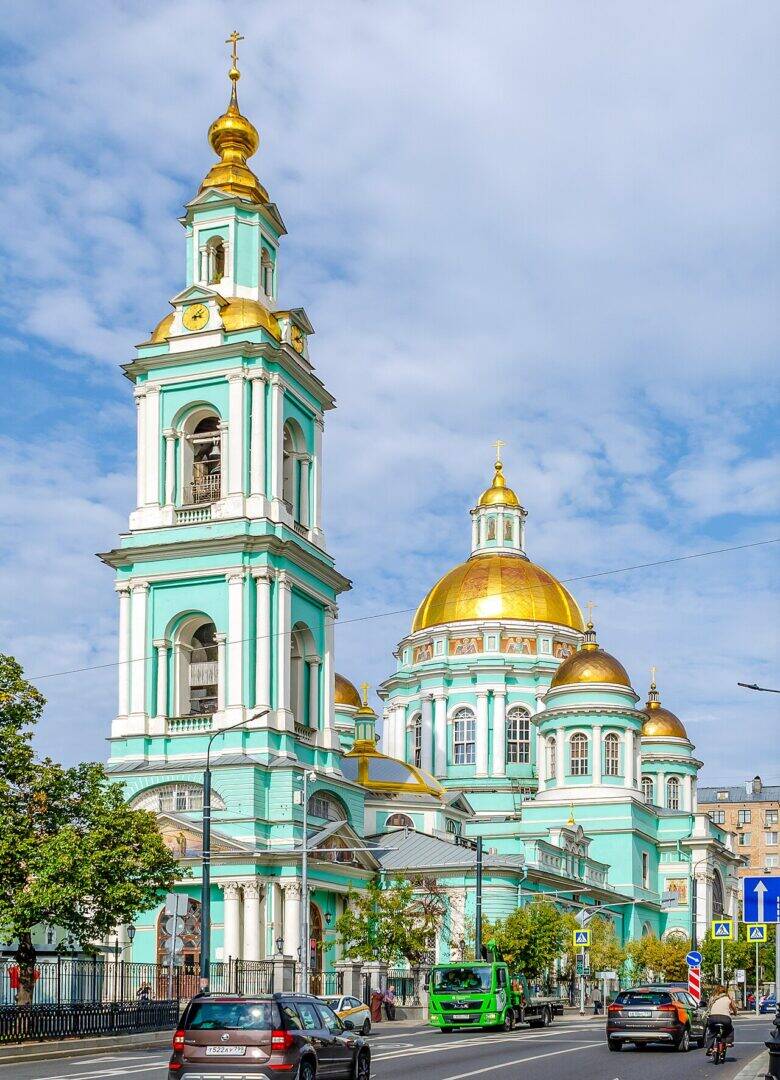
Where was Pushkin born, and what do his Moscow addresses reveal?
Alexander Sergeevich Pushkin was born in Moscow on 26 May 1799 according to the Old Style calendar, or 6 June according to the New Style calendar. A commemorative plaque cannot establish the exact house where he was born. The plaque on Baumanskaya Street marks one historical account; the monument on Pushkin Square was erected decades after the poet’s death; and the State Museum on Prechistenka occupies a house that Pushkin is not do…
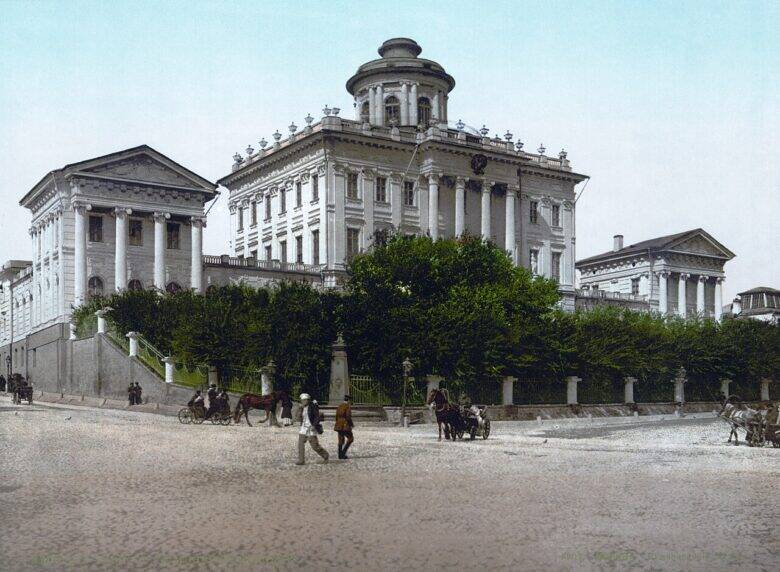
Why Pashkov House Is Attributed to Bazhenov: Documents and the Legend of Its Façade
Pashkov House on Vagankovsky Hill is usually associated with Vasily Bazhenov. Researchers have found no signed design or building contract from the time of its construction. A letter written by Prince Nikolai Yusupov in 1827 helps explain why Pashkov House is attributed to Bazhenov: it names the architect as the building’s creator. This supports the attribution, but the letter was written several decades after the house was built and does not reveal the source of its information. The Russian State Library there…
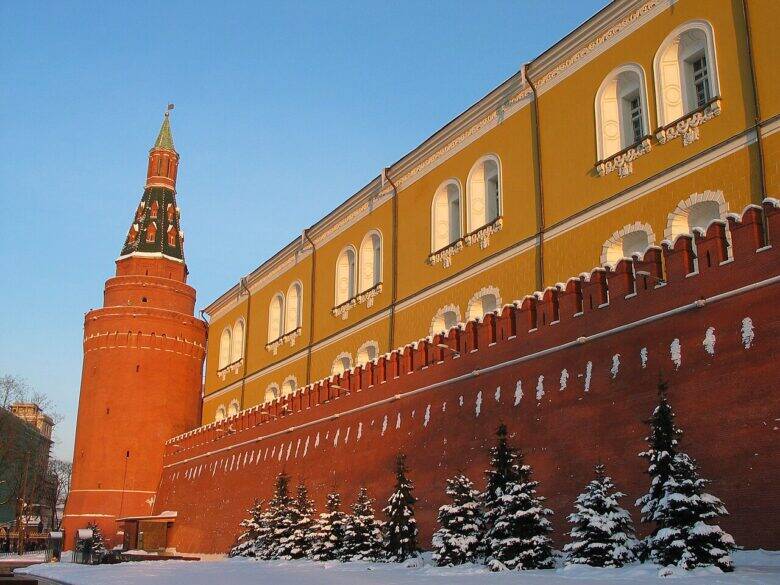
The Neglinnaya and its bridges: why Alexander Garden has three sections
Alexander Garden is divided into three sections: the Upper, Middle and Lower Gardens. Their boundaries were shaped by the approaches to the Trinity and Borovitsky Gates, which crossed the strip of land along the Kremlin’s western wall. The Neglinnaya River was taken underground, but the routes of the two bridges were preserved. These boundaries therefore reflect the history of the river and the entrances to the fortress.
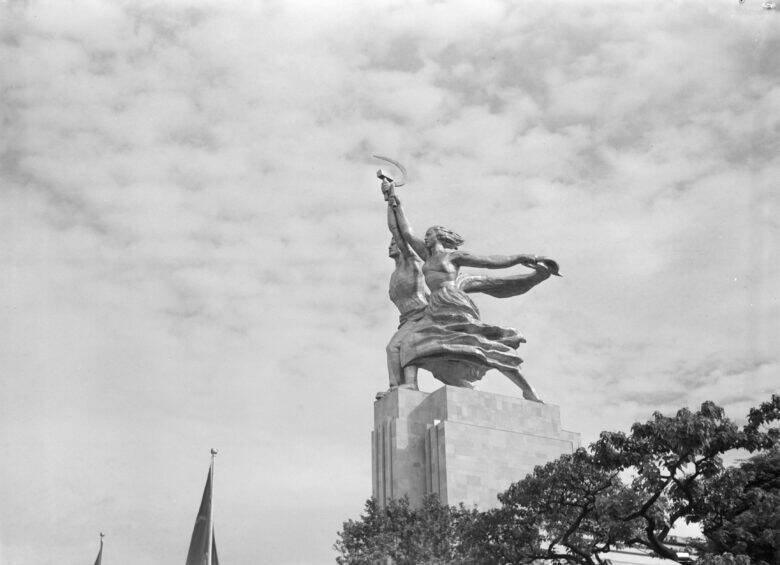
‘Worker and Kolkhoz Woman’: How the Image Became Mosfilm’s Emblem
The Mosfilm emblem first appeared in Grigori Alexandrov’s Spring in 1947. It was based on Vera Mukhina’s sculpture Worker and Kolkhoz Woman, created for the 1937 exhibition in Paris. But several years separate the emblem’s screen debut from the making of a special copy for the studio: the document commissioning a plaster model dates from 1950, and its acceptance certificate from 29 May 1951. Thi…
Foreign Guests at VSKhV and VDNKh: What the Archives Reveal
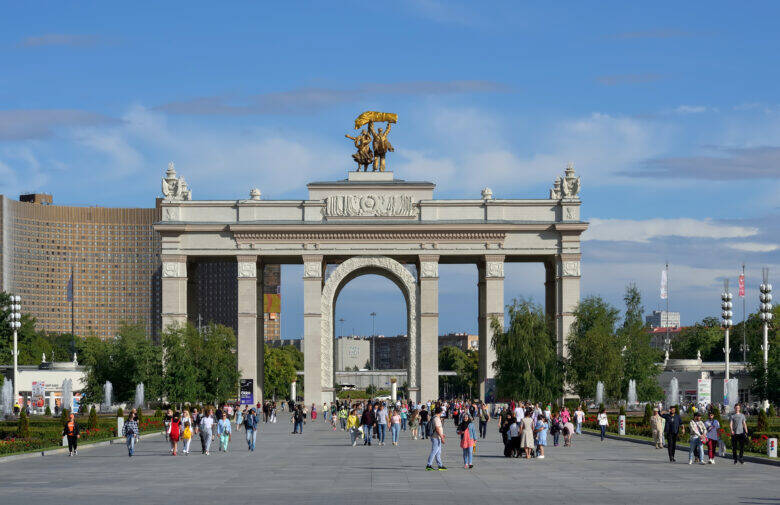
In the mid-1950s, foreign visitors to the All-Union Agricultural Exhibition were shown tractors, experimental plots and the republics’ pavilions. By the early 1960s, museum records also document exhibits related to space. The displays changed gradually: a model of the Vostok spacecraft appeared in Pavilion No. 34 in 1965, while the name ‘Cosmos’ was adopted in 1967. These conclusions are based on dated photographs, documentary film catalogues and the history…
The Stone Flower at VDNKh: the tale, the film and the vision behind the fountain
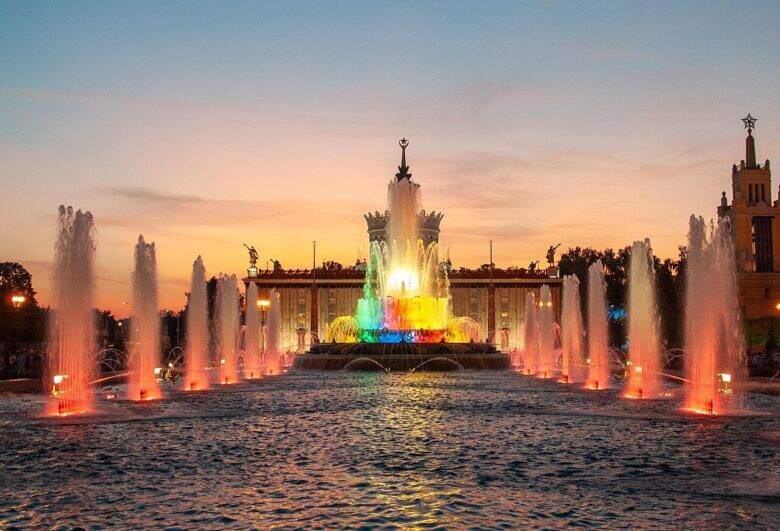
The name of the Stone Flower Fountain at VDNKh refers to Pavel Bazhov’s tale of the same name. The project’s connection with Aleksandr Ptushko’s 1946 film, also called The Stone Flower, is explicitly noted in an official publication. Created for the opening of the renovated All-Union Agricultural Exhibition in 1954, the fountain had a composition of its own: a flower amid crystals, jets of water and sixteen bronze still lifes depicting the bounty of the republics.
The Bolshoi Theatre after the fire of 1853: what remained of Bove’s design and what Kavos changed
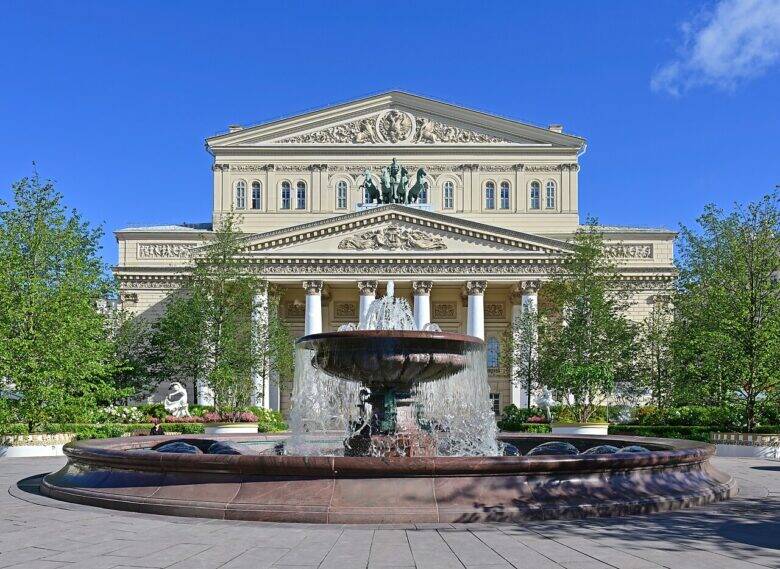
After the fire of 1853, the Bolshoi Theatre retained the load-bearing walls and portico structures of the building erected in 1825 on Theatre Square with the involvement of Osip Bove. Albert Cavos incorporated these elements into the reconstruction, raised the height of the building, rebuilt the auditorium and altered the façades. The building’s apparent continuity does not, therefore, mean that every detail belongs to the same perio…
What remains of the 1923 exhibition in Gorky Park: a pavilion and traces of its layout
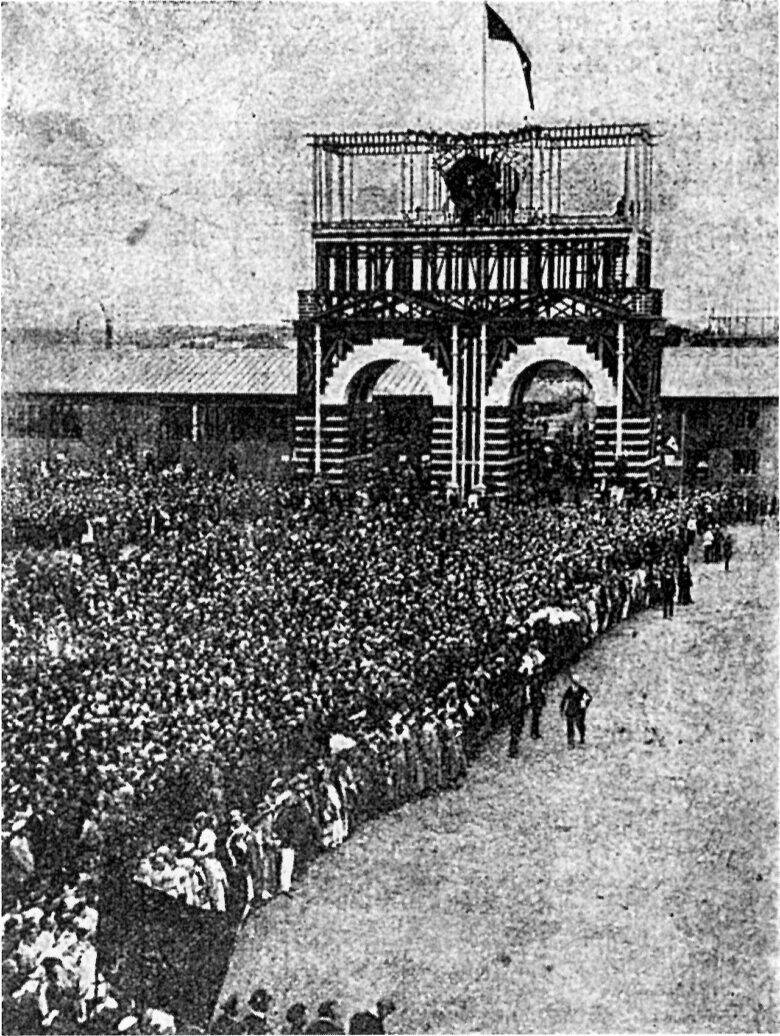
What survives in Gorky Park from the 1923 All-Russian Agricultural and Handicraft Exhibition is the Hexagon pavilion (originally called ‘Machines and Implements’), along with the routes of certain paths and the positions of open squares. The former Handicrafts Pavilion building, listed as part of this legacy in the heritage protection document, was demolished in 2025. The answer therefore depends on the date of the document and on what counts as surviving: a purpose-built exhibi…
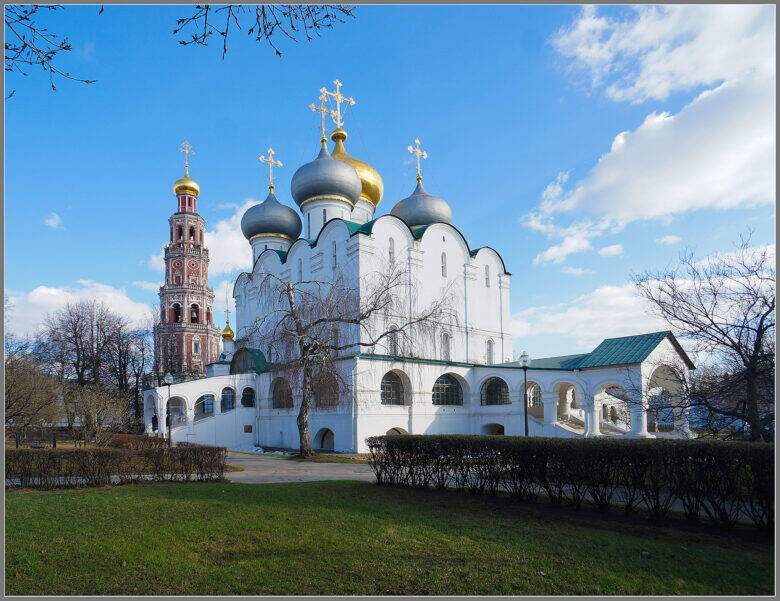
Why the walls of Novodevichy Convent are dated to two different centuries
Novodevichy Convent has had two stone enclosure walls. Archaeologists date the first to the turn of the 16th and 17th centuries, with 1598–1603 considered the most likely period of construction; the present enclosure, with its twelve towers, was built in the 1680s. Remains of the earlier wall lie within the present one. So the question of when the walls of Novodevichy Convent were built cannot be answered with the date the convent was founded: 1524.
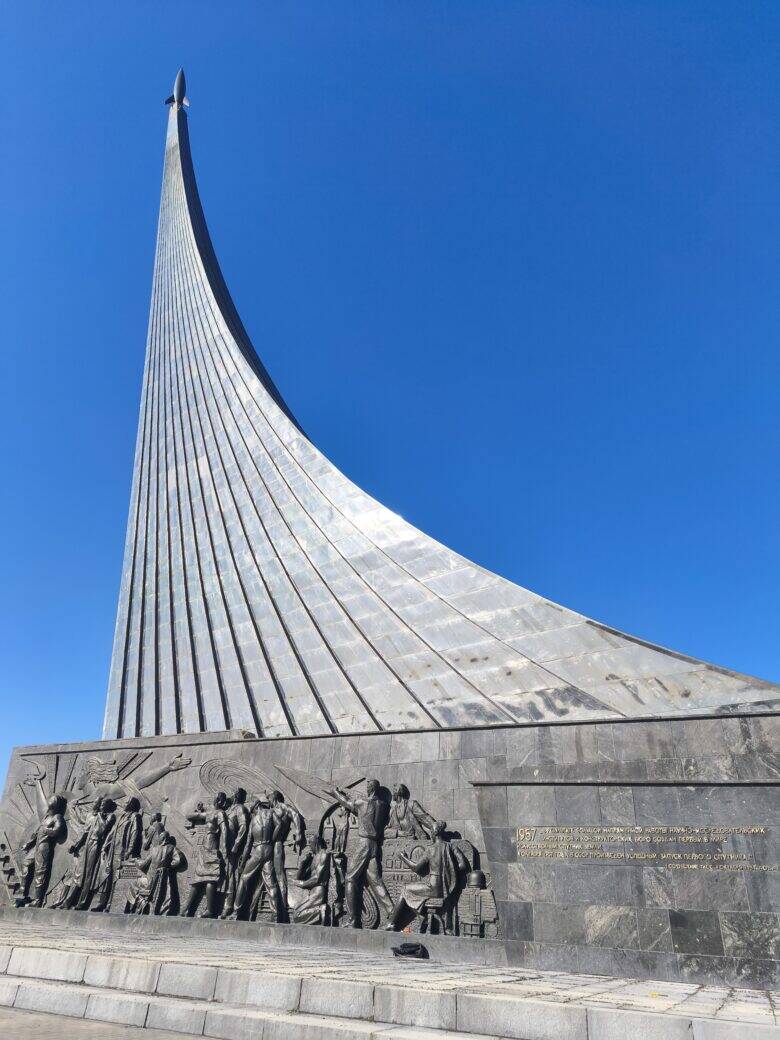
The people at the base of the rocket: who is depicted on the Monument to the Conquerors of Space
The Monument to the Conquerors of Space near VDNKh honours the people whose work made spaceflight possible, rather than a single crew or spacecraft. The rocket is visible from afar; the answer to who is depicted lies at its base. Bronze high reliefs depicting scientists, designers and workers adorn two sides of the granite pedestal. The approved description of the monument’s protected features specifies their number: 29. A separate sculptur…
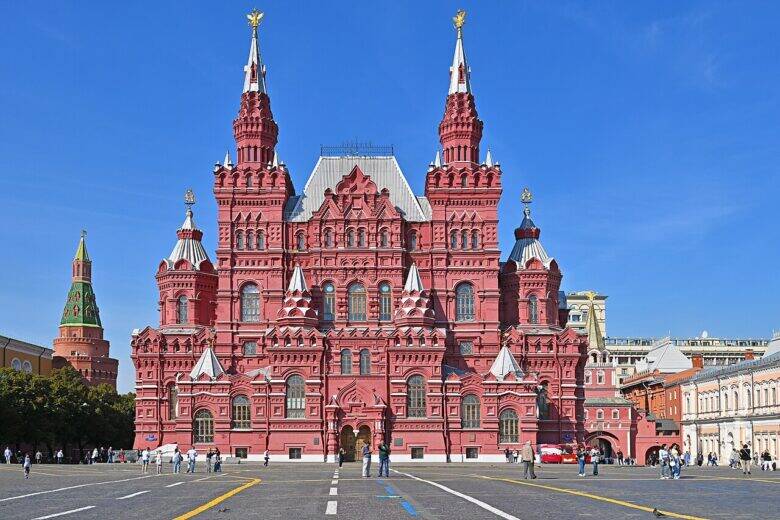
How the Duma site changed the design of the Historical Museum
A decision by the Moscow City Duma in 1874 explains why the Historical Museum was built on Red Square: its members offered the museum land previously purchased for their own building. The change also shaped the architectural design. The architects had to plan a large public building within sight of the Kremlin, with a façade facing the square and foundations on difficult ground near the former course of the Neglinnaya River. Museum records…
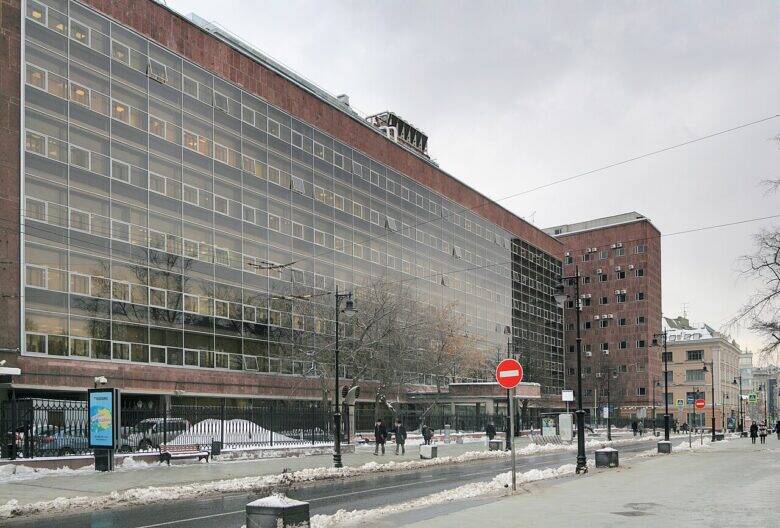
Le Corbusier’s Centrosoyuz Building: why ‘exact breathing’ was abandoned and what happened to the façade
Le Corbusier conceived the Centrosoyuz Building on Myasnitskaya Street in Moscow as a large office building in which the movement of people, the design of the façade and the supply of air would work together. The boldest part of his vision — an ‘exact breathing’ system with so-called neutralising walls — was never built. The Le Corbusier Foundation attributes its omission to the Soviet client’s lack of the necessary technology; a 2022 historical a…
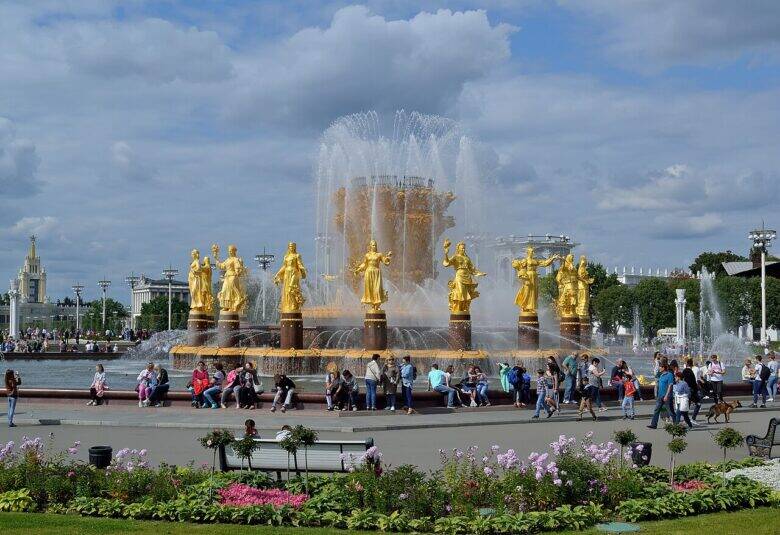
The 16th figure of the Friendship of Peoples Fountain: why it remained
The Friendship of Peoples Fountain has 16 gilded sculptures of women: when it opened on 1 August 1954, the USSR had sixteen union republics. The sixteenth figure represented the Karelo-Finnish SSR. A law passed on 16 July 1956 transformed it into the Karelian Autonomous Republic within the Russian SFSR; the sculptural ensemble retained the arrangement conceived for the 1954 exhibition. The difference between the familiar figure of…
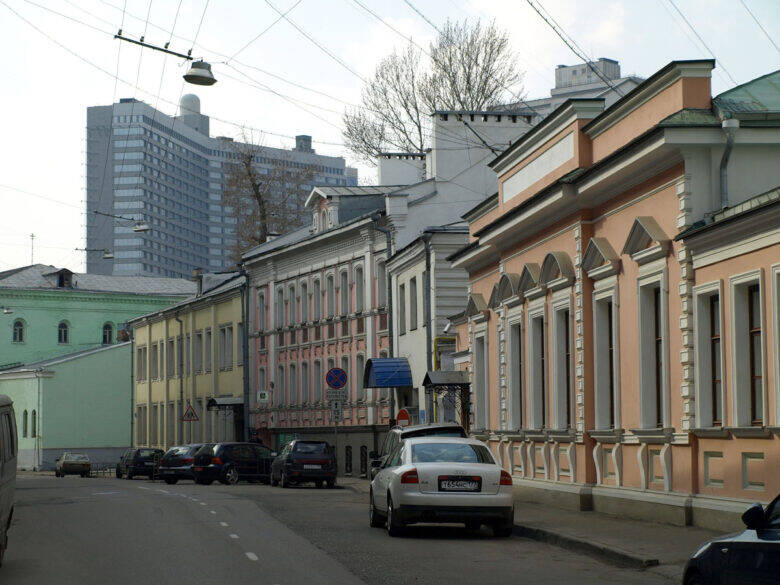
Why Novy Arbat was built through the old lanes
Novy Arbat was laid out north of Stary Arbat as a broad route west out of the city centre. The older street, lined with substantial buildings, was considered difficult to widen, while traffic heading west was increasing. The route was proposed in the 1935 General Plan, but the avenue itself was built mainly in the 1960s. It cut through existing blocks and replaced some of the lanes and Sobachya Ploshchadka.
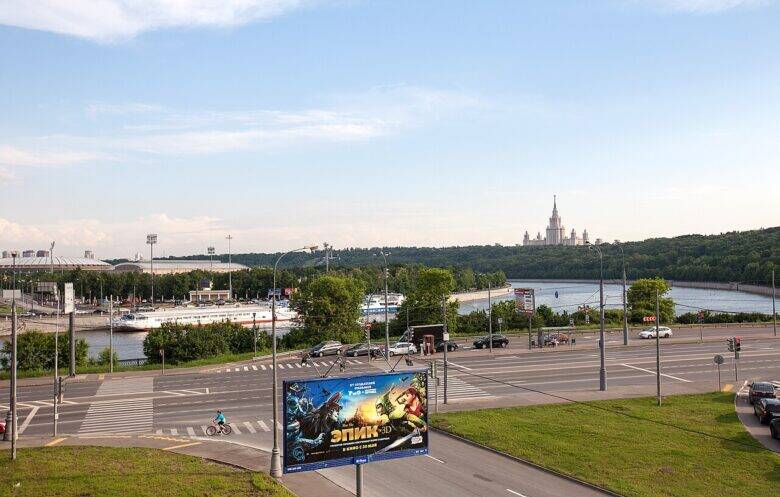
The Cathedral of Christ the Saviour on Sparrow Hills: What the Ground Revealed
Alexander Vitberg’s design for the Cathedral of Christ the Saviour placed it on Vorobyovy Gory. Work had stopped by 1826, but the brief explanation that ‘unstable ground prevented construction’ conflates two different sites: the slope into which the architect set the lower church, and the level ground at the top. Engineers considered it impossible to build the enormous cathedral on the sloping riverbank; some specialists allowed for a different solution on the summit, while quali…
Advantages of individual excursions over group ones
- All attention is on you. Answers to all your questions.
- An atmosphere of tranquility and privacy.
- We pay special attention to the places that interest you.
- Possibility of adapting the route to your preferences and interests.
- You hear everything the tour guide says.
- At individual excursion you dive deeper.
- No one is in a hurry. Take a good look at the sights - they won't leave without you.
- Without loud laughter and inappropriate jokes from other tour participants.
- Your photos will not be crowded with other participants.
- The opportunity to discuss personal impressions and emotions with the guide during the process.
- Take a break when needed - to rest or take photos.
- A personal guide remembers you, and you remember him. Such moments remain in memory.
- There is less strain on your hearing and attention, since the guide is literally right next to you and speaks only for you.
- The excursion can be either educational or easy, depending on your wishes.
- Opportunity to gain insight or exclusive information.
- Absence of outside pressure.
- The guide doesn't make stops at points of sale (at least we certainly don't).
- You don't have to get up early or come at an inconvenient time. You choose when.
- Possibility to visit places closed to large groups.
How much more expensive are personal tours than mass tours?
If you are alone or in pairs, then a sum of several thousand for a walking tour of the city or twenty thousand for a car excursion is significant.
But if you're going for a walk with family or friends, the cost for an individual participant approaches one or two thousand - the amount that each person would pay for a group excursion with strangers.
For your group of 8 or more people, the price becomes even lower when calculated per person, making a private tour truly attractive.
***
A mass excursion is tourism, an individual excursion is a journey through the city’s secrets with a personal guide.
The Radius excursion bureau offers fascinating excursions on the history of Moscow in Russian and foreign languages. You can choose a walking tour or a sightseeing trip by car, as well as order an individual route. Our stylish guides will provide a lively speech without cliches, immersing you in the rich history of the capital. In addition, we offer corporate excursions, and our experience of cooperation with such companies as Yandex and Faberlic confirms our competence.
For those who want to make an original gift, gift certificates for our excursions are available. This is the perfect way to give an educational walk around Moscow with a modern guide. Our excursions are conducted in Russian, English, German, Spanish and Hebrew, and can include walks, bike rides, scooter rides or a boat ride on the Radisson Royal on the Moscow River.