Vladimir Bortko’s 2005 television series The Master and Margarita conveys the novel’s scope and narrative sequence more fully, while Mikhail Lokshin’s 2024 film The Master and Margarita is more convincing as a modern work of cinema in its own right. There is therefore no overall winner in this comparison. The first version will appeal to viewers who value Bulgakov’s dialogue, attention to detail and large ensemble of characters. Lokshin’s work is stronger when it comes to cohesive storytelling, visual scale and an individual directorial interpretation.
It would be misleading to judge the adaptations solely by their fidelity to the book or their box-office performance. A ten-part television premiere and a feature-length theatrical release belonged to different media environments; television ratings cannot be equated with the number of tickets sold. Popular affection and artistic quality cannot be reduced to a score on a single platform either. The differences between the two versions can be seen in their format, structure, interpretation of the characters, portrayal of Moscow and Yershalaim, production, audience and critical reception.
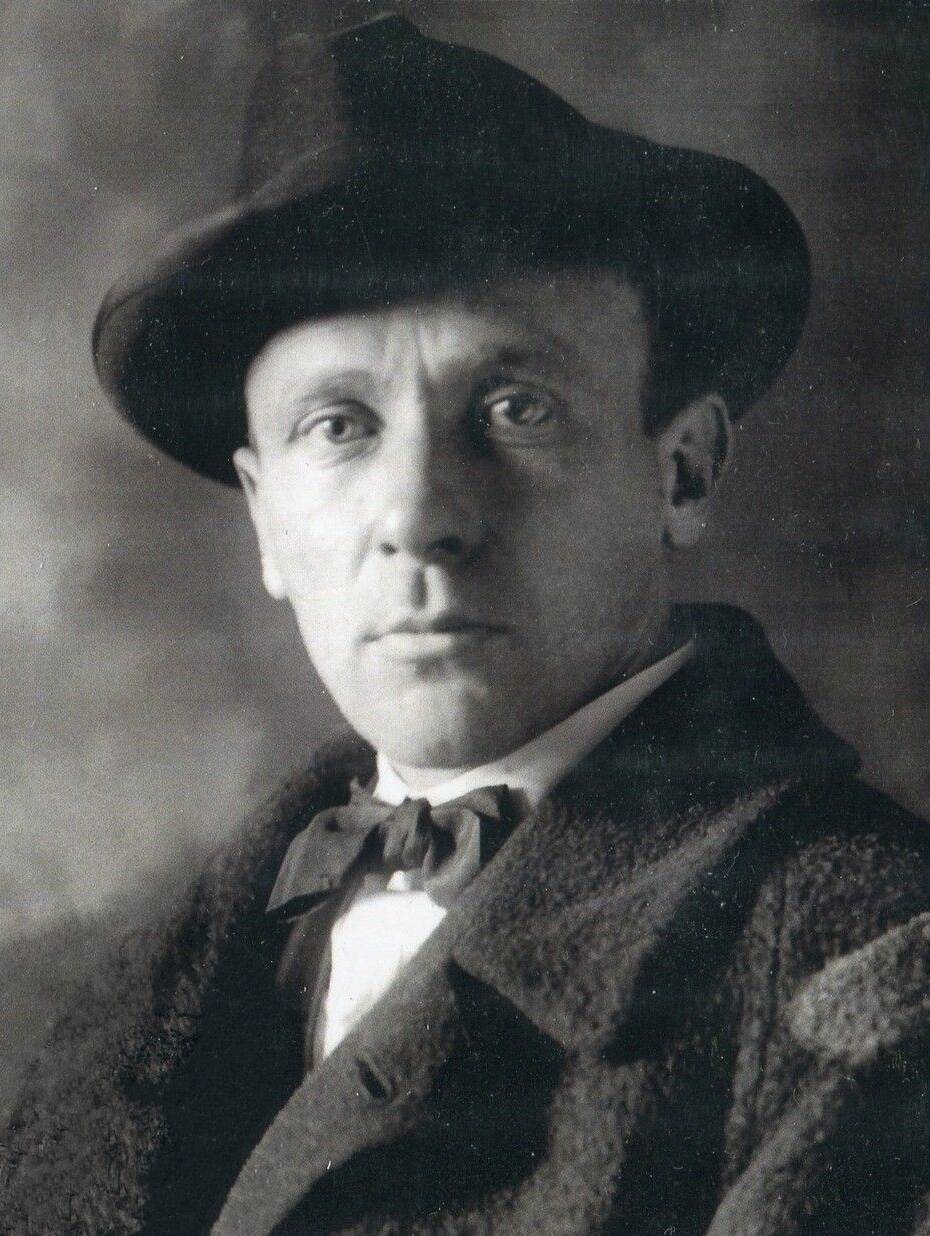
Mikhail Bulgakov. Photographic portrait by Moisei Nappelbaum Wikimedia Commons, Mikhail-Bulgakov.jpg, author: Moisej Nappelbaum, licence: Public domain source
How to compare screen adaptations: fidelity to the plot and fidelity to the themes
Accuracy in retelling the story and artistic quality describe different aspects of an adaptation. Adaptation scholars regard fidelity to the source material as a contentious but useful criterion, provided its meaning is defined in advance. A list of retained scenes reveals how the screenwriter has handled the plot. It says nothing about pacing, the actors’ delivery, the composition of the shots or the meaning these choices create in the new work.
The philosopher of film James Harold distinguishes between narrative and thematic fidelity. The former concerns events, characters and the sequence of the action; the latter preserves the central issues even when the plot is altered. By this measure, Bortko’s version is closer to the novel in narrative terms: the series retains the sequence of chapters and extensive passages of dialogue. Lokshin and Kantor alter the Master’s biography and the causal links between events, but preserve the themes of power over the artist, cowardice, mercy and the freedom of the manuscript. Thematic fidelity does not justify every change, while narrative accuracy alone does not guarantee compelling cinema.
There is also a textual limitation. Bulgakov continued revising the novel until the end of his life, while readers encountered it in different editions: the journal publication of 1966–1967 appeared with cuts imposed by the censors, and the unabridged book edition followed in 1973. The catalogue of the National Electronic Library includes a complete two-volume collection of drafts prepared from the manuscripts. Thus, the phrase “faithful to the book” means fidelity to the accepted printed text, rather than to a single, immutable authorial original.
Four levels of evidence
- Observable detail
- An editing transition, line of dialogue, shot composition or sequence of scenes that can be verified by watching the particular version.
- Production fact
- A date, credit, budget, filming location or technical decision confirmed by an official project listing, a report or a member of the production.
- Reception data
- Television ratings, tickets sold, user scores and awards. Each metric reflects a particular audience and must specify a date, source and unit of measurement.
- Interpretation
- An explanation of Woland's function, the meaning of the ending or the author's intention. Such a judgement belongs to the critic or editorial team and is open to a strong counterargument.
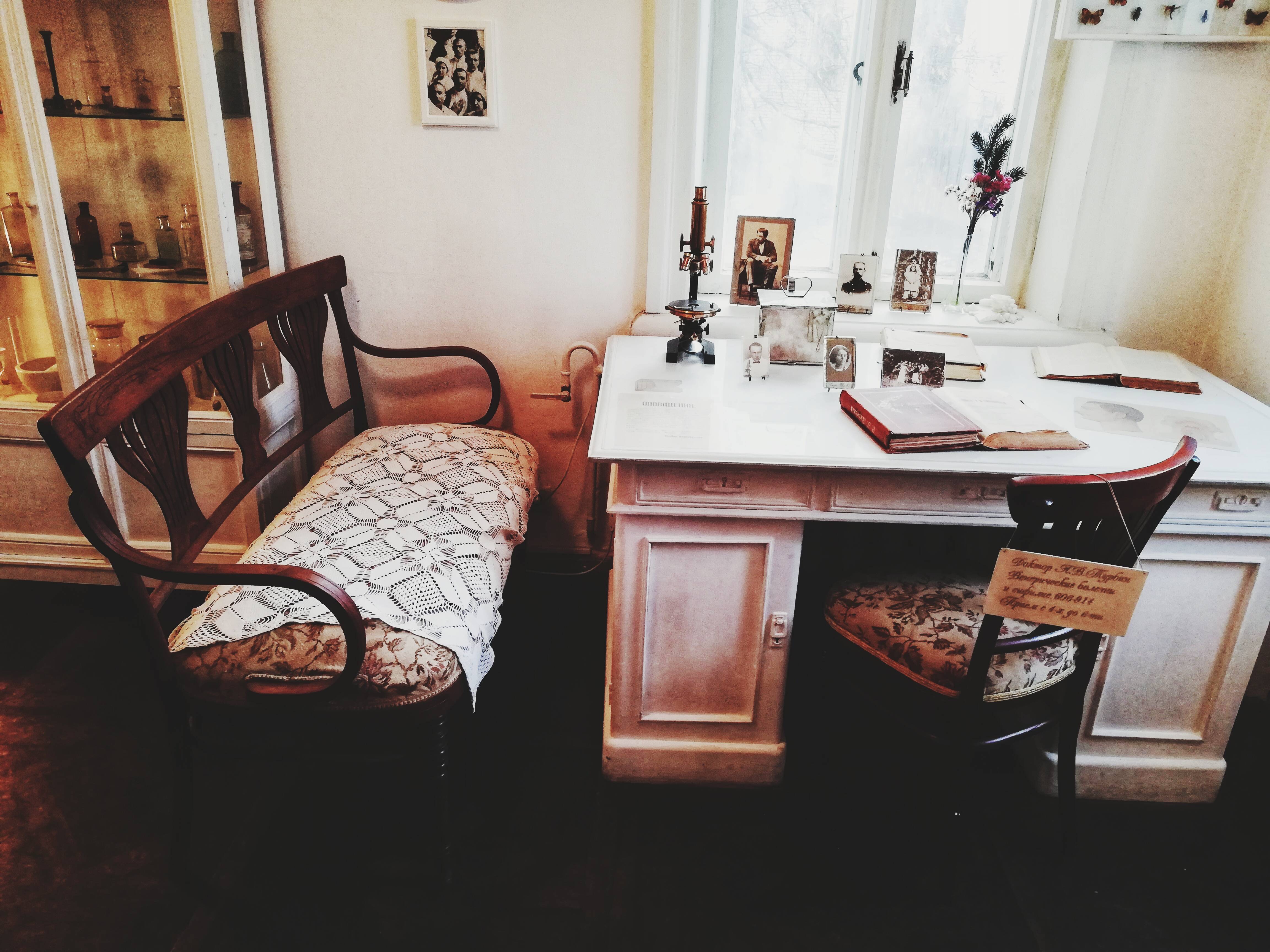
Mikhail Bulgakov's writing desk at the writer's museum in Kyiv Wikimedia Commons, M. A. Bulgakov's Desk.jpg, author: DaVinci14, licence: CC BY-SA 4.0 source, license
What exactly are we comparing?
The comparison covers The Master and Margarita, Bortko’s 2005 television series, and The Master and Margarita, Lokshin’s 157-minute film released in 2024. Bortko’s ten-part series premiered on the Rossiya television channel on 19 December 2005. The director also wrote the screenplay; Valery Myulgaut served as cinematographer, Vladimir Svetozarov as production designer, and Igor Kornelyuk as composer. Each episode runs for about 50 minutes, bringing the complete version to approximately eight hours.
Databases list two different years for Lokshin’s film because they refer to different stages in its history. Kinopoisk dates the production to 2023, the PROFIT film company classifies the project as a 2024 release, and its Russian theatrical run began on 25 January 2024. The screenplay was written by Roman Kantor and Mikhail Lokshin, with Maxim Zhukov as cinematographer, Denis Lishchenko as production designer, and Anna Drubich as composer. This article uses 2024, the year in which the film was released to audiences.
| Criterion | Vladimir Bortko | Mikhail Lokshin |
|---|---|---|
| Format | Ten-part television miniseries | Feature film, 2 hours 37 minutes |
| Premiere | 19 December 2005, Rossiya television channel | 25 January 2024, Russian theatrical release |
| Screenwriting approach | Detailed adherence to the novel's structure and dialogue | Reshaping the novel around the Writer's fate |
| Principal strength | Time, text and ensemble cast | Editing, visual setting and a unified character arc |
The difference in running time affects many directorial and screenwriting decisions. Bortko can retain secondary episodes, develop the Moscow satire in detail, and preserve lengthy dialogue scenes. Lokshin has to connect three narrative worlds over the course of a single evening and bring the protagonist’s story to its conclusion. The series therefore retains more material from the novel, while the film restructures it more freely.
Two adaptation strategies: preserve the text or reshape it
Bortko treats the novel as a finished score, while Lokshin and Kantor rework it for the cinema. Contemporary reviews of the television premiere noted that the series reproduces the novel down to its minor episodes and textual details. The director preserves the familiar sequence of events: the meeting at Patriarch’s Ponds, Yeshua’s interrogation, Ivan’s pursuit, the Master’s appearance, Margarita’s story, the ball and the denouement. The lengthy speeches play almost the same role as they do in the book.
This fidelity gives the series an important advantage. Viewers hear Bulgakov’s prose performed by a large ensemble cast and see characters whom a feature-length adaptation would inevitably have to cut. The pace of television allows time to linger over the literary society’s meetings, the antics of Woland’s retinue and the everyday fear of those living in the city’s communal flats. The series works well as a detailed companion to the novel, although it is no substitute for reading it: intonation, editing and the choice of face through which a character is portrayed all inevitably interpret the text.
Lokshin and Kantor begin with the Writer’s story before he meets Margarita. PROFIT’s official website explicitly describes the film as “a cinematic fantasy” inspired by Bulgakov’s work. Yevgeny Tsyganov’s character is initially portrayed as a celebrated playwright. After his play about Pilate is banned, he is publicly vilified and ostracised by the literary establishment, and begins writing a novel into which he weaves familiar faces and events he has experienced. At the same time, Woland appears in the reality of Moscow, enters into conversation with him and acts within the text he is creating.
This approach allows the screenplay to freely combine motifs from the novel with circumstances from Bulgakov’s life, without presenting the Writer on screen as an exact portrait of the author. The film creates a composite character and turns the writing of the book into dramatic action. Viewers see the events experienced by the Master and how they find their way into the manuscript. In this way, the screenwriters link the banning of the play, love, fantasy and the protagonist’s disintegration.
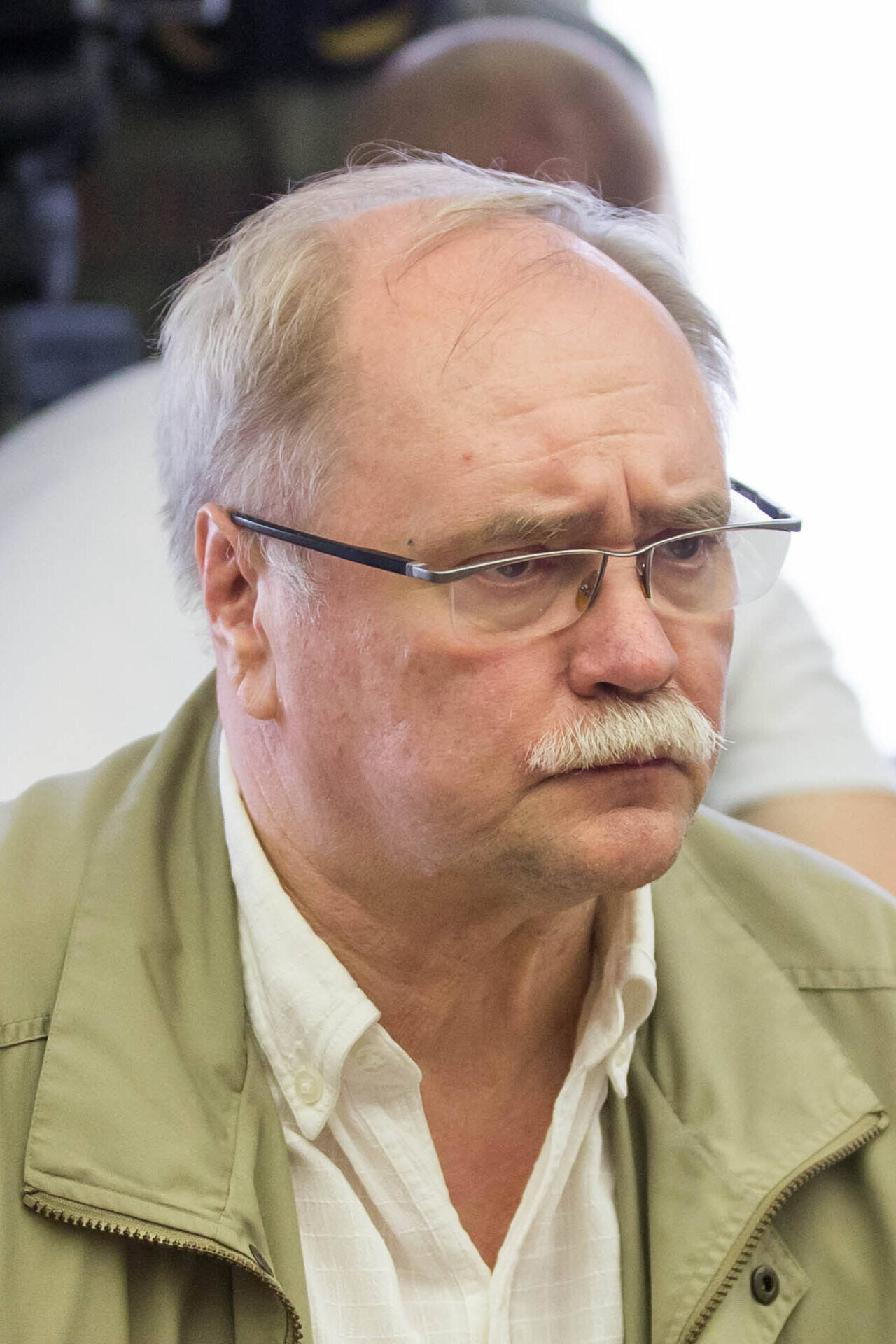
Director Vladimir Bortko, 10 July 2014 Wikimedia Commons, Vladimir Bortko (2014-07-10) (cropped).jpg, author: Federation Council Press Service, licence: CC BY 4.0 source, license
How the narrative’s three worlds are structured
The series divides the action between Moscow, Yershalaim and the mystical realm, while the film makes these three worlds constantly mirror one another. Bortko preserves the novel’s shifts in register. In the Moscow chapters, he blends satire with fear; he stages the Yershalaim scenes as Pilate’s tragedy, while Margarita’s flight and the ball unfold in an overtly fantastical realm. The transitions remain recognisable even to viewers who read the book long ago.
In Lokshin’s film, the boundaries are deliberately porous. Research papers presented at a 2025 conference at the Russian State University for the Humanities identify three levels in the film: the stylised reality of the Writer, the novel he is creating and a fantastical realm where personal experience merges with fiction. The cinematographer, production designer and editors distinguish these layers through colour, architecture, lighting and camera movement, yet recurring faces and situations link them together.
This restructuring is particularly evident in the treatment of Pontius Pilate’s story. Bortko devotes considerable screen time to Yeshua’s interrogation and preserves the verbal duel almost in its entirety; Kirill Lavrov builds his portrayal of the procurator around physical heaviness, pain and suppressed authority, while Sergei Bezrukov plays Yeshua as outwardly fragile yet inwardly serene. Lokshin shortens the Yershalaim section and uses editing to give Pilate greater prominence: the episode and the judgement delivered recur as fragments of memory and text. Writing in Seans magazine, critic Alexei Gusev links this rearrangement to the shift of the narrative centre towards the procurator.
As a result of this compression, Yeshua, Levi Matvei and the gradual development of the Yershalaim narrative receive less screen time in the film. In return, the screenplay draws Pilate and the Writer closer together: both must decide whether to submit to authority and fear. The series develops each storyline separately with greater clarity; the film binds them more closely into a single dramatic structure.
The Master and Margarita: different centres of the story
Bortko presents the couple as already formed in the novel, whereas Lokshin traces in detail the Writer’s transformation into the Master. Alexander Galibin plays a man who has finished his book, endured its hostile reception and abandoned the struggle. His on-screen voice is provided by Sergei Bezrukov, who also plays Yeshua. This production decision creates a direct sonic kinship between the author of the Yershalaim story and its hero, although the novel itself does not require them to be literally identical.
Anna Kovalchuk portrays Margarita as strong-willed, mature and ready to act before the Master can regain faith in his manuscript. The longer running time allows Bortko to preserve her journey from a secret love affair, through her bargain with Azazello, to the ball and her plea for Frida. However, the television version introduces the heroine relatively late: the opening hours belong to Woland, Ivan, the literary establishment and Pilate. The love story is fully developed, but does not shape the series as a whole.
Lokshin gives Evgeny Tsyganov’s character a clearly defined social position at the outset. His protagonist is familiar with success, the theatre and literary circles, and then loses them one by one. Yulia Snigir portrays Margarita as someone who immediately recognises the scale of his inner defeat and does not reduce their relationship to a rescue mission. The film shows more of the couple’s life together and links the manuscript to their shared experience, making love the central axis of the narrative rather than one of three equally important storylines.
Both interpretations are vulnerable to criticism from different angles. Galibin's restrained performance suits the portrayal of a broken man, but some viewers see it as lacking in action; the separate voice creates a greater distance between face and speech. Tsyganov's character has a clear biographical arc, but the screenplay attributes experiences and actions to the Master that Bulgakov's hero never had or undertook. In Lokshin's version, the love story unfolds more coherently, while Kovalchuk is given greater scope to explore the fantastical side of the role.
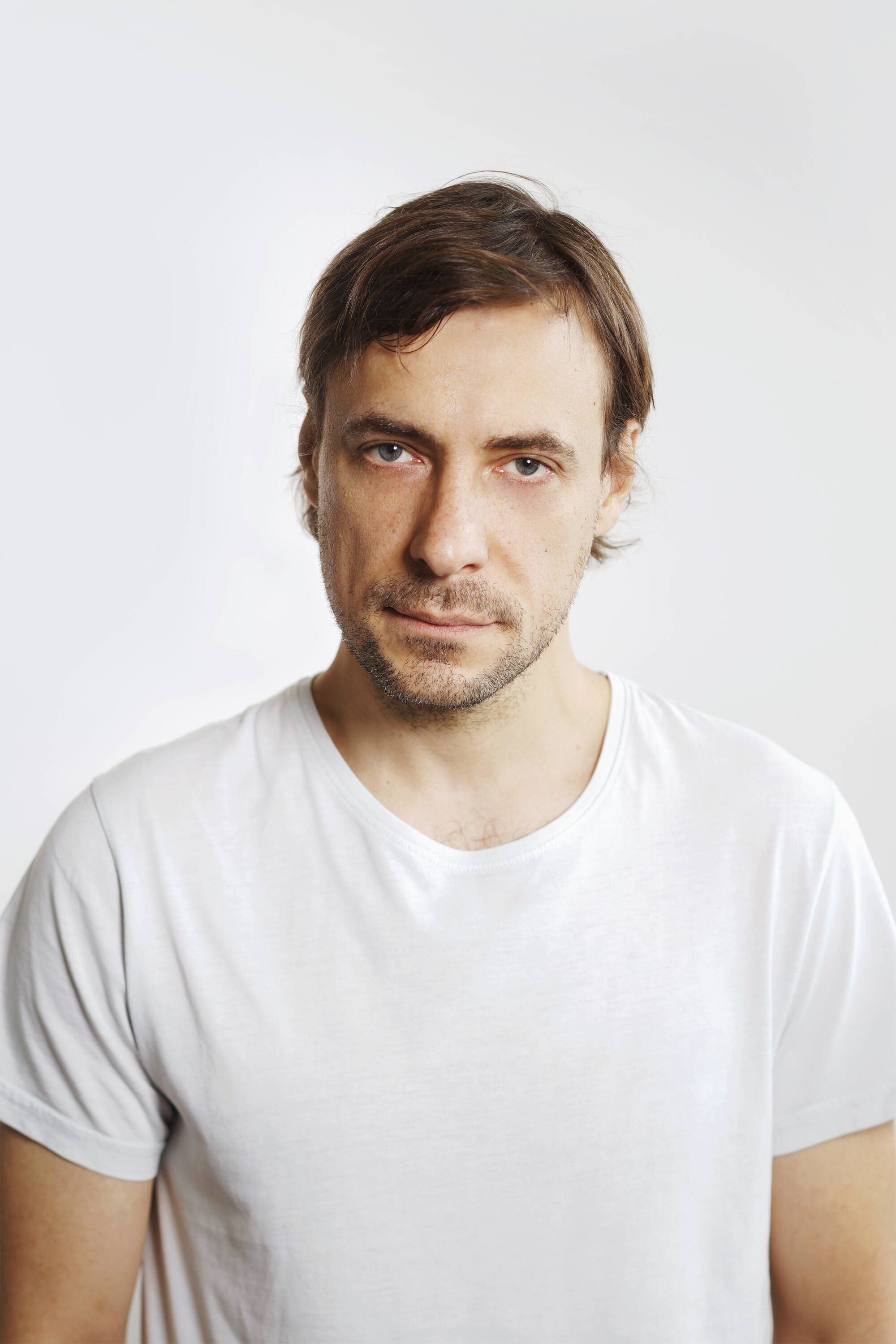
Actor Yevgeny Tsyganov, 8 October 2017 Wikimedia Commons, Tsyganov photo.jpg, author: Sprcrstl, licence: CC BY-SA 4.0 source, license
Woland and his retinue: judge or co-author
Oleg Basilashvili portrays Woland as a cold observer and arbiter, while August Diehl plays him as a mercurial tempter connected to the world the Writer is creating. In the television series, Basilashvili uses sparing gestures and relies on his voice. He rarely raises his tone, remains aloof and looks older than most of those involved in the Moscow drama. Alongside him, Alexander Abdulov turns Koroviev into a theatrical master of ceremonies, Alexander Filippenko portrays a hard-edged Azazello, and Alexander Bashirov provides the voice of Behemoth.
In the film, August Diehl speaks Russian with a noticeable accent, shifts his intonation constantly and throws himself physically into the Writer's scenes. Yuri Kolokolnikov turns Koroviev into a flamboyant master of ceremonies, while Yura Borisov provides the voice of Behemoth the cat. Woland's retinue has less screen time overall, so each appearance is staged as a self-contained spectacle. The editing moves the action swiftly from satire to menace and back again.
The key difference lies in Woland's function. Bortko follows the novel, in which the foreign professor knows how events will unfold before the Muscovites do and tests people through power, fear and money. Lokshin also links Woland to the act of creation: the Writer gives him the traits of a foreigner he has met, while the film leaves room for different interpretations of what is happening. This figure can be seen as an independent supernatural force, a character in the manuscript or a means by which the author passes judgement on the world around him.
This ambiguity makes Diehl central to the film's dramatic structure, but leaves Bulgakov's retinue with less autonomy. In Bortko's series, Behemoth and Koroviev have time to play out a succession of separate episodes; in Lokshin's film, their scenes are subordinated to the Writer's story. The series offers more material for admirers of Moscow satire. The film explores Woland's connection with the manuscript's author in greater depth.

A sign at Patriarch’s Ponds referencing The Master and Margarita. Photo: Dima / Wikimedia Commons, CC BY-SA 3.0. Wikimedia Commons, Patriarch Ponds Sign.JPG, author: Dima, licence: CC BY-SA 3.0 source, license
Moscow and Yershalaim: reconstruction versus fantasy
Bortko recreates a recognisable historical setting, while Lokshin constructs an imagined 1930s metropolis as it might have appeared in a future that never came to pass. The series recreates communal flats, editorial offices, theatre corridors and restaurant life with close attention to everyday detail. At the same time, a significant proportion of the Moscow scenes were filmed in St Petersburg: the creators used suitable architecture and supplemented it with sets.
Lokshin and production designer Denis Lishchenko deliberately enlarge the scale. Their city is filled with construction sites, vast public spaces and architecture in which completed buildings stand alongside unrealised designs from the period. In this Moscow, the Palace of the Soviets exists as a completed landmark dominating the skyline. The film does not present such a city as a documentary reconstruction. The completed Palace of the Soviets and the immense public spaces embody the future promised by the era; beside them, the individual appears defenceless.
Bortko’s Yershalaim differs from the Moscow storyline in its textures and landscapes. The film crew worked in Crimea and Bulgaria, where they used a complex of ancient-style buildings for Herod’s palace; the wide shots of Jerusalem were filmed in Israel. These location settings allow Bortko to construct extended dialogues between Pilate and Yeshua. In Lokshin’s film, the Yershalaim episodes are more compact and rely more heavily on composition, lighting and digital post-production.
In both versions, the directors give Moscow a role of its own. Bortko draws on specific addresses and social habits, because the satire works through recognition. Lokshin portrays the city as a system that is simultaneously building a magnificent future and denying the Writer access to the stage and the press. To maintain a consistent artistic conceit, the director sacrifices the accuracy of individual façades.

A modern 3D reconstruction of the Palace of Soviets project. Creator: Ilya Ilusenko, Public Domain. Wikimedia Commons, Palace Of Soviets 1.JPG, creator: Ilya Ilusenko, licence: Public domain source
Pacing, Visuals and Music
Bortko allows more time for dialogue, while Lokshin conveys connections through editing and imagery. In Bortko’s version, the camera often stays close to an actor as they deliver an extended passage from Bulgakov’s text. In the scenes at Patriarch’s Ponds and in Herod’s palace, tension is created through pauses, shifts between close-ups and vocal intonation. This approach preserves the nuances of meaning in the dialogue, but at times reduces the visuals to an accompaniment to already powerful literary material.
Lokshin, cinematographer Maxim Zhukov, and editors Dmitry Korabelnikov and Dmitry Slobtsov shift scale and setting more rapidly. Flashbacks, recurring motifs, similar shot compositions and abrupt transitions between worlds convey information that the television series spells out. The film demands that viewers pay closer attention to who is narrating each episode and which level of reality it belongs to. This editing compresses three narrative worlds into 157 minutes, although some of the connections become overly explicit.
Igor Kornelyuk’s music for the television series establishes the characters’ themes and links the episodes together. The recurring melodies help maintain cohesion throughout its lengthy running time, while the recognisable main theme also stands on its own, independently of the images. Anna Drubich’s score for the film is more closely attuned to the mounting tension and the scale of its settings. The professional community honoured her with the White Elephant Award for Best Music.
The two productions are separated by almost two decades of technological development. A direct comparison of their computer-generated imagery therefore reveals little about the direction. Margarita’s flight, Behemoth’s transformations and the city panoramas of 2005 were created with a different generation of tools and for television resolution. The makers of the 2024 film designed its imagery for the big screen and used a modern digital production workflow. What matters is how effectively each effect serves its dramatic purpose within its respective adaptation.
Why the Endings Change the Meaning of the Two Versions
Bortko frames the finale as the fulfilment of the novel’s metaphysical law, while Lokshin links the resolution to the final act of writing and the characters’ consciousness. Both adaptations grant the Master and Margarita peace, but offer different answers as to how literally Woland’s on-screen world exists.
Bortko: the Novel’s Complete Cosmology
The television series methodically resolves all three narrative strands. Azazello brings the couple’s earthly story to an end, the Master and Margarita join Woland’s retinue, and the Master releases Pontius Pilate from his centuries-long wait. The house, with its lamp and silence, becomes a distinct form of existence after death. The series accepts the distinction between light and peace as a law of the novel’s world; viewers need not choose between a psychological vision and an objective miracle.
Lokshin: the Manuscript on the Border Between Reality and Vision
The film places the completion of the manuscript in the clinic and links the fantastical episodes more closely to the states of mind of the Writer and Margarita. Writing in Seans, Alexei Gusev interprets the flight and the ball as part of her dying vision, and compares the burning pages in Woland’s hand to Moscow engulfed in flames. Yet the editing does not rule out every other interpretation: the finale can be seen as events from the novel being written, the couple’s reunion after death, or a visual expression of their final wish.
The contrast is particularly striking in the fate of the manuscript. In Bortko’s version, its survival affirms the power of the written word over physical destruction and restores to the Master the text he has already created. In Lokshin’s film, Woland is present during the very act of writing, while fire connects the work, the city and the price of artistic freedom. The television series brings individual plotlines to a close; the film leaves open the question of who ultimately wrote the world it depicts and to whom its final version belongs.

Mikhail Bulgakov’s autograph in a 1937 photograph. Wikimedia Commons, Public Domain. Wikimedia Commons, Mikhail Bulgakov’s Autograph 1937.jpg, creator: Mikhail Bulgakov, licence: Public domain source
Production and Budgets: Why the Figures Cannot Be Compared Directly
Бюджет сериала оценивали в 5–6 миллионов долларов, бюджет фильма — в 1,2 миллиарда рублей, но простое пересчитывание по курсу исказит сравнение. Проекты создавались в разные годы, для разных экранов и с разной структурой расходов. На цену влияли инфляция, техника, продолжительность съёмок, оплата большого состава, объём цифровых эффектов, продвижение и дистрибуция.
«Коммерсантъ» во время телепремьеры писал примерно о 650 тысячах долларов на серию и общей сумме свыше 6 миллионов; Кинопоиск указывает бюджет 5 миллионов долларов. Расхождение следует сохранять как диапазон, а не выбирать удобную цифру. Студия визуальных эффектов «Бегемот» сообщает, что после тестов на 16-миллиметровой плёнке создатели перешли на одну из первых в Санкт-Петербурге HD-камер Sony CineAlta. Производство распределили между несколькими командами.
The project was announced in 2018, and filming of Lokshin's version began in the summer of 2021. It was produced by Mars Media, PROFIT and Amedia. The reported budget of 1.2 billion roubles is corroborated by industry publications and the project's official listing. Box-office receipts exceeded the stated production costs, but cinema takings should not be regarded as the producers' net profit: the revenue is shared among the parties involved in distribution, and such a comparison does not account for advertising and distribution expenses.
The size of the budget helps to explain the scale of the sets and the digital city, but does not in itself determine the artistic quality. The series spreads its resources across a lengthy running time, a large ensemble cast and numerous episodes. The film focuses on a complex visual environment, expansive spaces and post-production.
How many viewers watched each version
Bortko’s television ratings and the tickets sold for Lokshin’s film measure different actions, so the claim of ‘22 million versus 5 million’ cannot be used as an exact comparison. Under Mediascope’s current definitions, the rating indicates the percentage of the surveyed audience who watched the programme, while the audience share is the percentage of the total television audience watching at that time. Box-office statistics record ticket purchases, and one person may pay for several seats or attend more than once.
The Rossiya channel broadcast the first two episodes of Bortko’s series on the evening of 19 December 2005. According to preliminary TNS Gallup Media data cited by Kommersant, the Moscow rating approached 30 per cent, while the audience share was close to 60 per cent; for viewers aged four and over, the newspaper reported 26 per cent and just over 52 per cent respectively. The figures among adults were higher. This was a record audience reach for a specific broadcast, not the number of unique viewers across the entire series.
The episodes were broadcast in pairs, with the first episode shown without advertising and no repeat broadcast during the day or the following morning. These conditions concentrated the audience in front of their television sets at the scheduled time. Viewing figures varied for subsequent broadcasts, and no reliable publicly available count exists of unique viewers who watched at least three episodes or all ten. Nor can DVD viewings, repeat broadcasts, illegal copies and subsequent online views be added together without double-counting.
Different statistics apply to the film. According to the final data from the Cinema Fund’s Unified Federal Automated Information System, current as of 1 September 2026, its Russian theatrical release grossed 2,330,796,150 roubles from 5,581,453 tickets sold. For the first week, from 25 to 31 January 2024, the official report recorded 1,399,238 admissions, box-office takings of 561,428,213 roubles and 56,094 screenings. The average attendance was 25 people per screening.
Bortko’s series drew an exceptionally large simultaneous television audience and became a major event in linear broadcasting. Lokshin’s film sold 5.58 million tickets, representing paid admissions. These figures describe popularity within different distribution models and cannot be combined into a single league table.

Watching television at home. Context image: FailedImitator, CC BY-SA 2.0. Openverse, Flickr, 365.060 — Watching TV, creator: FailedImitator, licence: BY-SA 2.0 source, license
What the ratings, reviews and awards reveal
User ratings favour Bortko’s series, while the 2025 professional awards showed particular acclaim for Lokshin’s film. As of 1 September 2026, the miniseries has a Kinopoisk rating of 8.2 based on 425,560 ratings, while the film has 7.6 based on 549,392 ratings. The site also lists their IMDb ratings: 7.5 from approximately 5,300 votes for the first adaptation and 7.1 from approximately 6,700 for the second.
The gap cannot be regarded as an objective resolution of the debate. Users cast their votes in different years, having encountered the works in different formats and at different stages in the platforms’ development. Viewers of the series may have been rating a familiar text, a cherished television memory and twenty years of repeat viewing. The film received more ratings over a shorter period, while its release was accompanied by intense public debate. The rating reflects the views of a self-selecting sample, rather than a representative survey of all viewers.
Professional critics likewise reached no single conclusion. The series was praised for the scale of its production, its ensemble cast and its fidelity to the novel, but criticised for being overly illustrative: faithfully reproducing literary scenes does not in itself create an independent screen language. Writers for the journal Iskusstvo Kino explored this criticism in detail. Bortko nevertheless won a TEFI award for directing in 2006, while the restored version remains available on the Smotrim platform.
Reviews of the film focused more often on its narrative architecture. Writing in Seans, Alexei Gusev praised the way the novel had been reassembled through editing, but saw a downside in its excessive rationality and the lack of physical space within the frame. The St Petersburg Theatre Journal, by contrast, regarded the restructuring of its compositional labyrinth as Kantor and Lokshin's greatest achievement. Both assessments converge on one observation: the film deliberately creates a structure of its own rather than an abridged copy of the television series.
The awards season cemented the film's professional acclaim. In 2025, the White Elephant Awards named The Master and Margarita Best Feature Film and separately honoured its screenplay, August Diehl, Denis Lishchenko and Anna Drubich's music; the film's production and theatrical release shared the Event of the Year title with the Russian actors in Anora. At the 38th Nika Awards, the film received seven prizes, including Best Film, both leading acting awards, and awards for cinematography, production design, costume design and sound. These prizes reflect the judgement of the professional community, but do not oblige viewers to favour one aesthetic approach over another.

Yulia Snigir in front of the Kinotavr 2012 press wall. Photo: Alexey Yushenkov, CC BY-SA 3.0. Wikimedia Commons, Yulia Snigir.jpg, creator: Alexey Yushenkov, licence: CC BY-SA 3.0 source, license
The strengths and weaknesses of each adaptation
The choice depends on what you expect the adaptation to achieve. Bortko's series has the advantage in its completeness, its preservation of the dialogue and the time it gives to supporting characters. Its Pilate, Woland and Moscow ensemble are developed without the severe cuts imposed by a feature-film running time. It is also convenient to watch episode by episode, returning to individual chapters of the novel.
This level of detail also slows the series down. At times, its word-for-word fidelity weakens its own cinematic vision, while the lengthy dialogues demand the kind of attention one would usually give to a book or a play. The visual effects and some of the sets visibly bear the hallmarks of mid-2000s television production. This period limitation does not detract from the actors’ work, but it does affect how the fantastical scenes are perceived today.
Lokshin’s film is stronger in the coherence of its creative world. The Writer’s story links love, persecution, the manuscript and Woland’s arrival, while the cinematography and urban architecture reinforce this thread. The film can be watched without first becoming acquainted with all ten episodes, and its 157 minutes form a complete dramatic arc.
This loose adaptation will draw objections from viewers expecting the novel’s exact sequence: the film adds new events, gives the protagonist a composite biography and shifts the emphasis. Yershalaim and the retinue’s satirical adventures receive less screen time. The screenplay turns some of the novel’s ambiguities into clear psychological connections, and admirers of Bulgakov’s deliberate reticence may find this clarity excessive.
| If you value | Recommended version | Reason |
|---|---|---|
| Detail and fidelity to the novel’s sequence | Bortko’s series | Around eight hours and the preservation of secondary storylines |
| A distinctive cinematic language | Lokshin’s film | Narrative restructuring through editing and a unified arc for the Writer |
| A large ensemble cast | Bortko’s series | More screen time for Pilate, the retinue and the Moscow characters |
| Visual scale and an alternative Moscow | Lokshin’s film | Architecture, cinematography and modern visual effects |
| Watching in instalments | Bortko’s series | The episodic structure provides natural stopping points |
| A complete experience in a single evening | Lokshin’s film | Feature-length form and tightly paced drama |

Oleg Basilashvili. Wikimedia Commons, CC BY 4.0. Wikimedia Commons, Oleg Basilashvili.jpg, author: Unknown authorUnknown author, licence: CC BY 4.0 source, license
How to watch both versions for a meaningful comparison
It is best to choose the viewing order according to your aim. If you would first like to judge the film as a work in its own right, begin with Lokshin’s version, then see which storylines and dialogues Bortko develops. If you are analysing the adaptation from the perspective of the source novel, the series will serve as a detailed map of the printed text, after which the feature film will reveal its deliberate cuts and new causal connections.
A direct comparison can usefully focus on three pivotal scenes: the meeting at Patriarch’s Ponds, Pilate’s interrogation of Yeshua and the finale featuring the Master and Margarita. For each pair of scenes, note the narrator, how much of the original text has been retained, and the device that carries the central meaning — dialogue, an actor’s pause, editing or the arrangement of space. Watching in this way reveals the consequences of the directors’ choices: what the new form loses, what it clarifies and what image of the character it creates. A simple list of omitted episodes cannot explain this.
The Master and Margarita: Bortko or Lokshin — Which Is Better?
Bortko gives a more precise answer to the question ‘How can the novel be adapted for television?’, while Lokshin answers ‘How can it be retold through the medium of cinema?’. The television series preserves the breadth of the book, trusts its language and gives the actors time to inhabit extended scenes. The film cuts, rearranges and adds material, but in doing so it links the Master’s fate to the construction of the fictional world and makes that connection the central plot.
Our editorial verdict can be expressed without declaring an outright winner. Bortko’s version is stronger for a first detailed return to the novel and an exploration of its characters. Lokshin’s film is more interesting when considering an adaptation as a work in its own right. Watching both in sequence reveals more than searching for a winner. Just over eighteen years passed between the series premiere on 19 December 2005 and the film’s release on 25 January 2024. During that time, screen language, technology, distribution methods and expectations of classic literary adaptations all changed.
Comparison with the novel is essential, but the book is not a ready-made brief for the director. Bortko shows how the scope of television can preserve the source material’s complex polyphony. Lokshin tests whether the themes of love, cowardice, power and the author’s freedom can survive a radical restructuring of the composition. The choice of the better version therefore depends on which criterion the viewer considers most important.
After such an analysis, it is fascinating to see how the literary and cinematic images relate to the real city. To explore this, the bureau offers a themed The Master and Margarita tour. It continues the exploration of the novel through its addresses, the city’s history and details of the local setting.
Sources
- Watch: The Master and Margarita, the restored version of the TV series
- Watch: Sergei Bezrukov’s biography and his voice performance as the Master
- Kommersant: TNS Gallup Media data on the TV series premiere
- Kommersant: viewing trends for The Master and Margarita television broadcast
- Kommersant: audience figures for the 2005 television premiere
- Rossiyskaya Gazeta: the production of Vladimir Bortko’s television series
- Begemot Studio: filming equipment and visual effects used in the television series
- Iskusstvo Kino: a critique of Vladimir Bortko’s TV series
- PROFIT Film Company: official film profile and awards
- KinoPoisk: the 2005 miniseries The Master and Margarita
- KinoPoisk: Mikhail Lokshin’s film The Master and Margarita
- IMDb: The Master and Margarita, 2005 miniseries
- IMDb: The Master and Margarita, a film by Mikhail Lokshin
- Cinema Fund’s UAIS: final Russian box-office figures
- Cinema Fund: official report for 25–31 January 2024
- Kommersant: the film’s billion-plus box-office takings and production background
- Kommersant: the film’s box-office takings exceeded two billion roubles
- Film Distributor’s Bulletin: the film’s budget and financial support
- Seance: an analysis of Mikhail Lokshin’s film
- Petersburg Theatre Journal: the film’s narrative structure
- Russian State University for the Humanities: abstracts from the 2025 conference ‘Reader, Viewer, Listener’
- Film Distributor’s Bulletin: winners of the 2025 White Elephant Awards
- Rossiyskaya Gazeta: seven Nika Awards for The Master and Margarita
- Mediascope: definitions of rating, audience share, audience and reach
- Oxford Academic: Adaptation and Fidelity
- The British Journal of Aesthetics: The Value of Fidelity in Adaptation
- Great Russian Encyclopaedia: Mikhail Afanasyevich Bulgakov
- National Electronic Library: the complete collection of drafts of The Master and Margarita
We took a tour of Taganka designed for 12-year-old children. It was an excellent programme. We covered a great deal of ground and learnt so much. We discovered the story of Dryanaya Street and discussed the Vladimir Highway, the surrounding monasteries and churches, and the Old Believers. We now know where Korovin was born, where Stanislavsky was born and raised, where the Morozov merchant children lived, and why Arseny Morozov was considered such an outrageous figure in his day. We also discussed Solzhenitsyn, discovered where Stalin Avenue was supposed to be built, saw the bunker, walked to the Russian metochion of the Mount Athos Monastery, and learnt why the Illuzion cinema made Taganka famous. Of course, no tour would have been complete without Vysotsky and Lyubimov. We also touched briefly on Taganka Prison, although naturally we did not go there. All in all, it was an exceptionally rich and informative tour! Our guide Alexander was superb!
Our thanks to our guide Alexander for a magnificent sightseeing tour. Alexander’s love for Moscow and its history, his wide-ranging knowledge, elegant and engaging delivery, and personal charm make the tour not merely interesting and informative, but truly delightful! Thank you, Alexander! Tatiana and Tatiana, St Petersburg
On July 18th, we participated in the "Soul of Moscow" group tour led by Alexander. Kitay-gorod and its surroundings revealed a new side to us, and everyone thoroughly enjoyed it. Some of us began intensively studying related materials to broaden our horizons. We'll be back, and we highly recommend it! You won't regret it.
Good afternoon, on June 23rd we had a tour called " The Soul of Moscow ," led by Alexander. He's a very pleasant young man. We visited such lovely courtyards and alleys with him that we never even knew existed, and we learned so much. We really enjoyed everything, and we hope to continue our acquaintance. Alexander! Thank you! We had a great time with you, and we thoroughly enjoyed it. See you there!
This isn't my first time with Radius. This time, I took the Moscow metro . The goal was not only to admire the underground palaces but also to learn how to navigate the metro. As a resident of a region without a metro, I was a bit apprehensive and didn't understand how to navigate the metro. Of course, the internet helps, but live communication is much better. Tour guide Yulia handled this task perfectly. The information was accessible and interesting, the presentation was calm, and the communication style was very friendly. Thank you very much for the tour and the practical experience.
Good afternoon! I gave the "Soul of Moscow" tour to some of the capital's guests. We were thrilled to hear our guide, Anton. It was so informative and engaging, and very warm. To say we were absolutely delighted is an understatement. It turned out to be a truly family-friendly excursion. We learned so many interesting facts. The material was presented professionally, all our questions were answered, and we saw so much. It was simply WOW! Thank you so much, Anton, he's the best!!!!! From now on, I'll only come to you, the Radius team. I highly recommend it. I promise we'll see each other again soon on other tours.
Overall, the tour left a positive impression! Thanks to Alexander for the walk through the courtyards and atmospheric spots of Kitay-Gorod; we certainly wouldn't have done it on our own. The tour was comfortable, and the guide spoke confidently and calmly. One thing we personally missed: we would have liked more of the historical part, relating to ancient Moscow and the history of Kitay-Gorod. There were quite a few stories about the Soviet period and the bar scene, but for our group, this wasn't particularly relevant. We think the program could be a little more tailored to the age and interests of the group. It would also have been interesting to add more historical facts, monuments, and details about old Moscow and the area itself. That said, the tour was still interesting, and some places and churches were truly memorable. These aren't really "cons," but rather suggestions for an even more comprehensive program.
Hello! We had a corporate group of 10 people. Our guide was Anton, and we had a tour of Bulgakov. I would like to point out the excellent organization; everything went smoothly. The managers were very accommodating to our changes in the number of participants. The bus was very comfortable. Anton is a super-engaged and motivated guide. He lives this history and is delighted to share his knowledge and create an unforgettable experience. Everything went well. I highly recommend it!
Thank you for a fascinating tour! It gave me so much food for thought to explore! Note: Review of the "Zamoskvorechye" tour with guide Maria.
I'd like to express my gratitude on behalf of our team! Thank you for keeping to our scheduled schedule despite our lack of organization. Our colleagues appreciated your preparation for the tour! It was informative. Note: Review of the "Modern Residential Complexes, Factory Past, and Avant-Garde" tour of the ZILART residential complex with guide Maria. Maria prepared and conducted a customized tour for employees of the Samolet Group of Companies development company.
Thank you! You have great talent. Good luck! ☺️ You're a wonderful guide! Thank you again! Note: This is a review of the corporate tour "The Heart of the Capital" with guide Maria.
Thank you for a wonderful day today!!)) Note: review of the excursion "The Soul of Moscow" with guide Maria
On behalf of the whole family, I want to thank you for a very informative and interesting tour! Note: This is a review of the "Palace Dungeons" tour with guide Maria.
Good afternoon! I'd like to express my gratitude and that of my guide for organizing the tour! We were very pleased. We'd like to do it again in October, but on a different route — ZIL. Note: This refers to the tour for Samolet Group developers, led by guide Maria.
Thanks to Alexander for the bar tour of Baumanka ! It was fun, exciting, and we discovered so many new places! Awesome! May we reach new heights!
Good afternoon! I was on a tour of Sukharevskaya Square — we went all the way to Tsvetnoy Boulevard. I didn't expect it to be so interesting! For those wondering whether to go — go for it! It truly became one of my most memorable summer memories!
Anastasia, good morning! Thank you and Masha for yesterday! The speakers are happy. The connection through the headphones was often lost, especially at the checkpoint, but that's just our current situation. You could hear if you were standing close, no more than 1.5 meters away. Colleagues have already asked for your contact information. I'd be happy to share it and look forward to another opportunity to work with you. Special thanks to the Director for the Bureau . Note: " Heart of the Capital " tour for participants of the 2025 Moscow Oncology Forum. Guides: Anastasia and Maria.
We'd like to thank Anton and Alexander for leading the tour! It was fascinating to hear how the Krasnaya Presnya district developed and how Prokhorov's influence on our city's development. It was a pleasant immersion into a quiet, previously unexplored area!
Good afternoon, thank you so much, Anastasia. The " Uncle Gilyai " tour was fantastic. Even though we're Muscovites and know a lot about Moscow, the experience was amazing, so much new and interesting happened. We'll definitely be back.
Thank you for the " Heart of Moscow " and " Khamovniki " tours. Anton, a knowledgeable and passionate Moscow guide, gave me the tour. He's a great storyteller, intelligent, well-read, and captivating. You've truly opened up my Moscow to me! I'll definitely be back next summer to explore Moscow with you. I'll recommend your wonderful tour program to all my friends!
Excursions with the Radius travel agency are always a positive experience if you choose them. We planned a tour of Zamoskvorechye on our next visit. We've worked with our guide, Anton, before. We'll definitely recommend him to everyone we know. The tour is informative, not overloaded with dates, and the information is comprehensive yet easy to understand, as it's presented in a light, narrative manner, not like a history textbook, dry and academic. Thank you for this approach. We'll definitely use the Radius agency again on our next visit to Moscow.
Thank you so much for the tour of Zamoskvorechye . Despite the weather, it was very interesting and informative! Note: this refers to the tour with guide Anton.
A huge thank you to Anastasia. We had a fantastic tour of the Patriki district. We learned so much. Anastasia is a true master of her craft. The tour was captivating, not at all boring, lively and interesting. Everyone was delighted. We were full of new impressions. I definitely recommend it. You won't be disappointed!
We explored the Soul of Moscow with my family and Radius on my birthday. Everyone thoroughly enjoyed the walk! Anton shared so many interesting facts about the capital and its history, taking us into spiritual depths no one else had even suspected. Most of us were either born or longtime Moscow residents who spent a lot of time walking around. It was educational, heartwarming, and unforgettable. 🙂 Overall, this wasn't my first time walking around Moscow with Anton, and each time was a real adventure!