Moscow’s horse-drawn trams continued carrying passengers after electric trams appeared in 1899: the last horse-drawn services disappeared only at the turn of 1911–1912. This delay cannot be explained simply by residents being accustomed to travelling slowly. The capital already had an extensive horse-drawn tram network with different owners, carriages and depots; replacing it meant buying out the lines, rebuilding the infrastructure and supplying the new routes with electricity.
What network had Moscow developed by the end of the 19th century?
By the time electric trams appeared, horse-drawn trams were already a form of mass urban transport. The first trial line opened in 1872 for the Polytechnic Exhibition, linking the city centre with Smolensky Station, now Belorussky Station. According to the Moscow Transport Museum, the single-track line extended for 4.5 kilometres and had nine passing loops. These sections allowed trams travelling in opposite directions to pass one another.
The 1872 exhibition route, according to Moscow Transport Museum, was served by ten double-deck carriages purchased from the Starbuck works in England. The open upper decks were known as imperials and were reached by steep spiral staircases. These ten carriages served only the exhibition line, whereas just a few years later the permanent undertaking was operating seven routes.
Miussky Depot was built in 1874 for the expanding network. A historical and cultural heritage assessment of the complex on Lesnaya Street lists its original facilities: a workshop, stabling for 114 horses, a shed for 100 carriages, stores and a barracks. By 1875, more than 70 double-deck carriages were operating on seven lines; by 1891, 1,539 horses were employed in running the network. These figures refer to different years and should not be combined into a single ‘fleet’: they show how quickly a temporary venture became a permanent operation.
Two networks and a single transfer ticket
Following the exhibition trial, Moscow’s municipal administration signed an agreement with Count Alexey Uvarov for a permanent network. The First Horse Railway Company, founded in 1875, had 27 versts of track, 82 carriages and three depot-and-stable complexes by the end of 1876. These figures, cited in materials for the All-Russian Olympiad for School Students, matter because they show the scale of an operating business: the future electric tram system would have to replace a transport service that already had routes, buildings and staff.
In 1883, the City Duma discussed gaps in the first network: it barely served Zamoskvorechye and took little account of Moscow’s radial and ring layout. On 15 March, councillors approved engineer A. N. Gorchakov’s proposal to establish a second undertaking. According to Moscow Transport Museum, Gorchakov and the Belgian banker R. Cumont founded a joint-stock company for this purpose in 1885. The two prospective owners thus acquired their own routes and operating infrastructure, which could not be merged by a single directive.

Boarding a horse-drawn tram outside Ryazansky Station in Moscow, 25 March 1902. Wikimedia Commons, Ryazansky voksal tram March 1902.jpg, author: mos.ru / Moscow Main Archive Directorate, licence: CC BY 4.0 source, license
The Belgian Company’s network began operating in 1885. Its founders laid lines along routes missing from the original company’s network, including the ring streets. By 1891, the undertaking had 43 versts of track, compared with the First Company’s 45 versts, according to calculations by G. A. Golts and S. A. Tarkhov. Their figures reveal two similarly sized parts of the future system, rather than a small private line alongside a large city railway.
The Moscow Transport Museum also describes the second company’s carriages. Émile Cambier devised a covered single-deck design with separate entrances to compartments for different classes; production was established at the Bellino-Fenderich works in Odessa. From May 1885, open summer and enclosed winter models also arrived in Moscow from Belgium and Odessa. The differences went beyond appearance: carriage design determined how passengers boarded, while seasonal variants required separate fleets of rolling stock.
In 1891, the companies agreed to operate jointly. They reorganised their services into 25 routes, laid connecting sections of track and introduced a single transfer ticket. This made it easier for passengers to continue their journeys after changing trams; the owners retained their rights to the lines and agreed on how to share the revenue. This early attempt at integration shows why ownership later had to be resolved before full electrification: a shared timetable did not make two undertakings into one.
On the earliest routes, travel conditions varied by class. A report published when the horse-drawn tram service opened, quoted by the research library of Petersburg Transport University, described carriages for forty people: the open upper deck cost five kopecks, while the enclosed lower deck cost ten. These fares applied to journeys in 1872; it would be a mistake to assume they remained the same throughout the following decades. They do, however, explain why a single carriage could offer passengers two different travel experiences.
What happened in 1899, and why did it not mean the end of horse-drawn trams?
Moscow’s first electric tram entered service in 1899, on a route linking Butyrskaya Zastava with Petrovsky Park via Maslovka. According to Istorik magazine, the ceremonial opening took place on 6 April, with regular services beginning on 7 April, both dates in the New Style calendar. Historical accounts also give 25 March — the date of the same ceremony in the Old Style calendar.

One of Moscow’s first electric trams, car No. 19, outside Butyrsky Depot. The photograph was taken in 1917; these cars entered service in 1899. Wikimedia Commons, Launch of Moscow’s first electric tram.jpg, author: Unknown authorUnknown author, licence: Public domain source
The Moscow Transport Museum notes that horse-drawn and electric trams operated side by side in Moscow for more than ten years and initially competed with one another. The museum’s account of another exhibit puts the horse-drawn tram network at around 25 routes and almost 100 kilometres by the beginning of the 20th century. These figures describe the entire operating network at the turn of the century, rather than the length of the first electric line; the comparison shows the scale of the conversion that lay ahead.
The first electric tram took over part of an existing line
The 1899 route followed a section of the former horse-drawn tramway. According to a historical and cultural heritage assessment of Butyrsky Depot, the First Company had proposed changing the form of traction as early as 1895. Construction of premises for the new transport began in Bashilovka in June 1898. The same assessment states that construction work on the Butyrskaya Zastava–Petrovsky Park section was complete by the end of January 1899, and trial runs began in February. Converting an existing route to electric traction required specific preparation of both track and depot.
A masonry depot with a shed for 30 cars and a machinery room was built on Nizhnyaya Maslovka for the new transport. According to the city’s account, just five trams were used for the initial services: the line was considered suburban. The availability of a depot, traction power and prepared track explains why the service began here, rather than simultaneously on all the central streets.
Figures published in Istorik magazine convey the scale of this first service: Falkenried cars ran from eight in the morning until eight in the evening at intervals of roughly fourteen minutes, and a ticket cost six kopecks. This was the timetable for one particular route in 1899, rather than a schedule for all the lines that followed. Even a successful service running at those intervals could not yet carry the passengers of a network comprising dozens of existing routes.
Opening the electric section did not free up enough carriages for other streets. Historian I. I. Serzhenko quotes a letter from the First Company’s board to Mayor Vladimir Golitsyn: after converting part of the line, the company intended to transfer the released carriages to existing routes, but demand there had grown; the letter mentioned a need for another 200–250 horses and a new horse-tram depot. This was the operator’s own estimate, rather than evidence of a completed purchase. The document shows why horse-drawn trams could remain in service in the year electric trams appeared: passengers on neighbouring routes still needed them.
How did horse traction limit services?
Moscow’s horse-drawn trams depended on the strength of the team. Rails reduced resistance to movement, but the horses still had to pull a carriage full of passengers, and extra help was needed on inclines. The postilions described by Vladimir Gilyarovsky added horses before steep sections and returned the team to its usual size on level ground. This was a labour-intensive part of running the service, rather than merely a colourful detail of city life.
Steam traction did not become a general solution for the city centre. An in-house publication of the Moscow Metro describes suburban steam-tram lines where a locomotive hauled horse-tram carriages, citing smoke as the reason they could not be introduced on city streets. The issue went beyond a contest of speeds: the authorities were seeking a form of traction suitable for a large transport system.
Single-track running also limited capacity, even when the horses had enough strength. Moscow’s first horse-drawn tramway had nine passing loops over 4.5 kilometres: an oncoming carriage had to be allowed through at a designated point. An article from the Moscow Transport Museum, published by Vedomosti, identifies delays while waiting for another tram to pass as one of the drawbacks. It was possible to add horses for a climb; eliminating waits for oncoming traffic required changes to the way services were organised.

A horse-drawn tram carrying passengers on Pokrovka. In the background is the Church of the Dormition of the Most Holy Mother of God. Late 19th century. Wikimedia Commons, History of trams in Moscow 06.jpg, author: Moscow Main Archive Directorate, licence: CC BY 4.0 source, license
Behind the familiar figure of the driver stood a whole range of occupations. City accounts of the horse-drawn tramways mention conductors, ticket inspectors, station supervisors, grooms and veterinary surgeons. The horses needed not only stables but also constant care at the depots. The transition to electricity changed both costs and work: as horse operations declined, demand grew for electricians, carriage-workshop foremen and substation staff. This last point is an inference from how the two systems worked, rather than a tally of specific redundancies or new hires.
The Belgian Company also tried another form of mechanical traction. In 1886, a steam tram linked Butyrskaya Zastava with Petrovsko-Razumovskoye; in 1887, another line was laid from Kaluzhskaya Zastava to the Sparrow Hills. The disappearance of horse-drawn trams should therefore not be portrayed as a simple choice between the horse and the electric motor: the city had already tried steam locomotives on suburban routes. Smoke and sparks remained a serious obstacle on crowded streets; outside the centre, this form of transport survived longer.
The Moscow Transport Museum notes another detail: the small locomotive was enclosed in a rectangular metal casing to avoid frightening horses in the streets.
Why did separate ownership slow the integration of routes?
Some tracks remained in the hands of the privately owned Belgian Horse Railway Company, while by 1911 most new electric lines belonged to the municipal administration. According to research by I. I. Serzhenko, the private company retained services between the centre and several city gates, the approaches to three railway stations and the tracks along the Garden Ring. The city executive board could not rebuild these sections without an agreement with the owner or a buyout.
For passengers, the boundary between owners was almost invisible on the map, but made itself felt when changing trams. The executive board could not unilaterally change the traction system or fares on another owner's tracks, or incorporate them into an overall operating plan. The published report on the work of the Moscow City Duma for 1909–1912 specifically discusses the inconvenience caused by the separate operation of the private horse tram and municipal electric networks, including changes between services and inconsistent fares. This is the executive board's view of its own tasks, rather than an independent assessment of all parties to the dispute.
The unified timetable introduced in 1891 did not end the legal separation between the companies. Research by Golts and Tarkhov dates the transfer of the First Company's assets to the municipality to 1901; the Belgian Company's share remained in its ownership. Thus, by 1911, predominantly municipal electric routes coexisted with private horse tram lines. This provides an important part of the answer to the article's question: passenger demand across the network did not give the executive board the right to convert another owner's tracks.
In 1901, after taking over the First Company's lines, the municipality began planning electric routes. A 1908 guidebook to Moscow lists municipal electric trams alongside horse trams and notes that the project included new tracks as well as the conversion of existing ones. The guidebook captures a transitional stage: electric routes operated alongside horse tram lines.
Why the buyout took years
In March 1900, the Moscow City Duma resolved to develop the city's tramways as a municipal enterprise. According to Serzhenko's research, the First Company's network passed to the city in September 1901 on condition that annual payments of 485,000 roubles would continue until the concession expired in 1918. Even a successful buyout meant long-term financial obligations for the city. Separate negotiations were needed with the second owner, whose tramway infrastructure remained in private hands for another decade.

A tram outside the Moscow City Duma building on Voskresenskaya Square. Moscow, 1913. Wikimedia Commons, 3097218 A. A. Gubarev — Voskresenskaya Square. Moscow City Duma, 1913.jpg, author: Alexandr Alexandrovich Gubarev, licence: Public domain source
The report on the Duma's work for 1909–1912 shows how far apart the parties were in valuing the Belgian network: the company sought an annual payment of 249,000 roubles until the concession expired, while the city offered 55,000. These figures reflect the negotiating positions, rather than an approved fare or the final purchase price. The parties also disputed the city's right to lay new tracks across privately owned ones; the report records conflicting legal opinions. The delay cannot be reduced to a shortage of electric tramcars: the price and ownership boundaries of the infrastructure already in service first had to be settled.
The municipal report defends the executive board's actions and presents the private network as an obstacle to planning. The source is useful for dates, proposed sums and stated objectives, but its assessments of the Belgian Company's conduct need to be treated with caution. Serzhenko's research confirms the prolonged conflict between the owners and reveals another aspect of the city's decision: the tramway gradually became a profitable municipal enterprise. This helps explain why ownership mattered so much to the Duma.
How did the depots make the transition from horses to electricity?
Converting the old depot took several years. According to historical and cultural assessment, an electrical substation was built on Miusskaya Square in 1901, and the depot was adapted to handle both horse trams and electric trams. By 1907, horse traction at this depot had ended. Between 1901 and 1907, the Miussky depot serviced both types of tramcar.
The transition continued after the horses had left the depot. Between 1908 and 1911, timber buildings were replaced with masonry structures, and tramcar, mechanical and electrical workshops were established. The change in traction meant not only new tramcars on the streets, but also different work for those who repaired them, dispatched them into service and maintained the equipment. The surviving complex reveals these changes more clearly than a single celebratory photograph of the opening of a line.

The Miussky tram depot and the surrounding streets with tram tracks, around 1910. Wikimedia Commons, Miussky tram park.jpg, author: Unknown authorUnknown author, licence: Public domain source
Before the Miussky depot was fully rebuilt, the city already had a separate 'Electric' depot at Bashilovka, built for the first route. These depots served different purposes. The Bashilovka complex handled the initial section near Maslovka, while the Miussky depot was gradually adapted to the municipal lines, retaining its connection to the old network. The first electric tram depot was already operating in 1899; conversion of the older site continued until 1911.
The historical and cultural assessment of the Miusskaya substation states that, in the summer of 1904, the Maryinskaya line from Maryina Roshcha to Sukharevskaya Square was made ready to open, together with its cable network. Electricity was supplied through this traction substation. This example brings ownership, depots and power supply together on a single route: the city could launch electric services where it had prepared both the tracks and the supporting facilities in advance.
Why did the tram network need the power station later known as GES-2?
The expansion of tram services required a reliable source of power and a system for distributing electricity across the city. In 1907, the Central Power Station of the Municipal Tramways, later known as GES-2, was built to supply the trams. The history of Moscow's trams on the GES-2 House of Culture website links its construction specifically to the expansion of the municipal network, rather than to the first tram service in 1899: eight years separated the two events.
The GES-2 website describes how power was supplied to the lines. Steam turbine generators produced electricity; cables across the Moskva River carried alternating current at 6,600 volts to the tram substations. The Mosenergo History Museum describes the rotary converters at the substations: they converted high-voltage alternating current into direct current at 600 volts. These figures refer to the historical GES-2 power supply system described here. Without a power station and substations, an electric tramcar could not simply be placed on any horse tram line and sent into service.

GES-2 on Bolotnaya Embankment before reconstruction: a white plume is visible above the two tall chimneys. Wikimedia Commons, Bolotnaya Embankment powerplant and cinema.jpg, author: Evgeny Marchenko, licence: CC BY 3.0 source, license
By materials from the GES-2 House of Culture, electrical engineer Mikhail Polivanov was responsible for the equipment while also overseeing the development of the tram network. Nikolai Sushkin supervised the technical decisions, and the metal frame was commissioned from the Bari firm, where Vladimir Shukhov worked.
The name 'Tramway Power Station' explicitly reflected its original purpose. Its present name, GES-2, came later: after Moscow's power stations were brought together in the MOGES network in 1922, it was assigned the number two, while the familiar designation became established only after the war. When discussing the events of 1907, it is therefore more accurate to refer first to the Tramway Power Station, then explain that this is the building we now know as GES-2.
Power reached the network in stages
Before the municipal power station opened, the tramway depended on supplies from the Raushskaya power station, owned by the private Electric Lighting Company. The Mosenergo History Museum reports that in 1904 the Duma signed a four-year contract with the company, and by 1907 the tramway accounted for around 30 per cent of the electricity generated by the Raushskaya station. This share shows that rail transport was already placing a substantial load on the power system, even though horse tram lines had not yet disappeared entirely.

The building housing the turbine hall and boiler rooms of the Raushskaya power station on the bank of the Moskva River. Present-day view. Wikimedia Commons, Moscow Municipal Power Station, Main Building with Turbine Hall and Boiler Rooms.jpg, author: Uladzimir Filipau, licence: CC BY-SA 4.0 source, license
The Moscow city executive board began building its own Tramway Power Station in 1904. Its first phase was commissioned on 2 February 1907 under the old calendar, or 15 February under the new; the Mosenergo Museum gives its initial capacity as 6,000 kilowatts. The report on the opening lists two installed turbine generators, one held in reserve, and space for a third. Capacity was planned to accommodate further expansion of the routes, but it was not all brought into service on a single day.
When it opened, the Tramway Power Station supplied the Lubyanskaya and Krasnoprudnaya substations. According to a newspaper report from 1907, the Miusskaya substation continued to receive power from the Raushskaya station until the contract with the private company expired on 1 May 1908. This is a specific example of the overlap between the old and new power supply systems: even after the building beside the Vodootvodny Canal was completed, the entire electric tram network did not immediately switch to a single source.
How did the electric tram network grow while horse trams were still running?
Horse trams continued to carry Muscovites as the city expanded its electric network. Konstantin Klimov's historical overview gives rounded figures for 1905: around 37 million journeys by horse tram and 22 million by electric tram. Six years after the first electric service, the older form of transport still accounted for a substantial share of journeys.
I. I. Serzhenko gives the length of the municipal tramway measured as single track: around 14 versts in 1904 and 108 versts by 1908. Meanwhile, the Belgian Company still owned separate lines outside the municipal system. The expansion of tramway infrastructure therefore did not in itself mean the disappearance of horse trams: ownership had to be settled before privately owned lines could be converted.

General plan of Moscow's electric tram network, 1910. Wikimedia Commons, 1910 moscow-tramway.jpg, author: Unknown authorUnknown author, licence: Public domain source
Fares also influenced passengers' choices. According to Serzhenko's research, the First Company retained its existing fare structure when replacing horse traction with electricity. Engineer A. Linev, who was involved in the electrification project, warned that fare increases could deter passengers making short journeys. The development of electric trams therefore cannot be explained solely by lower ticket prices.
In the pre-war years, according to Serzhenko's research, the city executive board reduced second-class fares in the early morning and at the end of the working day. The concession was intended for journeys to and from work. This measure belonged to the era of the developed municipal network; it tells us nothing about the timetables or fares of the first electric services in 1899.
Comparisons with departmental safety statistics require care: the figures measure different things. Serzhenko cites an estimate by the municipal construction department: during the first year of municipal electric tram services, the number of people injured per 100,000 tramcar-versts was between a quarter and a half of that on horse-drawn trams, depending on the month. This comparison covers a limited period and just four routes; it is not a permanent measure of safety on every route. The same department recorded injuries sustained while attempting to board or alight from a moving motor tramcar: passengers had to adapt their habits to the higher speeds.
What changed with the 1911 buyout?
The transfer of the Belgian lines to the city made it possible to rebuild the formerly private part of the tram network according to a unified plan. G. A. Golts and S. A. Tarkhov date the buyout to 1910; the published City Duma report dates the acceptance of the terms to 4 April 1911 and the start of work to 25 June that year. The decision and the completion of the conversion were separate events.
Ownership of the tracks allowed the city to coordinate routes, electrification and maintenance on lines still served by horse-drawn trams. This explains why their withdrawal accelerated, without suggesting that the advantages of electricity were suddenly discovered in 1911. The technical benefits had been known since the first services began; the city now had the organisational means to extend them to the remaining network.
The circular routes offer a particularly clear example. Before the buyout, the Belgian Company's horse-drawn trams continued to serve the Boulevard Ring and Garden Ring; following conversion, electric tram route ‘A’ opened on the Boulevard Ring in late 1911. Published accounts disagree on the exact date of the first service. This example shows how an existing line became part of a different system: passengers travelled in a different tramcar, while the city gained control over a connected route.

Sadovaya–Zemlyanoy Val in 1912: a tram on the tracks amid the city's buildings. Wikimedia Commons, 3095801 A. A. Gubarev — Sadovaya–Zemlyanoy Val. Passage from Taganskaya Square to Vysoky Bridge, 1912.jpg, author: Alexandr Alexandrovich Gubarev, licence: Public domain source
The terms of the agreement reveal what the ‘buyout’ involved. According to the City Duma report, a cash payment of 1.9 million roubles was agreed for the Belgian Company's entire undertaking; the city also assumed its bond debt, with annual payments continuing until 1921. A shareholders' meeting in Brussels approved the terms, and the Moscow authorities accepted them on 4 April 1911. It would be wrong to describe 1.9 million as the full cost of the transfer: the report lists the debt obligation separately.
Following the agreement, the Duma approved the technical design on 10 May, and conversion of the acquired sections began on 25 June. The report states that services had opened on the most important lines by the end of 1911 and that acquiring the Belgian undertaking added 86 versts of single track to the municipal network, bringing the total to 230 versts. This measure of track length is not the same as the length of passenger routes. These stages distinguish the legal decision from the completed construction work and explain why the disappearance of horse-drawn trams is dated to the end of 1911 rather than the day the agreement was signed.
When did Moscow's last horse-drawn tram disappear?
It is more reliable to place the change around the turn of 1911–1912 than to identify a single undisputed day. An article prepared with the press office of the Moscow Transport Museum dates the closure of the last routes to late 1911 or early 1912. Other publications give a more precise date, but the museum's cautious approach better reflects the available evidence as a whole.
Horse-drawn trams should not be confused with steam trams. Both ran on rails, but they used different forms of traction and were withdrawn at different times. A Moscow Metro in-house publication dates the completion of the steam line's electrification to 1922. This later date does not extend the history of horse-drawn trams in Moscow or change the answer about their last route.
The end of horse-drawn services calls for particular care. An article by Konstantin Klimov gives the date as 1 November Old Style, or 14 November 1911 New Style. The article prepared with the press office of the Moscow Transport Museum allows for the possibility that the last route closed in early 1912. These publications differ in the precision of their dating. Without a record of the final service, it is more reasonable to retain the date range and present the November date as one version found in published accounts.
What survives from this transition in transport?
The Moscow Transport Museum's permanent exhibition includes a horse-drawn tramcar dating from 1872. According to the exhibit description, the original running gear later served as the base for a tramway tower car used to repair overhead wires, while the wooden body with its open upper deck was reconstructed in 1999. This matters for visitors: what they see is a surviving structure with a reconstructed section, rather than a nineteenth-century vehicle preserved in its entirety.

Museum horse-drawn tramcar No. 35 with a team of horses at Moscow's Tram Day, 16 April 2016. Wikimedia Commons, Konka 1874.jpg, author: Press Office of the Moscow Government, licence: CC BY-SA 4.0 source, license
An exhibition is scheduled to open at GES-2 House of Culture on 29 October 2026: ‘The Tram Is Heading for the Depot’ by Egor Efremov and Maria Plaksina. The organisers use the image of the horse-drawn tram to reflect on progress and changes in the urban environment. As of 19 October 2026, the exhibition has yet to open. Artistic imagery cannot replace transport records, but it brings renewed attention to a transition that unfolded over many years and required decisions extending beyond the tramcar itself.
Less spectacular evidence of the network's transformation also survives. The Moscow City Administration's publication ‘Municipal Railways, 1903–1911’ contains historical photographs of the power station, engine room and tram infrastructure; GES-2 House of Culture uses its photographs to tell the story of the station's operation. Such material reveals the power supply and labour behind the tramcar, which a schematic route line cannot show.
What is the main lesson from the history of Moscow's horse-drawn trams?
By 1908, the municipal tram network had 108 versts of single track, but private horse-drawn lines continued to operate. After buying the Belgian network in April 1911, the city was able to convert the remaining lines. The timing of the disappearance of horse-drawn trams therefore cannot be explained solely by the advantages of the electric motor: passengers still needed transport while tracks, depots and power supplies were being replaced.
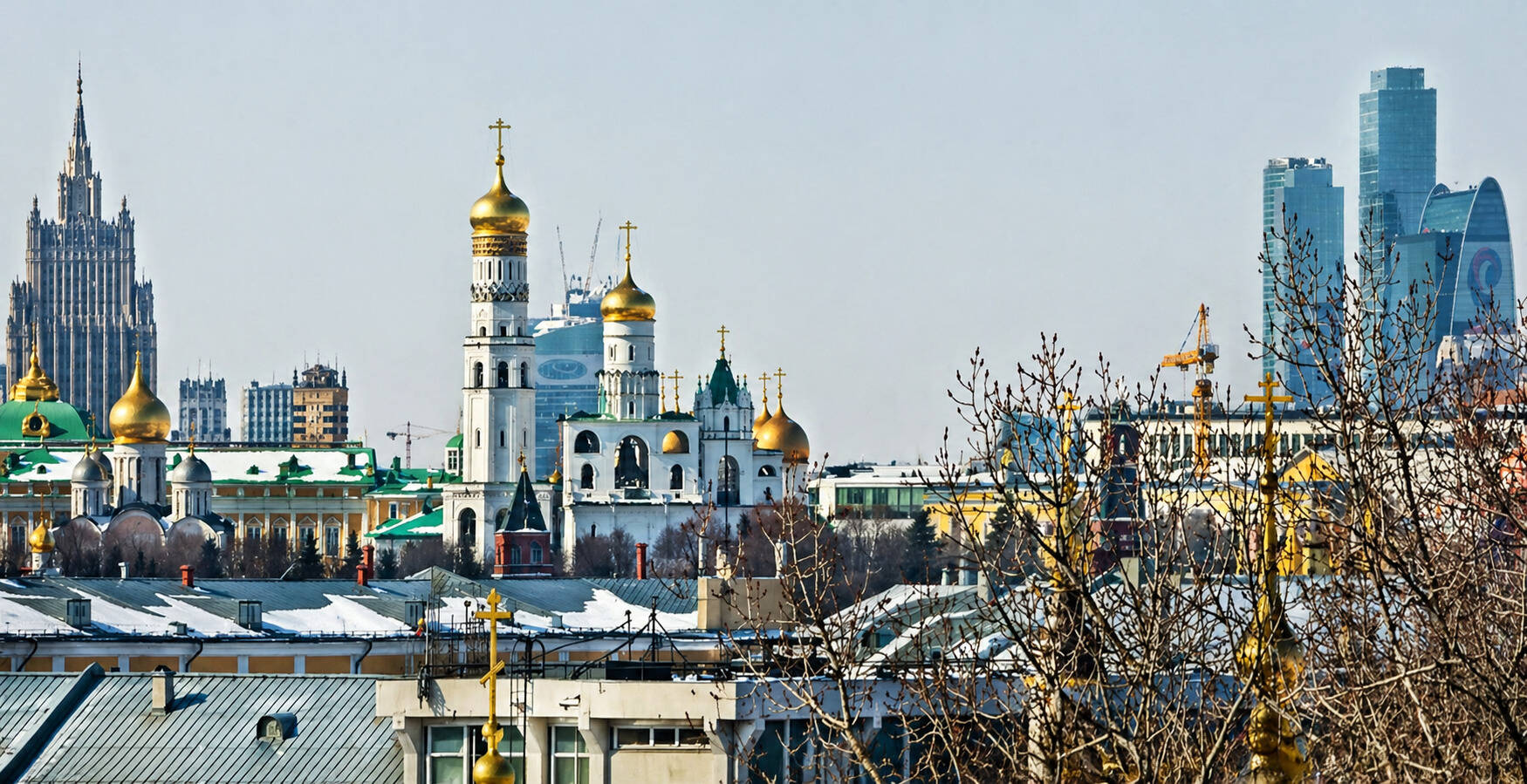
In the description Moscow sightseeing tour by car the bureau gives an example itinerary with a stop at the Cathedral of Christ the Saviour and a walk onto Patriarshy Bridge, which offers a view of GES-2. After reading this article, seeing the former Tram Power Station helps connect the building with the history of the city's tram network. This is an example itinerary rather than a compulsory stop; a visit to the exhibition is not included in the programme.
Sources
- Moscow Transport Museum: a horse-drawn tram and the history of the network
- GES-2: building the tram power station
- Moscow Transport Museum: Daimler Omnibus 1 T
- Moscow Transport Museum: permanent exhibition
- State historical and cultural assessment report on Miussky Depot
- Moscow City Duma: activities in 1909–1912
- GES-2: Moscow trams
- GES-2: how the power station worked
- GES-2: ‘The Tram Goes to the Depot’ exhibition
- G. A. Golts, S. A. Tarkhov: Urban Transport
- Mosenergo History Museum: The Tramway Power Station
- Historical and Cultural Expert Assessment Report on the Raushskaya Power Station
- I. I. Serzhenko. The Development of Urban Transport and Municipal Policy in Moscow in the Late 19th and Early 20th Centuries. DOI: 10.7256/2222-1972.2014.5.13853
- Historical and Cultural Expert Assessment Report on the Tram Depot on Nizhnyaya Maslovka
- PGUPS Research Library: horse-drawn trams in Russia and a publication on Moscow’s 1872 line
- Moskovskaya Pravda: the launch of tram route ‘A’
- Radius Tour Bureau: Moscow sightseeing tour by car
- Vedomosti.Gorod: the history of Moscow’s horse-drawn trams, based on materials from the Moscow Transport Museum
- Konstantin Klimov. A Carriage from the Century Before Last // Gruzovik Press, 2009
- Materials from the All-Russian School Olympiad in Technology: the history of horse-drawn trams
- Istorik magazine: Beyond the Butyrskaya Gate
- Historical and Cultural Assessment of the Miusskaya Tram Substation
- G. Moskovich. A Practical Guide to Moscow and Its Surroundings, 1908
- V. A. Gilyarovsky. Moscow and Muscovites: Before My Eyes
- Moscow Metro’s in-house publication ‘My Metro’, No. 3, 2021
We took a tour of Taganka designed for 12-year-old children. It was an excellent programme. We covered a great deal of ground and learnt so much. We discovered the story of Dryanaya Street and discussed the Vladimir Highway, the surrounding monasteries and churches, and the Old Believers. We now know where Korovin was born, where Stanislavsky was born and raised, where the Morozov merchant children lived, and why Arseny Morozov was considered such an outrageous figure in his day. We also discussed Solzhenitsyn, discovered where Stalin Avenue was supposed to be built, saw the bunker, walked to the Russian metochion of the Mount Athos Monastery, and learnt why the Illuzion cinema made Taganka famous. Of course, no tour would have been complete without Vysotsky and Lyubimov. We also touched briefly on Taganka Prison, although naturally we did not go there. All in all, it was an exceptionally rich and informative tour! Our guide Alexander was superb!
Our thanks to our guide Alexander for a magnificent sightseeing tour. Alexander’s love for Moscow and its history, his wide-ranging knowledge, elegant and engaging delivery, and personal charm make the tour not merely interesting and informative, but truly delightful! Thank you, Alexander! Tatiana and Tatiana, St Petersburg
On July 18th, we participated in the "Soul of Moscow" group tour led by Alexander. Kitay-gorod and its surroundings revealed a new side to us, and everyone thoroughly enjoyed it. Some of us began intensively studying related materials to broaden our horizons. We'll be back, and we highly recommend it! You won't regret it.
Good afternoon, on June 23rd we had a tour called " The Soul of Moscow ," led by Alexander. He's a very pleasant young man. We visited such lovely courtyards and alleys with him that we never even knew existed, and we learned so much. We really enjoyed everything, and we hope to continue our acquaintance. Alexander! Thank you! We had a great time with you, and we thoroughly enjoyed it. See you there!
This isn't my first time with Radius. This time, I took the Moscow metro . The goal was not only to admire the underground palaces but also to learn how to navigate the metro. As a resident of a region without a metro, I was a bit apprehensive and didn't understand how to navigate the metro. Of course, the internet helps, but live communication is much better. Tour guide Yulia handled this task perfectly. The information was accessible and interesting, the presentation was calm, and the communication style was very friendly. Thank you very much for the tour and the practical experience.
Good afternoon! I gave the "Soul of Moscow" tour to some of the capital's guests. We were thrilled to hear our guide, Anton. It was so informative and engaging, and very warm. To say we were absolutely delighted is an understatement. It turned out to be a truly family-friendly excursion. We learned so many interesting facts. The material was presented professionally, all our questions were answered, and we saw so much. It was simply WOW! Thank you so much, Anton, he's the best!!!!! From now on, I'll only come to you, the Radius team. I highly recommend it. I promise we'll see each other again soon on other tours.
Overall, the tour left a positive impression! Thanks to Alexander for the walk through the courtyards and atmospheric spots of Kitay-Gorod; we certainly wouldn't have done it on our own. The tour was comfortable, and the guide spoke confidently and calmly. One thing we personally missed: we would have liked more of the historical part, relating to ancient Moscow and the history of Kitay-Gorod. There were quite a few stories about the Soviet period and the bar scene, but for our group, this wasn't particularly relevant. We think the program could be a little more tailored to the age and interests of the group. It would also have been interesting to add more historical facts, monuments, and details about old Moscow and the area itself. That said, the tour was still interesting, and some places and churches were truly memorable. These aren't really "cons," but rather suggestions for an even more comprehensive program.
Hello! We had a corporate group of 10 people. Our guide was Anton, and we had a tour of Bulgakov. I would like to point out the excellent organization; everything went smoothly. The managers were very accommodating to our changes in the number of participants. The bus was very comfortable. Anton is a super-engaged and motivated guide. He lives this history and is delighted to share his knowledge and create an unforgettable experience. Everything went well. I highly recommend it!
Thank you for a fascinating tour! It gave me so much food for thought to explore! Note: Review of the "Zamoskvorechye" tour with guide Maria.
I'd like to express my gratitude on behalf of our team! Thank you for keeping to our scheduled schedule despite our lack of organization. Our colleagues appreciated your preparation for the tour! It was informative. Note: Review of the "Modern Residential Complexes, Factory Past, and Avant-Garde" tour of the ZILART residential complex with guide Maria. Maria prepared and conducted a customized tour for employees of the Samolet Group of Companies development company.
Thank you! You have great talent. Good luck! ☺️ You're a wonderful guide! Thank you again! Note: This is a review of the corporate tour "The Heart of the Capital" with guide Maria.
Thank you for a wonderful day today!!)) Note: review of the excursion "The Soul of Moscow" with guide Maria
On behalf of the whole family, I want to thank you for a very informative and interesting tour! Note: This is a review of the "Palace Dungeons" tour with guide Maria.
Good afternoon! I'd like to express my gratitude and that of my guide for organizing the tour! We were very pleased. We'd like to do it again in October, but on a different route — ZIL. Note: This refers to the tour for Samolet Group developers, led by guide Maria.
Thanks to Alexander for the bar tour of Baumanka ! It was fun, exciting, and we discovered so many new places! Awesome! May we reach new heights!
Good afternoon! I was on a tour of Sukharevskaya Square — we went all the way to Tsvetnoy Boulevard. I didn't expect it to be so interesting! For those wondering whether to go — go for it! It truly became one of my most memorable summer memories!
Anastasia, good morning! Thank you and Masha for yesterday! The speakers are happy. The connection through the headphones was often lost, especially at the checkpoint, but that's just our current situation. You could hear if you were standing close, no more than 1.5 meters away. Colleagues have already asked for your contact information. I'd be happy to share it and look forward to another opportunity to work with you. Special thanks to the Director for the Bureau . Note: " Heart of the Capital " tour for participants of the 2025 Moscow Oncology Forum. Guides: Anastasia and Maria.
We'd like to thank Anton and Alexander for leading the tour! It was fascinating to hear how the Krasnaya Presnya district developed and how Prokhorov's influence on our city's development. It was a pleasant immersion into a quiet, previously unexplored area!
Good afternoon, thank you so much, Anastasia. The " Uncle Gilyai " tour was fantastic. Even though we're Muscovites and know a lot about Moscow, the experience was amazing, so much new and interesting happened. We'll definitely be back.
Thank you for the " Heart of Moscow " and " Khamovniki " tours. Anton, a knowledgeable and passionate Moscow guide, gave me the tour. He's a great storyteller, intelligent, well-read, and captivating. You've truly opened up my Moscow to me! I'll definitely be back next summer to explore Moscow with you. I'll recommend your wonderful tour program to all my friends!
Excursions with the Radius travel agency are always a positive experience if you choose them. We planned a tour of Zamoskvorechye on our next visit. We've worked with our guide, Anton, before. We'll definitely recommend him to everyone we know. The tour is informative, not overloaded with dates, and the information is comprehensive yet easy to understand, as it's presented in a light, narrative manner, not like a history textbook, dry and academic. Thank you for this approach. We'll definitely use the Radius agency again on our next visit to Moscow.
Thank you so much for the tour of Zamoskvorechye . Despite the weather, it was very interesting and informative! Note: this refers to the tour with guide Anton.
A huge thank you to Anastasia. We had a fantastic tour of the Patriki district. We learned so much. Anastasia is a true master of her craft. The tour was captivating, not at all boring, lively and interesting. Everyone was delighted. We were full of new impressions. I definitely recommend it. You won't be disappointed!
We explored the Soul of Moscow with my family and Radius on my birthday. Everyone thoroughly enjoyed the walk! Anton shared so many interesting facts about the capital and its history, taking us into spiritual depths no one else had even suspected. Most of us were either born or longtime Moscow residents who spent a lot of time walking around. It was educational, heartwarming, and unforgettable. 🙂 Overall, this wasn't my first time walking around Moscow with Anton, and each time was a real adventure!