What lies behind the secrets of Mikhail Bulgakov's greatest novel? Why does the Master disappear for months, and when he returns, his coat is missing its buttons? Bulgakov did not say this directly, but every hint in the text causes tension and anxiety. Why did the writer need to use Aesopian language when talking about the fate of the main character? Today we will unravel these hidden signs and prove that the Master was arrested. Delve into the details and find out how the great novelist described the time when any knock on the window could turn into a night visit from the NKVD.
Let's look at all the hints, that is, evidence that the Master was arrested and spent three months in the OGPU (NKVD).
In an earlier version of the novel The Master and Margarita, Bulgakov has the phrase: “When a person leaves and disappears, it is not difficult to guess what happened to him.”
In the 30s, it really wasn't hard to guess what happened to him. After all, it was a time the most massive repressions in the country's history.
“…in mid-January, at night, in the same coat, but with torn buttons, I huddled from the cold in my courtyard”
What happened to the Master's buttons? Another hint from Bulgakov. In Stalin's time,The prisoners' sentences were torn off before they were placed in a cell so that they would not lock them up and "do stupid things." After the death of the "father of nations," many works were published with this sign of the times. Here are some quotes from them:
From the memoirs of the artist A. P. Artsybushev
They dragged me through a labyrinth of corridors, stripped me naked, and probed all my seams, cut off all the buttons, took away the belt. My curls, so well cut just now, lay on the tiled floor, went over with a machine…
Alexander Solzhenitsyn, "The First Circle"
I have the buttons were cut off, the lining was ripped open - who should I give it to sew it on?
— My buttons were cut off, the lining was ripped open — who should I give them to sew them on?
— How many buttons?
Recounted.
The door locked, and soon unlocked again. Kosenkiy held out a needle, about ten separate pieces of thread, and several buttons of different sizes and materials - bone, plastic, wood.
Nikolay Rech, “Memoirs of a Prisoner of Lubyanka and Butyrka”
I'm at the transit point cut off all metal objects from clothing (trousers buckles, buttons, etc.) and after appropriate sanitization, they took a photo of him from the front and in profile, attaching it to his sleeve.
Stepan Kuznetsov, "Spasskaya Beauty"
After finding a copper coin in my coat, the guard began to rip apart the seams of my coat even more vigorously, cut off buttons and rip off the hooks on the trousers, as a result of which the trousers stopped holding up and had to be supported by hand all the time.
Varlam Shalamov, "The Artist of the Shovel"
Here, after a restaurant spree, Tsvirko opened fire on Apollo's chariot above the entrance to the Bolshoi Theater and woke up in a prison cell. His clothes were ripping off buttonholes, buttonsAmong the prisoners, Tsvirko arrived in Vishera in the spring of 1929 and served his three-year sentence there.
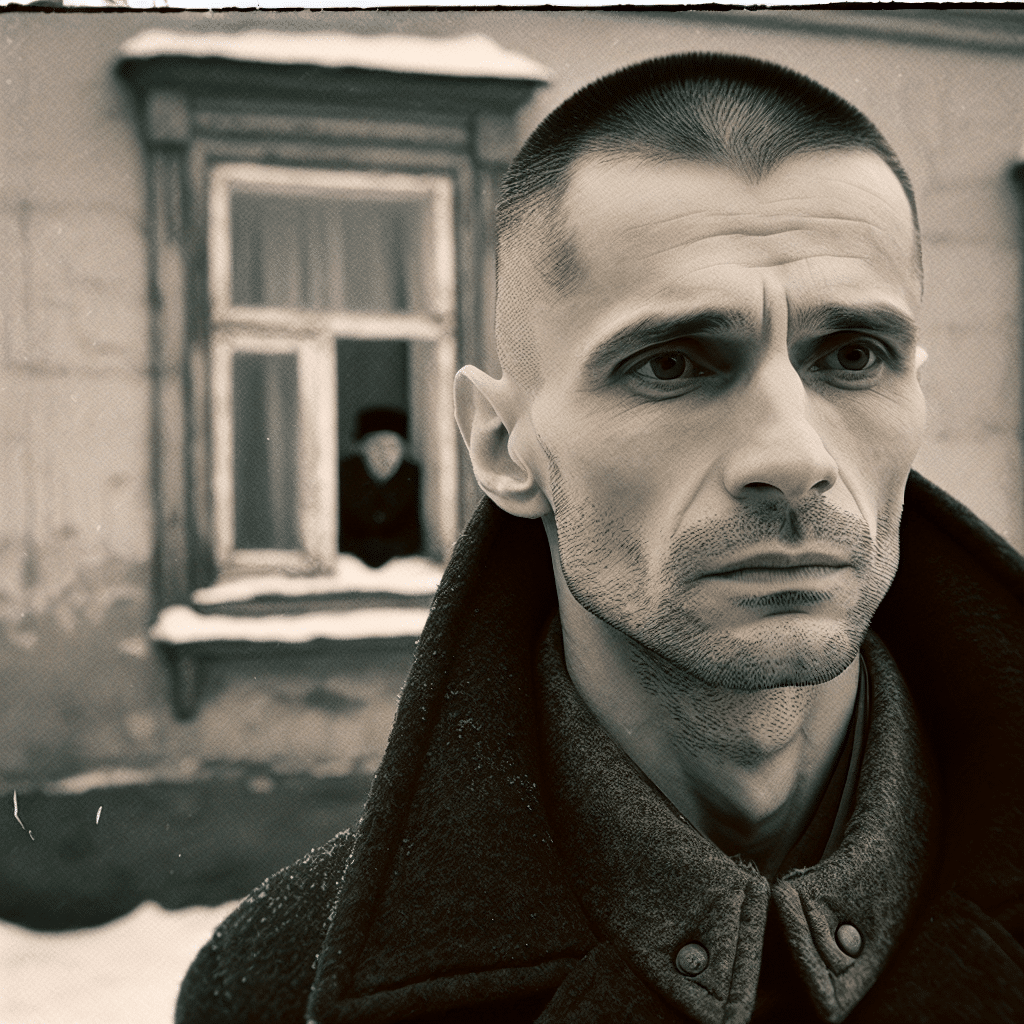
Bulgakov's hints: the Master's arrest remains a mystery.
Torn buttons are a grim detail of the times and, certainly interesting for the writer. Many of Bulgakov's contemporaries, even those who were not arrested, would have understood the hint. And they did understand, but already in the 60s-80s, when the novel was published and distributed. The hint is subtle and "tasteful", despite the dark subtext.
In early versions of the novel “The Master and Margarita,” torn-off buttons “rhymed” with the circumstances of the arrest of Nikanor Ivanovich Bosoy, whose suspenders and belt were taken away, leaving him in “sagging trousers.”
"...there was a knock on the windows..."
“A quarter of an hour after she left me, there was a knock on my window…” — this phrase is uttered by the Master during his story to Ivan Bezdomny in the clinic of Dr. Stravinsky. That is, someone knocked on his windows.
In the 2006 TV series "The Master and Margraita" by Vladimir Bortko, instead of the phrase "there was a knock on the window", the Master directly says "I was arrested". In the 2024 film, the arrest is shown, as well as the interrogation after it (which is not in the novel).
Who or what could have knocked on the Master's window? And why do the author and the Master not speak about it directly, but in passing? Because this is something that should not be spoken about directly.
Nothing else but the hands of the authorities could have knocked, most likely, if we remember where the Master lived. He lived in the basement. And there is There are several versions of the supposed address of the Master's basement, the main ones being the basement of the house on Mansurovsky Lane, 9, the basement of house 10/28 on Plotnikov Lane, and house No. 45/26 on Sivtsev Vrazhek.
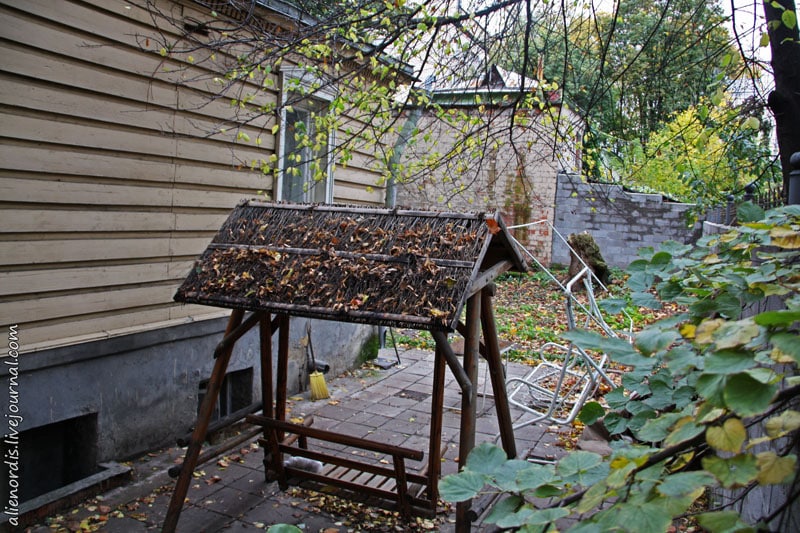
Basement of the Master's house in Mansurovsky Lane
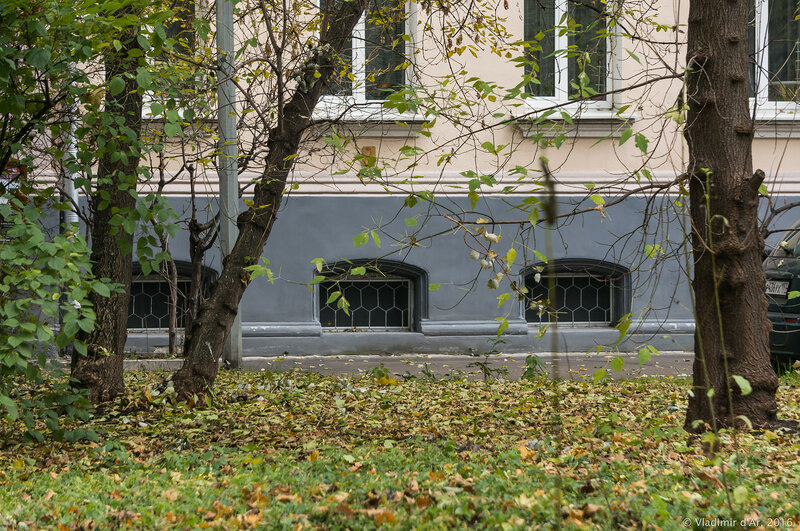
House 10/28 in Plotnikov Lane. Perhaps the Master lived here in the basement
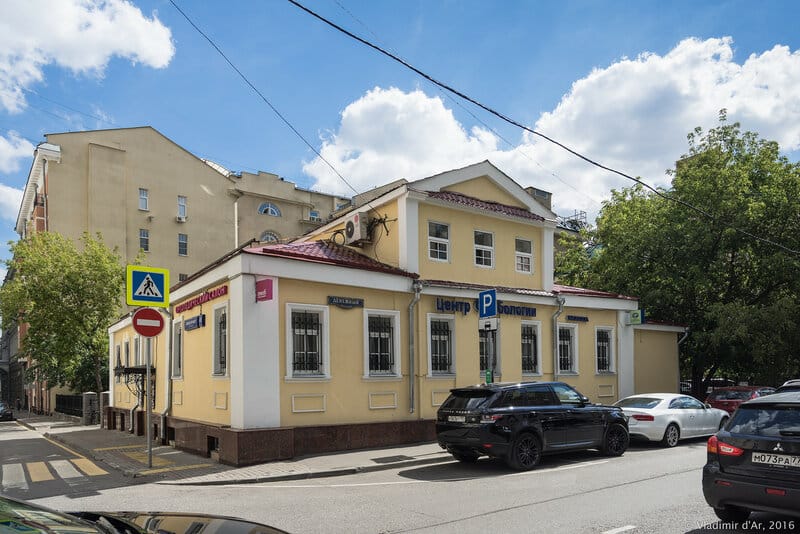
Building number 45/26 on Sivtsev Vrazhek street
If you think about a basement or look at photographs of prototypes of these basements (Muscovites can find them themselves during a personal walk around the city), it becomes clear that only a person can knock on these windows. For example, trees are not capable of this during bad weather in the case of a basement. Only a human hand can knock on a recessed basement window that protrudes only 30 centimeters above the ground. No tree branches can knock on such windows themselves.
If the Master had imagined it and had mistaken the knocking of the NKVD for something else, then he would obviously have told Ivan Bezdomny in Dr. Stravinsky's clinic: "it seemed to me that there was a knock on the window." For example, in his story to Ivan, he clearly says that he was afraid of the tram. He speaks about the knocking as if in passing, but specifically and in the plural: "they knocked on the windows."
And from a purely dramatic point of view, it would be strange to add this phrase just like that, especially considering that the novel was written and rewritten over the course of 12 years by an experienced playwright.
Denunciation of Aloysius
In the chapter “Extraction of the Master,” the assumption about the arrest of the Master is confirmed by Azazello’s question to Aloysius: “It was you, after reading Latunsky’s article about this man’s novel, who wrote a complaint against him, stating that he was storing illegal literature?”.
Aloisy Mogarych is the Master's former friend who wrote a denunciation of him and settled in his cozy basement after this gesture. The journalist became a reflection of Judas from the Jerusalem chapters of the novel.
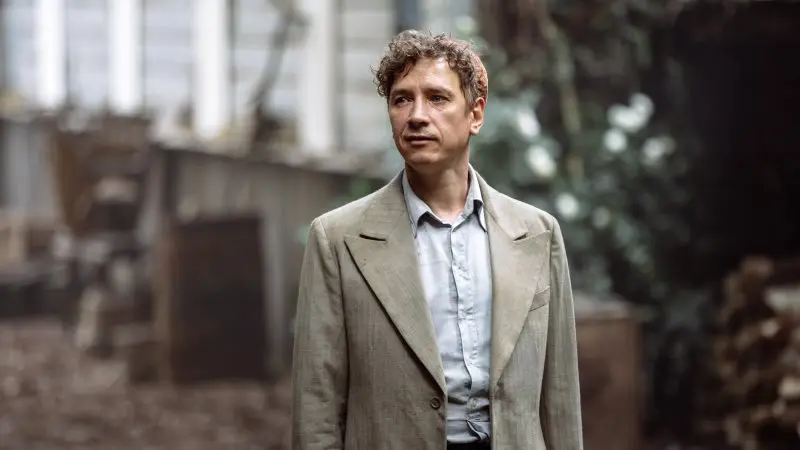
Alexander Yatsenko plays the role of Aloisy Mogarych in the film "The Master and Margarita" 2024.
It is obvious that after the denunciation, investigative actions were carried out - for example, the arrest and interrogation of the Master. It can also be assumed that Aloisy not only reported the presence of prohibited literature at the Master's, but also told many other things about his comrade, because the investigation is interested in other details in such cases: for example, what the suspect thinks about this or that issue. To the contents of the Master's novel at the investigator's questions would probably have arisen too, but the manuscripts, as we know, were burned.
Where was the Master from October to January?
It was dusk, in mid-October. And she left. I lay down on the sofa and fell asleep without turning on the lamp.
…
- Don't be afraid. Wait a few hours. I'll be with you tomorrow morning.
- These were her last words in my life... Shhh! - the patient suddenly interrupted himself and raised his finger. - Today's moonlit night is restless.
…
– A quarter of an hour after she left me, there was a knock on my window...
What the patient was whispering in Ivan's ear apparently worried him greatly. Convulsions kept passing over his face. Fear and rage swam and darted in his eyes. The narrator pointed his hand somewhere in the direction of the moon, which had long since left the balcony. Only when all sounds from outside ceased to be heard did the guest move away from Ivan and speak louder:
- Yes, so, in mid-January, at night, in the same coat, but with torn buttons, I was huddled from the cold in my courtyard.
…
That is, the Master tells Ivan that he was absent from mid-October, from the moment when there was a knock on the windows, until mid-January, when he came to his house. If the Master was not arrested, then where was he? And why doesn't he tell the poet Bezdomny about this?
The master gave his savings to Margarita
Why? Apparently, he was afraid of arrest. And all the characters in the novel "The Master and Margarita" in one way or another encounter the topic of arrests and state security agencies.
The theme of arrests in "The Master and Margarita"
Of course, even without the theme of buttons, the novel is full of references to the NKVD, the police and arrests.
The homeless man wants to send Kant to Solovki.
The scene of the interrogation of Yeshua by Pontius Pilate.
Berlioz hurries to the telephone to report Woland so that he can be arrested.
A homeless man demands five motorcycles with machine guns to capture a foreign consultant.
The sudden disappearance of people from a bad apartment (Anna Frantsevna, housekeeper Anfisa, an unnamed tenant and Belomut with his wife), Nikanor Bosoy and Timofey Kvastsov who informed on him and other members of the housing association (Prolezhneva, Pyatnazhko), as well as currency dealers, accountants Variety Lastochkin and even Chuma-Annushka are taken.
Likhodeev, Varenukha and Rimsky were briefly detained.
They are trying to take the consultant and his gang.
After Woland's departure, citizens Volman and Volper were arrested in Leningrad, three Volodins in Saratov, Kyiv and Kharkov, Volokh in Kazan, and candidate of chemical sciences Vetchinkevich in Penza. Nine Korovins, four Korovkins and two Karavaevs were caught in different places. A certain citizen was taken off the Sevastopol train tied up at Belgorod station. "There was much more, I can't remember it all." In Armavir: a cat. And also a certain dodger who fantastically increased his living space with the help of exchanges...
The master, expecting to be arrested, gives all his savings to his beloved Margarita and burns the manuscript. Seeing that Berlioz's room is sealed, Stepa Likhodeyev has no doubt that Berlioz has been arrested. Not having waited for Varenukha's return, sent to one of the Moscow institutions, Rimsky believes that he too has been arrested.
The Master himself, telling the story of his life to Bezdomny in the clinic, in the place where he switches to a whisper: - A quarter of an hour after she left me, there was a knock on my window... where the Master was from mid-October to "mid-January: ... at night, in the same coat, but with torn buttons, I huddled from the cold in my courtyard... The cold and fear, which became my constant companions, drove me to frenzy." At that time, buttons on outerwear were usually cut off at Lubyanka, we have already discussed them in detail.
Hearing that Azazello has been sent to her on a "business matter," Margarita "guesses": "Do you want to arrest me?" Aloisy Mogarych comes to Woland in his underwear, but with a suitcase, clearly prepared in case of arrest... The mere mention of an arrest instills fear in people. The nameless guest who knocked on the basement window, having learned from Margarita that Aloisy had been arrested, immediately runs away: "At that very moment, the knees and the backside disappeared, and one could hear the gate slam."
Bulgakov's personal experience
The novel was written during the period of the most massive repressions in the history of the country. Bulgakov himself was interrogated by the OGPU from 1926, including the confiscation of his diaries. After that, he really did burn his diary after he got it back from the authorities. These episodes are very similar to the Master, although Mikhail Afanasyevich himself remained free.
It seems almost miraculous that Bulgakov managed to avoid the fate of his hero. Elena Sergeyevna's diaries mention many names of arrested people from their circle: V. Kirshon, N. Erdman, O. Mandelstam, N. Lyamin, B. Pilnyak, N. Venkstern, I. Babel, Vs. Meyerhold... These are friends, enemies and simply acquaintances of the married couple. Only after Stalin's death did it become possible to speak about this openly. Therefore, even Bulgakov was forced to resort to Aesopian language when describing the arrest of his hero.
The best way to learn about history and culture is to take a guided walk through the actual sites of these events. You can also book a tour «Master and Margarita" and others.
We had a corporate group of 10 people. Our guide was Anton, and we had a tour of Bulgakov. I would like to point out the excellent organization; everything went smoothly. The managers were very accommodating to our changes in the number of participants. The bus was very comfortable. Anton is a super-engaged and motivated guide.
He lives this story and takes great pleasure in sharing his knowledge and creating impressions.
Everything went well. I recommend it!
Note: Review of the excursion Zamoskvorechye with guide Maria
Note: Review of the tour "Modern Residential Complexes, Factory Past, and Avant-Garde" around the ZILART residential complex with guide Maria. prepared and conducted a tour based on an individual request for employees of the development company GC "Samolet"
Note: Review on corporate excursion "The Heart of the Capital" with guide Maria
Note: Review of the excursion "The Soul of Moscow" with guide Maria
Note: Review of the excursion Palace Dungeons with guide Maria
I'd like to express my gratitude and that of my supervisor for organizing the tour! We were very pleased.
We would like to repeat this in October, but on a different route – ZIL.
Note: This is about a tour for developers of the Samolet Group of Companies, conducted by guide Maria.
Was on excursions along Sukharevskaya Square - we reached Tsvetnoy Boulevard, I didn’t expect it to be so interesting!
For those who are in doubt whether to go or not - go, it really has become one of the cool summer memories!!!
Thank you and Masha for yesterday!
The speakers are happy. The connection in the headphones often failed, especially at the checkpoint, but this is our current life situation. It was audible if they were standing close, no further than 1.5 meters. Colleagues have already asked for your contacts. I will gladly share and will be glad to have a new opportunity to work with you. Special thanks to the Director for the Bureau
Note: excursion "Heart of the capital» for participants of the Moscow Oncology Forum 2025. Guides - Anastasia and Maria
It was very interesting to hear how the Krasnaya district developed. Presni, how Prokhorov's figure influenced the development of our city. A pleasant dive into a quiet, previously unexplored area!
Note: we are talking about the excursion with the guide Anton
There was a great tour of the area. Patricks.
We learned a lot of new things. Anastasia is a master of her craft. The tour was exciting, not boring at all, lively and interesting. Everyone was satisfied. Full of new impressions. I definitely recommend it. You will be satisfied!
Overall, this wasn’t the first time I’ve walked around Moscow with Anton, and each time it was a real adventure!
I wanted to express my gratitude once again for the wonderful excursion on Saturday - we really enjoyed the walk, the information and the communication with you, then we discussed for a long time what everyone remembered and what struck them. It would seem that you have lived in Moscow all your life, there was Moscow studies at school, but it turns out that you still don’t know so much!! In general, thank you very much, my mother said it was the best gift for her birthday!
Note: this is about the excursion "Soul of Moscow«
I will definitely recommend this company to my friends and we will use its services ourselves.
Excellent organization of excursions, all wishes were taken into account, punctuality at the highest level
Note: Review of the excursion-performance, which the guide Alexander specially developed as part of the order "Dream Tour".