The theatrical heart of Moscow lies within a few central districts between Theatre Square, Kamergersky and Leontievsky Lanes, and the Arbat. Here you will find the Bolshoi Theatre, the Moscow Art Theatre, Stanislavsky’s house, and places associated with Meyerhold, Vakhtangov and Tairov. This guide brings them together into a coherent walking route and explains precisely what changed on each of these stages.
In 1898, Stanislavsky and Nemirovich-Danchenko founded the Moscow Art Popular Theatre. Vakhtangov, Meyerhold and Tairov later developed their own principles for working with actors, the stage and audiences. Within a few central districts, surviving buildings and exact addresses allow you to trace the transition from imperial theatre to the directing schools of the twentieth century.
Theatre Square: the stage of power and urban ceremony
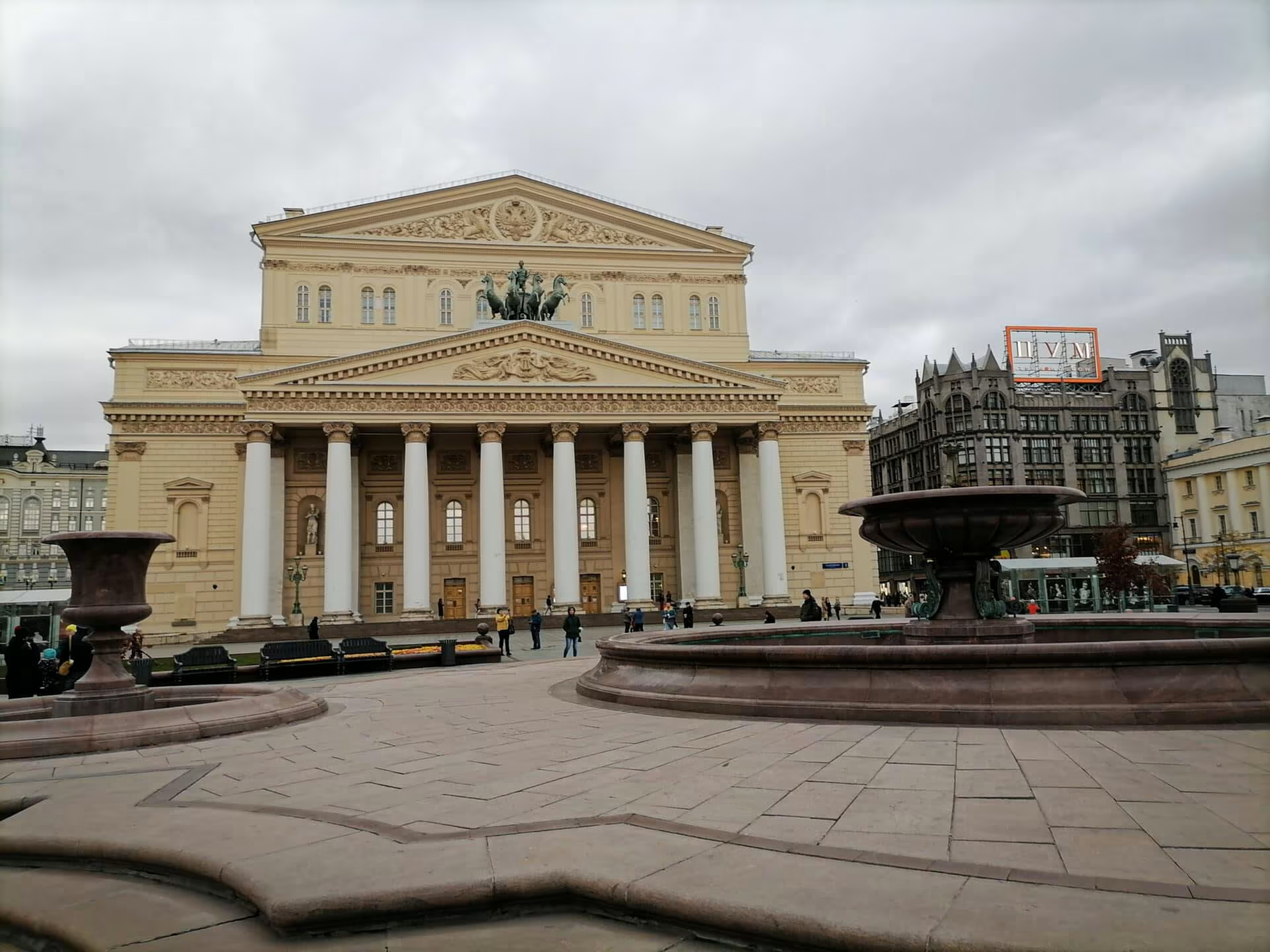
The Bolshoi Theatre on Theatre Square
It's logical to begin a discussion of theatrical Moscow with Theater Square. Here, theater emerges from private life and becomes part of state and city ritual. In today's cultural memory, the Bolshoi Theater is perceived as an almost unchanging symbol of Moscow, but its history is built on fires, reconstructions, and restorations. The theater traces its tradition back to the private enterprise of Prince Pyotr Urusov and Mikhail Medoks, founded in the second half of the 18th century. In 1780, the Petrovsky Theater opened, then the building burned down, the city survived the fire of 1812, and in post-fire Moscow, the theatrical axis we recognize from the square near the Bolshoi was recreated.
The Bolshoi Petrovsky Theatre opened in 1825. The architectural image of post-fire Moscow is associated with Osip Bove, and after the fire of 1853, the theatre was restored under the direction of Albert Cavos and reopened in 1856, in time for the coronation celebrations of Alexander II. Even this chronology demonstrates that the Bolshoi Theatre was more than just a performance venue. It was an instrument for restoring order to the city after the catastrophe, a visible sign of imperial Moscow, and simultaneously a place where the public learned to be an audience.
Theater Square is designed like an open hall. There's a distance in front of the building, allowing one to view the façade almost frontally, like a stage set. Apollo's Quadriga, the columns, the austere portico, and the proximity of the Maly Theater—all create a unique scenography for the city. Here, even before entering the theater, one finds oneself in the role of a spectator. One sees not only the building but also one's own participation in the ceremony: the entrance, the waiting, the evening light, conversations, the meeting of acquaintances, the movement of people toward the doors.
The Bolshoi and Maly Theaters, located side by side, give Moscow an important duality. The Bolshoi is associated with opera and ballet, with scale, orchestra, movement, and stately solemnity. The Maly Theater is associated with dramatic tradition, Russian plays, the acting school, and the language of the stage. Between them runs an invisible line between two theatrical temperaments: the musical-imperial and the verbal-dramatic. This is a good starting point for a stroll, because here the theater still appears as an official cultural façade. Further on, in the side streets, it becomes much more intimate and adventurous.
Kamergersky Lane and the Moscow Art Theatre: a new truth on the stage

Moscow Art Theatre on Kamergersky Lane Wikimedia Commons, Ads of MkHAT named Chekhov 1992.jpg, author: Glavarkhiv Moskvy, license: CC BY 4.0 source
It's a short walk from Theater Square to Kamergersky Lane, but the semantic transition is enormous. If the Bolshoi Theater speaks the language of representation, then the Moscow Art Theater speaks the language of internal action. The Moscow Art Theater was founded by Konstantin Stanislavsky and Vladimir Nemirovich-Danchenko in 1898. Their famous meeting at the Slavic Bazaar restaurant in 1897 became one of those Moscow episodes that has long since become a cultural myth, but behind the myth lay a practical program: to create a theater of ensemble, precision, psychological authenticity, and attentiveness to modern humanity.
The Moscow Art Theatre's first production was Alexei Tolstoy's Tsar Feodor Ioannovich. But the symbolic birth of the Moscow Art Theatre's distinctive tone was Anton Chekhov's The Seagull, which premiered in December 1898. After the failure of the play's first production at the Alexandrinsky Theatre, the Moscow Art Theatre's success marked a shift in theatrical language. The stage began to work with pauses, understatements, internal conflict, everyday details, and atmosphere, rather than a single, dramatic event.
Kamergersky Lane is significant precisely for this sense: a major cultural revolution is taking place not on a grand square, but in a relatively narrow urban space, where the theater is practically mingled with cafes, bookstores, pedestrian traffic, and everyday Moscow. The Moscow Art Theater building, with its façade designed by Fyodor Shekhtel, has become one of the city's most recognizable theatrical icons. But more important than the façade is the very principle of theater that took root here. Stanislavsky and Nemirovich-Danchenko changed more than just stage technique. They changed the ethics of performance.
The Moscow Art Theatre offered Moscow a new type of spectator attention: not to look at an actor as an adornment to a role, but to listen to the life that is born between the wordsThis was a very Moscow-like discovery for the city. Moscow is always strong not only in its parade but also in its undertones: the courtyard behind the facade, the conversation on the stairs, the other meaning of a familiar street. The Moscow Art Theatre stage taught us to see drama in the everyday, not just in grand historical gestures.
An entire theatrical geography grew up around the Moscow Art Theater. Studios, students, actors, directors, playwrights, and stage designers—all formed the cultural fabric of central Moscow. Kamergersky Street ceased to be just a side street; it became a place where one could speak of Chekhov, Gorky, Simov, Knipper, Moskvin, Kachalov, Nemirovich, and Stanislavsky not as museum figures, but as individuals who literally reshaped Moscow's hearing.
Leontyevsky Lane: Stanislavsky's House as a Laboratory

Stanislavsky House Museum on Leontievsky Lane
From Kamergersky Lane to Leontievsky Lane, you can walk through Tverskaya Street and the alleys of old Moscow's gentry. Stanislavsky's house at 6 Leontievsky Lane is important not only as a memorial address. This space helps us understand why Stanislavsky's system wasn't a set of effective acting tips. It was born of discipline, observation, analysis, repetition, doubt, and an almost scientific interest in the nature of stage action.
Stanislavsky lived in this house during the last decades of his life. His Opera and Drama Studio was located here, where classes, rehearsals, and the search for new acting techniques took place. The house itself doesn't give the impression of a noisy theater center. This is precisely its strength: the Moscow theatrical revolution often took place not in loud spaces, but in rooms where actors relearned to breathe, listen, move, and inhabit a role.
Leontievsky Lane offers a different scale to the theater. After Theater Square and Kamergersky, a private, almost homely tone emerges. It's important to imagine Stanislavsky not only as a bearded portrait with a stern gaze, but also as a man who was incredibly practical. He was interested not in abstract "inspiration," but in the conditions under which inspiration becomes repeatable. How does an actor immerse themselves in the circumstances of a role? How does he maintain attention? How does the truth of behavior emerge? What makes a scene come alive, not just painted?
This line is especially important for modern audiences. We often perceive theater as a finished product: a ticket has been purchased, the evening has been chosen, a seat has been found. But theatrical Moscow reveals itself more deeply through the work that goes into the performance itself. Rehearsal culture is one of its secret foundations. On Leontievsky Lane, the city reveals not the outward glamour, but the inner technology of art. And there's an almost esoteric quality to this: the audience sees only the result, but behind it lie exercises of attention, memory, body, emotion, rhythm—the invisible alchemy of the stage.
Bryusov Lane: The Artists' House and Meyerhold's Shadow

Meyerhold's apartment museum on Bryusov Lane Wikimedia Commons, Meyerhold House Museum (Bryusov Lane, 12).jpg, author: Alexey Shakhov, license: CC BY-SA 4.0 source, license
If Leontievsky Lane is associated with Stanislavsky's discipline, Bryusov Lane inevitably leads to a different energy—Meyerhold's. The Meyerhold Apartment Museum is located at 12 Meyerhold, in the famous House of Artists; the full memorial name retains the name of Vsevolod Meyerhold. Meyerhold moved here in 1928 with Zinaida Reich and her children. The building was a cooperative, built for artists; among the neighbors were actors, directors, and members of the theater community. The address itself sounds like a distillation of Moscow cultural life in the late 1920s.
Meyerhold began within the orbit of the Moscow Art Theater, but quickly became a figure of a different nature. While Stanislavsky sought the truth of inner action, Meyerhold sought the truth of form, rhythm, construction, gesture, and the organized body. His biomechanics, his work with convention, montage, and acting were an attempt to create a theater for the new century. In Moscow, this coincided with a revolutionary sense of the times: old forms seemed too constricting, and the new reality demanded a different language.
Bryusov Lane is remarkable because here theatrical history is felt not only as aesthetics but also as fate. Meyerhold was arrested in 1939 and executed in 1940. Zinaida Reich was murdered in their apartment in 1939. This biographical shadow precludes any discussion of the avant-garde as a joyful play of forms. Moscow theater in the first half of the 20th century was not only a space for experimentation but also a space for risk. Artistic boldness could become politically dangerous, and theatrical language a subject of suspicion.
In Bryusov Lane, theatrical Moscow reveals its tragic side: here you can see how close art, power, fear, and freedom stood in the 20th century.This place requires a pause on the route. Not because the walk needs to be turned into a memorial lecture, but because without this pause, it's impossible to understand the value of the Moscow avant-garde. Behind the words "conventional theater," "biomechanics," and "constructivism" lie not only terminology but also a human biography, cut short by state violence.
At the same time, Meyerhold shouldn't remain solely a tragic figure. His significance is broader. He taught the theater to think in terms of space, tempo, physical score, masks, and the grotesque. He made the actor not only a psychological vehicle for a role but also a precise stage instrument. In Moscow geography, this continues to challenge Stanislavsky: not to abolish him, but to maintain the tension between inner truth and expressive form.
Arbat and Vakhtangov: Fantastic Realism as a Moscow Celebration

Vakhtangov Theatre on Arbat Wikimedia Commons, Vakhtangov Theatre (20221104164213).jpg, by MikSed, license: CC BY-SA 4.0 source, license
After Bryusov Lane, it's logical to move to the Arbat. The Yevgeny Vakhtangov Theatre at 26 Arbat grew out of the studio culture associated with the Moscow Art Theatre, but developed its own distinct character. The theatre's official birthdate is considered to be November 13, 1921, when the Third Studio of the Moscow Art Theatre performed "The Miracle of St. Anthony." In 1920, the studio occupied Berg's former mansion on the Arbat. In 1926, it was named after Yevgeny Vakhtangov.
Vakhtangov is a unique figure in the Moscow theater. He was a student of Stanislavsky and knew the Moscow Art Theater school from the inside, but his own path led to a synthesis of psychological truth and theatrical performance. He is often associated with the concept of fantastic realism. This formula seems paradoxical, but for the Arbat, it is almost natural. The Arbat itself is structured as a place between everyday life and legend: here, communal memory, noble houses, shops, literary myths, tourist noise, and the true shadows of Moscow coexist.
Vakhtangov's defining symbol was "Princess Turandot," staged in 1922 based on Carlo Gozzi's fairy tale. It was the director's last production during his lifetime and one of the most celebrated myths of Russian theater. Vakhtangov's "Turandot" is significant not for its retelling of the plot, but for the very nature of the stage performance: the actors didn't hide theatricality but rather transformed it into a source of freedom. Masks, irony, improvisation, commedia dell'arte, and contemporary commentary—all of this created the feeling of a theater that doesn't reject convention but rather makes it honest.
On Arbat, the theater approaches the audience differently than on Theater Square. There's no imperial distance here. The Vakhtangov Theater is embedded in the street, its movement, shop windows, cafes, tourist groups, and Moscow passersby. It doesn't separate the stage from the city with a high, symbolic pedestal, but rather seems to continue the Arbat play. Therefore, this location is particularly appropriate for a conversation about how theater can be not only a serious experience but also an intelligent joy.
The Vakhtangov line is important for Moscow as proof that depth does not have to be gloomy, and acting does not have to be superficial.In a good theatrical promenade, this needs to be discussed separately. Moscow culture often favors heaviness, moral weight, and historical responsibility. Vakhtangov reminds us of another force: festive form can be a precise philosophical instrument if it is backed by discipline, taste, and inner freedom.
Triumphal Square: The City as a Theatrical Hub

Triumphalnaya Square and the Mayakovsky monument Wikimedia Commons, Opening of Mayakovsky's monument in Moscow 01.jpg, author: Glavarkhiv Moskvy, license: CC BY 4.0 source, license
Triumphalnaya Square is another important focal point of Moscow's theatrical scene. It's associated not with a single director or style, but with a whole nexus of cultural meanings. Here, the Mayakovsky Theatre and the Satire Theatre are located side by side, as are the Mossovet, Tverskaya Street, the Garden Ring, and the memory of Meyerhold and the urban public life of the 20th century. The square has constantly changed its appearance, been rebuilt, and become a place of movement, anticipation, urban noise, and political meaning.
The Mayakovsky Theater occupies a building whose theatrical history dates back to pre-revolutionary entertainment and the Aquarium Garden. During the Soviet era, it became one of Moscow's prominent dramatic stages. Various artistic eras are associated with this space, but the very environment of Triumfalnaya Square is particularly important for the route. Here, the theater is no longer a small alley or an imperial square, but part of a larger urban flow. One emerges from the metro, crosses the square, sees the posters, hears the sounds of the Garden Ring—and realizes that theater in Moscow is embedded not only in cultural memory but also in the very core of the modern metropolis.
Triumfalnaya Square also recalls Mayakovsky as a figure for whom the city itself was a stage. The poet worked with voice, poster, gesture, public performance, and the rhythm of the street. His name is not a coincidence: the 20th-century avant-garde culture blurred the boundaries between stage, square, podium, poster, and literary soiree. In this sense, Triumfalnaya Square is not only a theatrical address but also a place where Moscow speaks loudly, sometimes harshly, sometimes almost declaratively.
For both the article and the tour, it's important not to overload this point with a list of institutions. It's better to see it as a shift in scale. Theater Square depicts theater as a state ceremony. Kamergersky Square as a psychology school. Leontievsky Square as a laboratory. Bryusov Square as a tragic avant-garde. Arbat Square as a studio performance. Triumfalnaya Square, meanwhile, depicts theater as part of urban pressures, advertising, transportation, public discourse, and cultural competition.
Tairov and the Chamber Theatre: the missing piece of the route

The Pushkin Theatre on Tverskoy Boulevard, formerly the Chamber Theatre Wikimedia Commons, Moscow TverskoyBvd Pushkin Drama Theatre 08-2016.jpg, author: A.Savin, license: FAL source, license
When considering the four major Moscow directorial lines, Alexander Tairov inevitably appears alongside Stanislavsky, Meyerhold, and Vakhtangov. His Chamber Theatre, founded in 1914, was one of the most notable attempts to build a stage art between psychologism and pure theatrical form. Tairov sought a synthetic theatre where movement, music, color, rhythm, and acting expressiveness work as a unified whole.
Tairov's theme is also important because it helps avoid reducing Moscow theater to the convenient dichotomy of Stanislavsky and Meyerhold. Moscow was more complex. It simultaneously embraced various theatrical models: realistic, conventional, studio, musical-plastic, revolutionary, chamber, imperial, and mass. Tairov's Chamber Theater and actress Alisa Koonen add a distinctive vein of aesthetic independence to this map. This is a theater where not only the truth of experience and construction are important, but also a high level of formal culture.
On a city walk, Tairov may not be a single, long stop, but an intellectual bridge. He helps explain why Moscow's theatrical history is so rich: there was no single, triumphant method. There were debates, schools, convergences, and ruptures. Directors borrowed from one another, argued, departed, created studios, returned to the classics, and once again broke form. The city became not an archive, but a living system of competing ideas.
How to read a Moscow theater route

Kamergersky Lane near the Moscow Art Theatre
Theatrical Moscow is best revealed on foot, but it doesn't necessarily have to be a long walk in a single day. A more accurate approach is to read the city as a series of connected scenes. The first scene is Theater Square: the façade, the ceremony, the Bolshoi and Maly Theaters, the Moscow public as a social organism. The second is Kamergersky Lane: the Moscow Art Theater, Chekhov, Shekhtel, the birth of a new audience attention. The third is Leontievsky Lane: Stanislavsky's house, studio discipline, the actor's inner technique. The fourth is Bryusov Lane: Meyerhold, the Artists' House, the avant-garde, tragedy. The fifth is Arbat: Vakhtangov, studio style, fantastical realism, intelligent theatrical performances.
This route shouldn't resemble a school curriculum. Its strength lies in the fact that each stop poses a question. At Theater Square: why does the city need a state stage? At Kamergersky: how did theater learn to hear the pause? At Leontievsky: can inspiration be transformed into a method? At Bryusov: what price does art pay for freedom of form? On Arbat: why can play be more serious than direct expression?
A good tour of Moscow's theatre scene works not as a reference book, but as a tuning of vision and hearing.Afterward, a person looks differently at the playbill, the theater entrance, the old staircase, the alley next to the stage. They understand that theater doesn't begin at the third bell. It begins earlier: in the architecture, in the audience's itinerary, in the layout of the neighborhood, in the memory of the artists' apartments, in the way the city itself casts its roles.
Yet theatrical Moscow doesn't require deliberate secrecy. Its hidden meanings lie on the surface, if you know where to look. The House on Bryusov Lane tells the story of the avant-garde. Kamergersky Lane tells how the symbol of the seagull became the sign of a new theatrical language. Leontievsky Lane shows that behind theatrical freedom lies daily work. Arbat Lane shows that a celebration can be the result of meticulous direction. Theater Square shows that art is always connected to power, money, the public, and the image of the city.
How to choose a theatre tour format

Walking theatre route through central Moscow Wikimedia Commons, Bolshoi Theatre 05.jpg, by Dmitry Makeev, license: CC BY-SA 4.0 source, license
Moscow's theater scene can be explored in a variety of ways, and each format has its own limits of accuracy. A self-guided tour offers freedom of pace, but requires advance preparation: check addresses, museum opening hours, availability of indoor exhibits, and distances between points in advance. A group tour is convenient if a pre-defined route and a predictable price are important; this same logic applies to many Moscow theater tours, where the program is pre-designed around the playbill, the building, or the museum schedule. However, this format almost always follows a general pace. A private Moscow tour is appropriate when tailored to the interests of family, visitors to the city, colleagues, or someone who already knows theater well and doesn't want a basic explanation. A bus, minivan, minibus, car, or car route can connect distant points, but the theater center is best explored on foot: pauses at entrances, street turns, the scale of the courtyard, and the distance between facades are all important.
| Format | When it suits | Limitation |
|---|---|---|
| Independent walk | If you want to walk through Theatre Square, Kamergersky, Leontyevsky and Bryusov at your own pace. | Without preparation, it is easy to miss the semantic connections between the Moscow Art Theatre, Stanislavsky, Meyerhold and Vakhtangov. |
| Group excursion | If you need a general overview and pauses at specific buildings are not important. | The itinerary is rarely tailored to the group's needs; museum visits depend on the schedule and group size. |
| Individual route | If conversation on equal terms, a flexible pace, children, guests, a corporate context, or a focus on a specific school are important. | You need to formulate your interests in advance: architecture, directing, literary Moscow, avant-garde, or a family walk. |
| Museum format | If the goal is to see documents, memorial rooms, photographs, costumes and the subject environment. | The opening hours and exhibition contents should be checked before visiting; some programs are available by appointment or by session. |
Terms that help us understand theatrical Moscow

The Bolshoi Theatre auditorium Wikimedia Commons, Moscow locations by mos.ru 03.jpg, author: Glavarkhiv Moskvy, license: CC BY 4.0 source, license
- Stanislavsky's system
- An actor's method of working on a role, attention, action, and circumstances. For a walk, this is the key to Leontievsky Lane and the Moscow Art Theater: there, not only the director's biography is important, but also the technology of stage truth itself.
- Meyerhold's biomechanics
- Stage training and the principle of acting expressiveness, where the body, rhythm, and structure become the independent language of the performance. This term explains why Meyerhold cannot be understood solely as a student of the Moscow Art Theater.
- Vakhtangov's Fantastic Realism
- The combination of psychological authenticity with open theatrical performance, masks, conventionality, and festive form. This is especially important for Arbat: Vakhtangov's line does not negate the truth, but rather translates it into a freer theatrical register.
- Studio-like
- A theatrical format where schooling, rehearsals, pedagogy, and artistic exploration are no less important than the finished production. Moscow's 20th-century theater largely grew out of these studios.
Route errors and limitations

Theatre posters and theatre entrance Wikimedia Commons, Afisha 1950.jpg, author: Eruveriss, license: Public domain source
The main mistake in Moscow theater is constructing a route like a list of facades. This approach quickly turns a powerful topic into a collection of photographs: the Bolshoi, the Moscow Art Theater, the Vakhtangov Theater, a memorial plaque, the next address. A different logic applies: first define the question, then select the points. If the question is about psychological theater, the center of gravity will be the Moscow Art Theater and Stanislavsky. If about the avant-garde, it will be Meyerhold, Tairov, Triumfalnaya Square, and Bryusov Lane. If about theater as an urban ceremony, it will be the Bolshoi and Maly Theaters.
The second restriction is access to the interior of the buildings. A theater is not a museum in the traditional sense: foyers, auditoriums, rehearsal spaces, and utility areas operate according to the schedule of performances and internal programs. The Stanislavsky House Museum, the museum departments of the Moscow Art Theater, and Meyerhold's apartment require separate verification before visiting: schedules, days off, tour sessions, and temporary exhibitions are subject to change. Therefore, a good itinerary should have two layers: an outdoor one, which runs in any weather, and a museum one, which is confirmed in advance.
FAQ: Frequently Asked Questions about Moscow's Theatre Industry
How much time should I allow for a walk around theatrical Moscow?
A street route from Theater Square through Kamergersky and Leontyevsky to Bryusov is sufficient in 2-2.5 hours. As a walking tour of Moscow, this route focuses on short walks and precise stops, rather than mileage. If you include Arbat Street or a museum visit, it's best to plan a separate section, otherwise the topic will become too dense.
Is it possible to complete the route without a guide?
Yes, if you prepare a map and brief information on key schools in advance. But a guided tour of Moscow provides a different level of coherence: a good Moscow city guide or tour guide explains why the Moscow Art Theater, Stanislavsky, Meyerhold, and Vakhtangov are at odds with each other, even across different addresses. Without this dramaturgy, a walk often turns into a mere inspection of buildings.
Is Moscow's theatre scene suitable for children?
Suitable for teenagers and children already interested in theater, literature, or the city. For younger students, it's best to choose a short route with 3-4 stops and plenty of visual details: the square, the façade, the poster, the memorial plaque, and the theater entrance.
What's more important: a performance or a tour of theatrical addresses?
These are different experiences. The performance provides a lively evening of art, and the walk explains why such schools and scenes emerged in Moscow. The combination works well: first the route, then a performance at one of the theaters related to the theme.
Do I need to buy tickets to museums in advance?
For memorial and theater museums, it's wise to check in advance on their official websites. Exhibits may have separate schedules, and tour programs often depend on the theater's schedule and group composition.
Why is this topic important now?

A theater audience in a Moscow foyer Wikimedia Commons, The lobby of the Moscow Art Theatre.jpg, author: Published by Brentano's, NY, 1922, license: Public domain source
In 2026, writing about Moscow's theater scene should be done without any artificial sense of novelty. Most of the key events along this route are long since history: the Moscow Art Theater was founded in 1898, Vakhtangov's Turandot appeared in 1922, the Bryusov Artists' House is associated with the late 1920s, and Meyerhold's fate is linked to the tragedy of 1939-1940. But historical distance doesn't make the topic cold. On the contrary, it allows us to see which ideas have outlived their eras.
The modern audience lives in a world where attention is constantly fragmented. Theater, especially in Moscow, offers the opposite experience: concentration, shared presence, slow observation, and trust in the living person on stage. Therefore, a walk through Moscow's theater scene is not only a cultural route but also a way to regain one's ability to pay attention. This effect resembles attention therapy, but is based not on a beautiful pose but on the history of art.
For middle-class Muscovites who have long known the main museums and theaters, the value of such a theme isn't in the discovery of a "secret place." The value lies in the different assemblage of a familiar city. The Bolshoi Theater, the Moscow Art Theater, Arbat, Tverskaya Street, Bryusov and Leontievsky Lanes are familiar to many. But when they connect into a line of directorial schools, Moscow gains depth. It ceases to be a collection of prestigious addresses and becomes an intellectual itinerary.
Moscow's theater scene is also well-suited for conversations with children and teenagers, as long as it doesn't turn into a forced cultural history. Here, we can discuss professions that audiences typically don't see: director, artist, teacher, studio actor, playwright, composer, set designer. We can demonstrate that a performance isn't just about "who said what," but a complex system of lighting, movement, text, pauses, costumes, tempo, and space. This kind of conversation respects audiences of all ages because it doesn't simplify art into a mere retelling of a plot.
What remains behind the scenes of the theatrical route

Behind the scenes of a Moscow theater
Moscow's theatrical scene has another important layer, rarely encompassed in a short tour. This is the world of people and professions that make a performance an event, not just a text spoken from the stage. In Moscow, it's especially evident that theater has always been a collective effort: the director set the method, the actor gave it a living body, the artist constructed the visual image, the composer and music director formed the audience's ear, the teacher held the school together, and the administrator transformed the artistic dream into a tangible evening, complete with tickets, seating arrangements, a repertoire, and an audience.
That's why Moscow's theatrical addresses are best understood through more than just great names. Behind Stanislavsky stand the students of the studio; behind Vakhtangov, the students and actors without whom his fantastic realism would have remained a mere figure of speech. Behind Meyerhold stand artists, constructivists, and actors prepared to work with the body as a precision instrument. Behind the Bolshoi Theatre stands the vast machine of an orchestra, a ballet troupe, a vocal school, workshops, costume studios, and rehearsal rooms. Moscow theater has always been a city within a city, with its own hierarchy, craft, memory, and unspoken rules.
There's another, more subtle layer: audience culture. Moscow created not only theaters but also audiences capable of debating productions, anticipating premieres, reading reviews, recognizing acting styles, and comparing schools. For such a viewer, theater wasn't a one-time entertainment, but part of an intellectual lifestyle. An evening at the theater continued after the curtain call: in conversation on the way home, in letters, in diaries, in kitchen arguments, in newspaper articles, in family memories of those who saw the old "Turandot" or heard the legendary artist perform.
This spectator tradition is also important for the modern route. If you explore theatrical Moscow only as a collection of familiar landmarks, it remains beautiful but flat. However, if you keep in mind the invisible audience that has been nurtured for decades alongside these stages, the city changes. Kamergersky Lane becomes not just the address of the Moscow Art Theater, but the birthplace of a new type of attention. Arbat becomes not just a street with a theater, but a space where the audience consented to the game and understood its rules. Bryusov is not just a memorial site, but a reminder that the audience is also responsible for preserving memory.
The Moscow habit of preserving theatrical memory beyond museums deserves special attention. It lives on in the names of side streets, in the stories of older theatergoers, in programs that have been lying around for years, in photographs of performers on the walls, in the casual remarks of tour guides, and in family stories about performances attended by grandparents and parents. This layer of memory can't be measured by the current season's playbill, but without it, the theater loses its urban depth. It's in this layer that Moscow's personal memory is most clearly audible.
The main hidden hero of theatrical Moscow is not an individual director, but the culture of attentive presence itself.It connects the stage and the city better than any sign. When a person walks from the Bolshoi to the Moscow Art Theater, from Leontievsky to Bryusov, from Arbat to Triumfalnaya, they walk through not only the biographies of great people. They walk through the history of how Moscow learned to look, listen, question, and return to complex art not for status, but for the sake of inner work.
Instead of a finale: Moscow as a rehearsal

Evening streets of theatrical Moscow Wikimedia Commons, 2015 night in Moscow — Satire Theatre 02.jpg, by Andrey Korzun, license: CC BY-SA 4.0 source, license
There are cities where theater is perceived as an evening decoration. Moscow is structured differently. Here, theater often became a way to test the strength of reality. Stanislavsky tested the truth of behavior. Nemirovich-Danchenko tested ensemble and dramatic culture. Meyerhold tested the possibilities of form and body. Vakhtangov tested the freedom of performance. Tairov tested the synthetic nature of the stage. The Bolshoi Theater tested the city's capacity for ceremony, and small studios tested the ability of art to be born in cramped rooms.
Therefore, theatrical Moscow is not just about performances you can see in the evening. It's about a city that constantly rehearses its own roles: capital, memory, avant-garde, empire, private life, public square, cultural experiment. Sometimes the rehearsal succeeds, sometimes it fails, sometimes it ends tragically. But it is precisely this incompleteness that lies its strength.
A Moscow theater route is best explored leisurely. Start at the Bolshoi, pause at the Moscow Art Theater, turn onto Leontievsky, walk to Bryusov, and then move the conversation to Arbat or Triumfalnaya Square. Between these points aren't many kilometers, but there's plenty of cultural time. A few side streets in central Moscow contain a debate about the nature of art that has lasted for over a century.
And perhaps the main conclusion of such a journey is simple: theater in Moscow isn't confined to the theater. It spills out onto the square, hides in apartments, resounds in alleys, changes its façade, leaves its mark on street names and on the city's habit of viewing itself from the outside. Therefore, theatrical Moscow remains one of the most compelling themes for a careful stroll: it reveals not only the stage's past but also how the city is learning to be alive.
If, after this map of directing schools, you want to see the theme not only in the text, but also in the urban rhythm, the logical continuation would be the route Theater capitalThis is a tour of Moscow's theatre scene, which brings together the Bolshoi Theatre, the Moscow Art Theatre, Stanislavsky's house, Meyerhold's apartment, and other locations where the Moscow stage became part of the city's history.
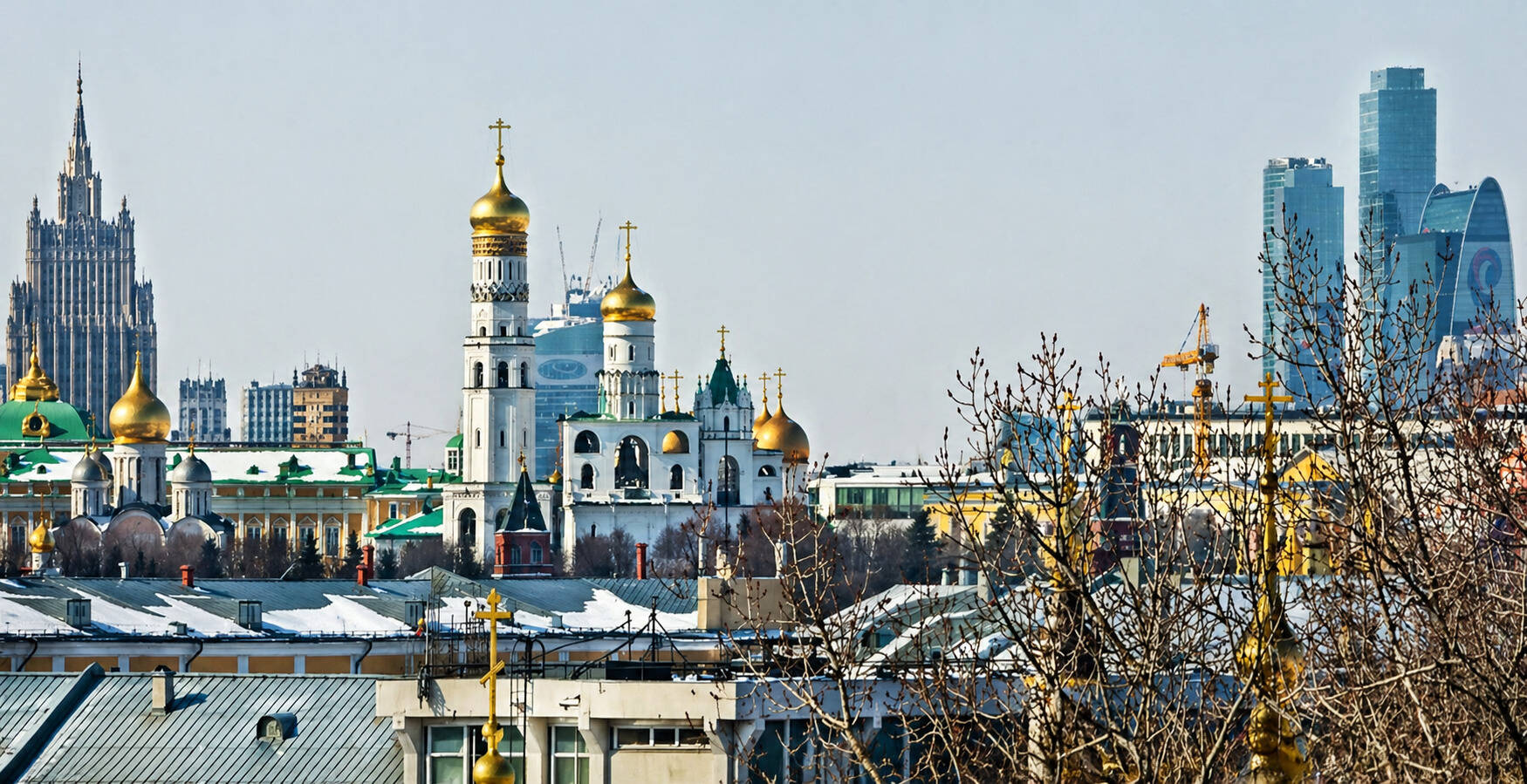
We took a tour of Taganka designed for 12-year-old children. It was an excellent programme. We covered a great deal of ground and learnt so much. We discovered the story of Dryanaya Street and discussed the Vladimir Highway, the surrounding monasteries and churches, and the Old Believers. We now know where Korovin was born, where Stanislavsky was born and raised, where the Morozov merchant children lived, and why Arseny Morozov was considered such an outrageous figure in his day. We also discussed Solzhenitsyn, discovered where Stalin Avenue was supposed to be built, saw the bunker, walked to the Russian metochion of the Mount Athos Monastery, and learnt why the Illuzion cinema made Taganka famous. Of course, no tour would have been complete without Vysotsky and Lyubimov. We also touched briefly on Taganka Prison, although naturally we did not go there. All in all, it was an exceptionally rich and informative tour! Our guide Alexander was superb!
Our thanks to our guide Alexander for a magnificent sightseeing tour. Alexander’s love for Moscow and its history, his wide-ranging knowledge, elegant and engaging delivery, and personal charm make the tour not merely interesting and informative, but truly delightful! Thank you, Alexander! Tatiana and Tatiana, St Petersburg
On July 18th, we participated in the "Soul of Moscow" group tour led by Alexander. Kitay-gorod and its surroundings revealed a new side to us, and everyone thoroughly enjoyed it. Some of us began intensively studying related materials to broaden our horizons. We'll be back, and we highly recommend it! You won't regret it.
Good afternoon, on June 23rd we had a tour called " The Soul of Moscow ," led by Alexander. He's a very pleasant young man. We visited such lovely courtyards and alleys with him that we never even knew existed, and we learned so much. We really enjoyed everything, and we hope to continue our acquaintance. Alexander! Thank you! We had a great time with you, and we thoroughly enjoyed it. See you there!
This isn't my first time with Radius. This time, I took the Moscow metro . The goal was not only to admire the underground palaces but also to learn how to navigate the metro. As a resident of a region without a metro, I was a bit apprehensive and didn't understand how to navigate the metro. Of course, the internet helps, but live communication is much better. Tour guide Yulia handled this task perfectly. The information was accessible and interesting, the presentation was calm, and the communication style was very friendly. Thank you very much for the tour and the practical experience.
Good afternoon! I gave the "Soul of Moscow" tour to some of the capital's guests. We were thrilled to hear our guide, Anton. It was so informative and engaging, and very warm. To say we were absolutely delighted is an understatement. It turned out to be a truly family-friendly excursion. We learned so many interesting facts. The material was presented professionally, all our questions were answered, and we saw so much. It was simply WOW! Thank you so much, Anton, he's the best!!!!! From now on, I'll only come to you, the Radius team. I highly recommend it. I promise we'll see each other again soon on other tours.
Overall, the tour left a positive impression! Thanks to Alexander for the walk through the courtyards and atmospheric spots of Kitay-Gorod; we certainly wouldn't have done it on our own. The tour was comfortable, and the guide spoke confidently and calmly. One thing we personally missed: we would have liked more of the historical part, relating to ancient Moscow and the history of Kitay-Gorod. There were quite a few stories about the Soviet period and the bar scene, but for our group, this wasn't particularly relevant. We think the program could be a little more tailored to the age and interests of the group. It would also have been interesting to add more historical facts, monuments, and details about old Moscow and the area itself. That said, the tour was still interesting, and some places and churches were truly memorable. These aren't really "cons," but rather suggestions for an even more comprehensive program.
Hello! We had a corporate group of 10 people. Our guide was Anton, and we had a tour of Bulgakov. I would like to point out the excellent organization; everything went smoothly. The managers were very accommodating to our changes in the number of participants. The bus was very comfortable. Anton is a super-engaged and motivated guide. He lives this history and is delighted to share his knowledge and create an unforgettable experience. Everything went well. I highly recommend it!
Thank you for a fascinating tour! It gave me so much food for thought to explore! Note: Review of the "Zamoskvorechye" tour with guide Maria.
I'd like to express my gratitude on behalf of our team! Thank you for keeping to our scheduled schedule despite our lack of organization. Our colleagues appreciated your preparation for the tour! It was informative. Note: Review of the "Modern Residential Complexes, Factory Past, and Avant-Garde" tour of the ZILART residential complex with guide Maria. Maria prepared and conducted a customized tour for employees of the Samolet Group of Companies development company.
Thank you! You have great talent. Good luck! ☺️ You're a wonderful guide! Thank you again! Note: This is a review of the corporate tour "The Heart of the Capital" with guide Maria.
Thank you for a wonderful day today!!)) Note: review of the excursion "The Soul of Moscow" with guide Maria
On behalf of the whole family, I want to thank you for a very informative and interesting tour! Note: This is a review of the "Palace Dungeons" tour with guide Maria.
Good afternoon! I'd like to express my gratitude and that of my guide for organizing the tour! We were very pleased. We'd like to do it again in October, but on a different route — ZIL. Note: This refers to the tour for Samolet Group developers, led by guide Maria.
Thanks to Alexander for the bar tour of Baumanka ! It was fun, exciting, and we discovered so many new places! Awesome! May we reach new heights!
Good afternoon! I was on a tour of Sukharevskaya Square — we went all the way to Tsvetnoy Boulevard. I didn't expect it to be so interesting! For those wondering whether to go — go for it! It truly became one of my most memorable summer memories!
Anastasia, good morning! Thank you and Masha for yesterday! The speakers are happy. The connection through the headphones was often lost, especially at the checkpoint, but that's just our current situation. You could hear if you were standing close, no more than 1.5 meters away. Colleagues have already asked for your contact information. I'd be happy to share it and look forward to another opportunity to work with you. Special thanks to the Director for the Bureau . Note: " Heart of the Capital " tour for participants of the 2025 Moscow Oncology Forum. Guides: Anastasia and Maria.
We'd like to thank Anton and Alexander for leading the tour! It was fascinating to hear how the Krasnaya Presnya district developed and how Prokhorov's influence on our city's development. It was a pleasant immersion into a quiet, previously unexplored area!
Good afternoon, thank you so much, Anastasia. The " Uncle Gilyai " tour was fantastic. Even though we're Muscovites and know a lot about Moscow, the experience was amazing, so much new and interesting happened. We'll definitely be back.
Thank you for the " Heart of Moscow " and " Khamovniki " tours. Anton, a knowledgeable and passionate Moscow guide, gave me the tour. He's a great storyteller, intelligent, well-read, and captivating. You've truly opened up my Moscow to me! I'll definitely be back next summer to explore Moscow with you. I'll recommend your wonderful tour program to all my friends!
Excursions with the Radius travel agency are always a positive experience if you choose them. We planned a tour of Zamoskvorechye on our next visit. We've worked with our guide, Anton, before. We'll definitely recommend him to everyone we know. The tour is informative, not overloaded with dates, and the information is comprehensive yet easy to understand, as it's presented in a light, narrative manner, not like a history textbook, dry and academic. Thank you for this approach. We'll definitely use the Radius agency again on our next visit to Moscow.
Thank you so much for the tour of Zamoskvorechye . Despite the weather, it was very interesting and informative! Note: this refers to the tour with guide Anton.
A huge thank you to Anastasia. We had a fantastic tour of the Patriki district. We learned so much. Anastasia is a true master of her craft. The tour was captivating, not at all boring, lively and interesting. Everyone was delighted. We were full of new impressions. I definitely recommend it. You won't be disappointed!
We explored the Soul of Moscow with my family and Radius on my birthday. Everyone thoroughly enjoyed the walk! Anton shared so many interesting facts about the capital and its history, taking us into spiritual depths no one else had even suspected. Most of us were either born or longtime Moscow residents who spent a lot of time walking around. It was educational, heartwarming, and unforgettable. 🙂 Overall, this wasn't my first time walking around Moscow with Anton, and each time was a real adventure!