Articles on Moscow’s history and culture help you prepare for a guided walk and choose a private tour on a subject that interests you.
Historius (page 6)
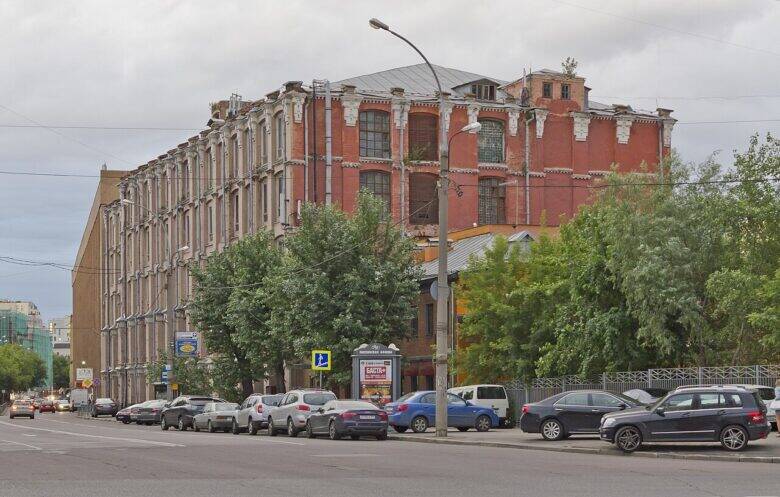
Tryokhgornaya Manufaktura School: what the dates 1816 and 1894 mean
Two dates appear in the history of the Trekhgornaya Manufactory school: 1816 and 1894. The first refers to the factory-based education that Timofey Prokhorov organised for workers’ children. The second relates to the company’s school for craft apprentices, whose charter was approved in the late 19th century. Decades of change at the company and its educational establishments separate these events; it would be inaccurate to…
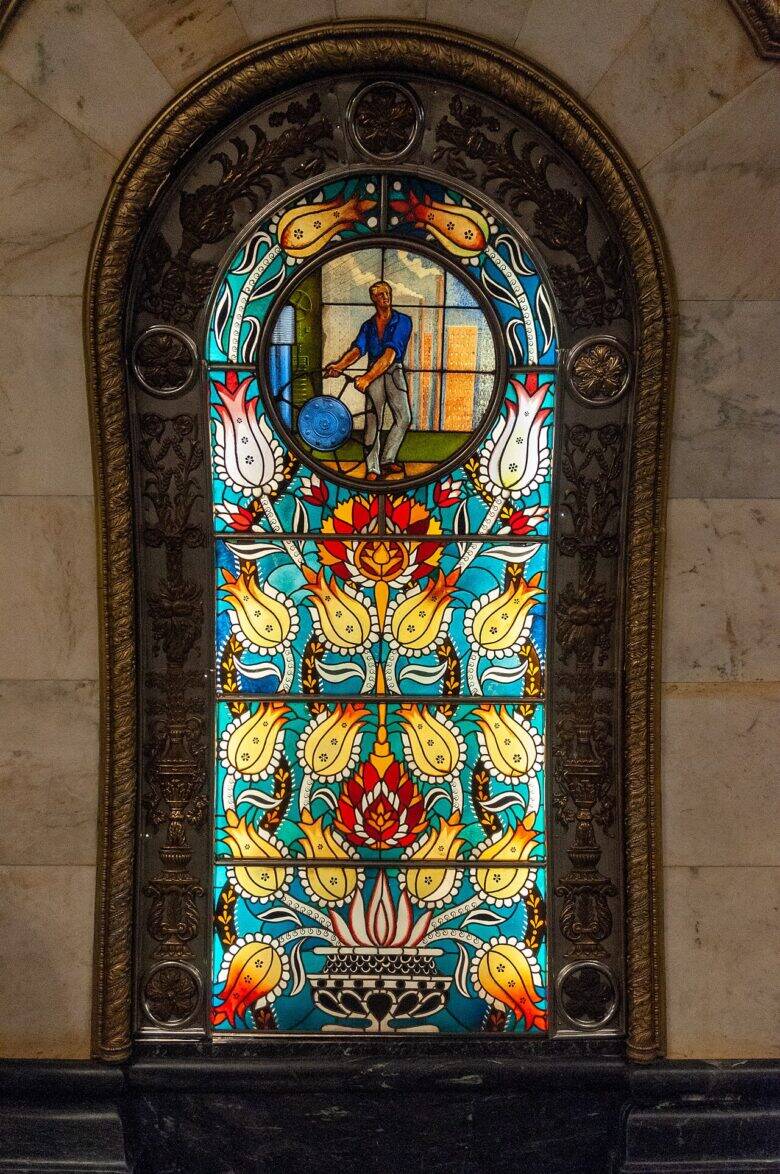
Novoslobodskaya’s stained-glass windows: from a cathedral in Riga or commissioned for the Metro?
The stained glass at Novoslobodskaya station comprises 32 compositions created for the Moscow Metro to designs by Pavel Korin and made by craftspeople in Riga. The claim that finished windows from Riga’s cathedral were transferred to the underground hall appears even in a city guidebook. Records of the commission and production establish a different origin for the compositions themselves. However, the provenance of every original piece of coloured glass c…
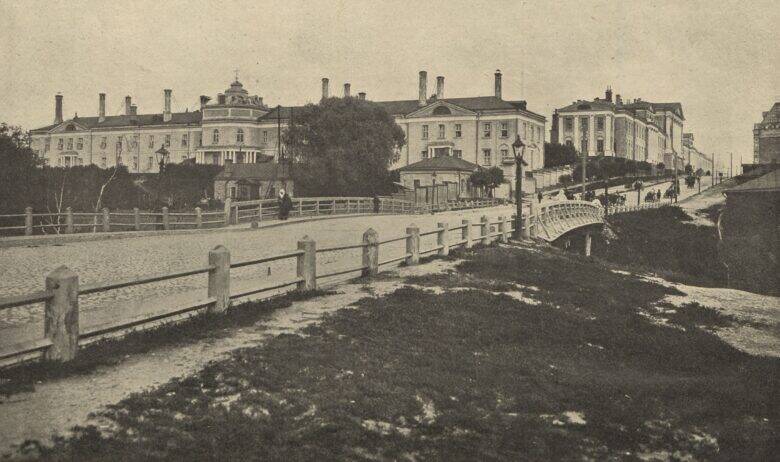
Why graduates of Bidloo’s school had to sit an exam in the navy
In 1712, Stepan Blazhenev and Ivan Belyayev, graduates of Nicolaas Bidloo’s Moscow Hospital School, had to sit another examination in St Petersburg after their final examination in Moscow, before entering service with the Baltic Fleet. The naval commission judged their knowledge inadequate; following their mentor’s complaint to Admiral General Fyodor Apraksin, both were nevertheless granted the rank of assistant medical practitioner and allowed to pract…
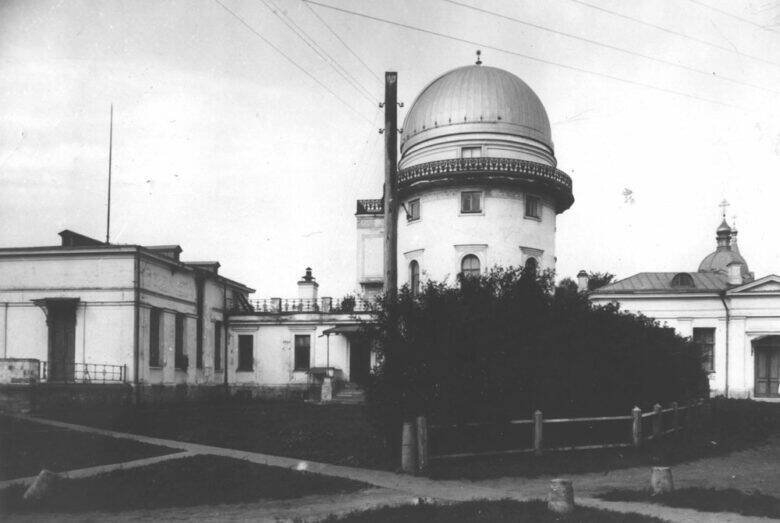
How the Krasnopresnenskaya Observatory’s Seven-Inch Refractor Was Restored
The telescope at Krasnopresnenskaya Observatory is a seven-inch refractor that operated from 1903, helping astronomers at Moscow University study variable stars. The instrument was later dismantled, then reassembled in the 21st century from rediscovered historic components. According to the Sternberg Astronomical Institute of Moscow State University (SAI), only two parts had to be made anew: an equatorial wedge and one component of the mount’s rotation mechanism. By 20…
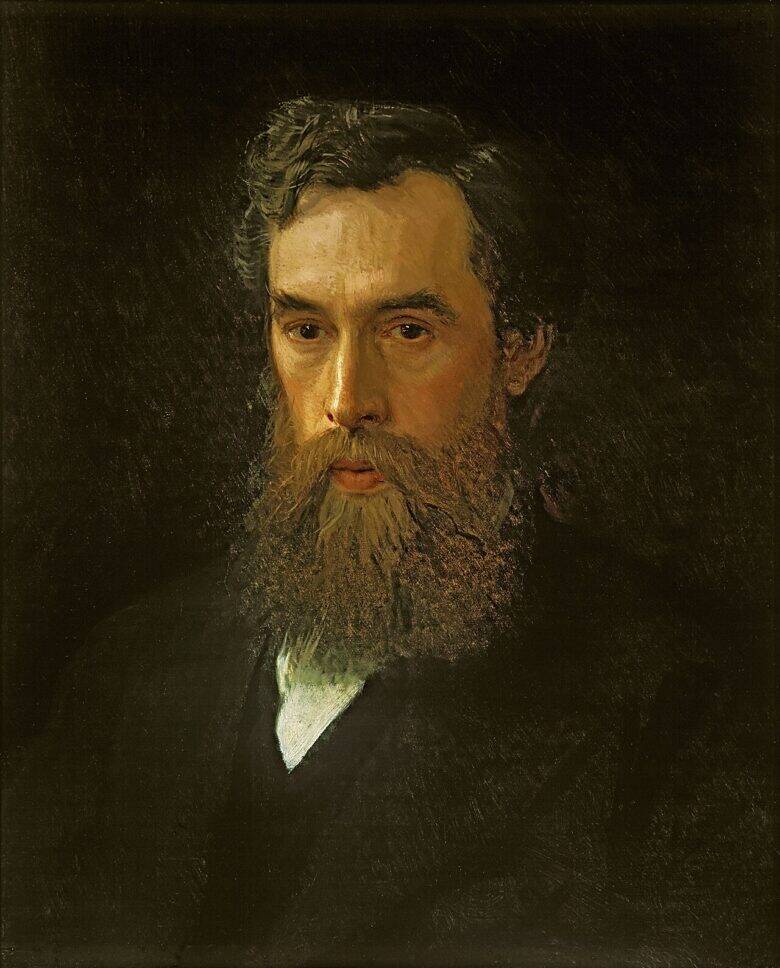
Tretyakovsky Proyezd: how the Tretyakovs opened a passage through the Kitay-Gorod wall
Tretyakovsky Proyezd connected Nikolskaya Street with Teatralny Proyezd through the Kitay-Gorod wall. Pavel and Sergei Tretyakov sought a public route into the trading quarter and convenient access for deliveries; architect Alexander Kaminsky designed it as an ensemble of two contrasting arches and commercial buildings. The result was a street built in the early 1870s that, thanks to its shifting sightlines and architectural motifs from different periods, appears to h…
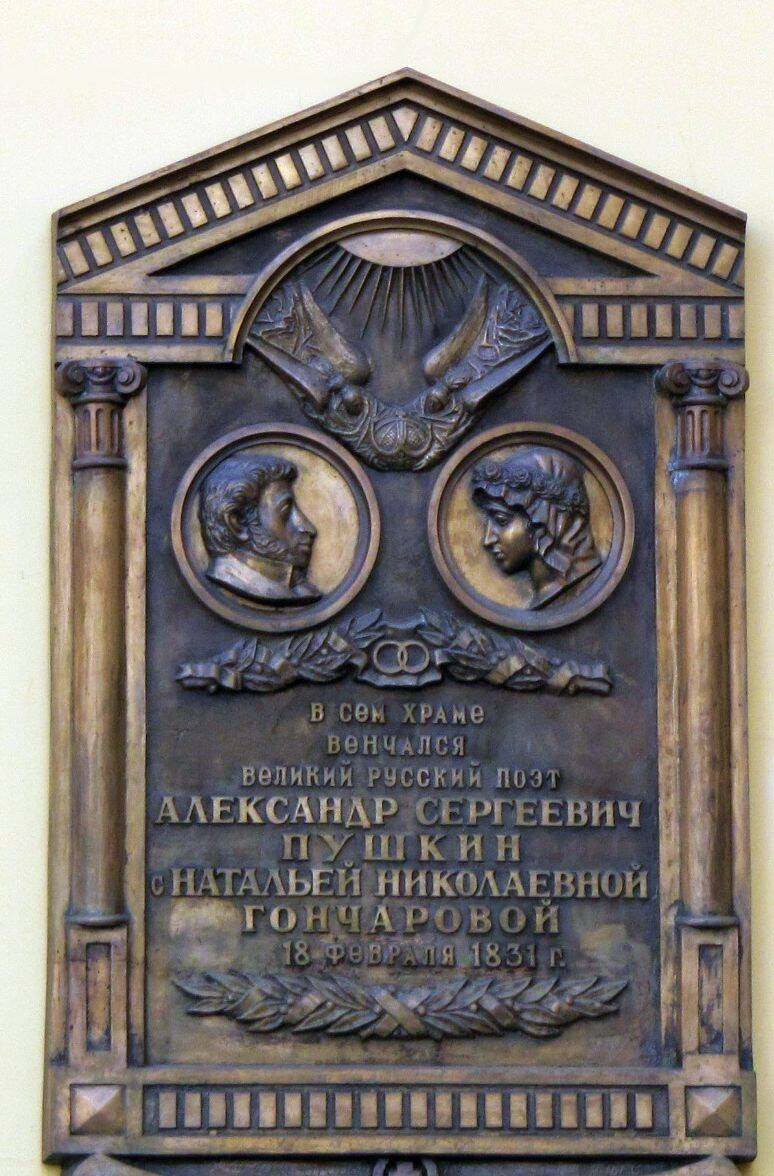
Where Pushkin and Goncharova were married in the unfinished Church of the Great Ascension
Alexander Pushkin and Natalia Goncharova were married on 18 February 1831 in the parish of the Church of the Greater Ascension at Nikitsky Gate. The new church was still under construction at the time, but its refectory, with two side chapels, had been in use since 1816; the official description places the wedding ceremony in this part of the church. One heritage protection document places the ceremony in the…
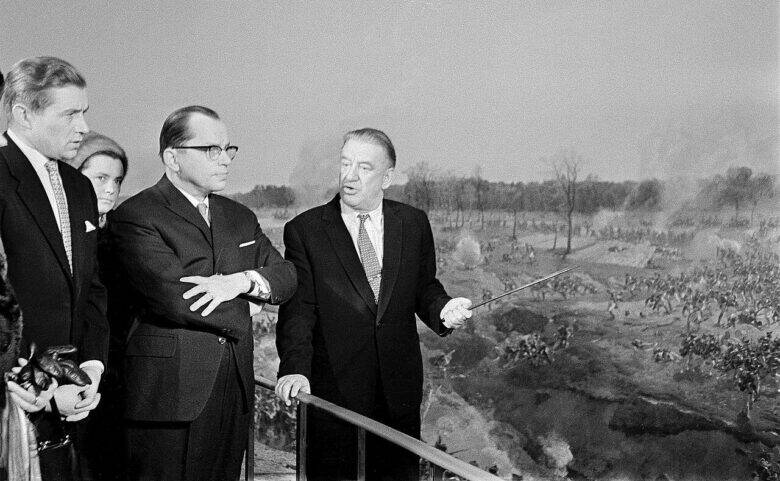
The History of the Borodino Panorama: from Chistye Prudy to Fili
The history of the Borodino Panorama is linked to two Moscow addresses. Franz Roubaud’s canvas was first displayed in 1912 in a purpose-built pavilion on Chistoprudny Boulevard. The museum building at 38 Kutuzovsky Prospekt did not open until 1962. After the original exhibition closed, the painting remained out of public view for decades and had to be restored before going on display again.
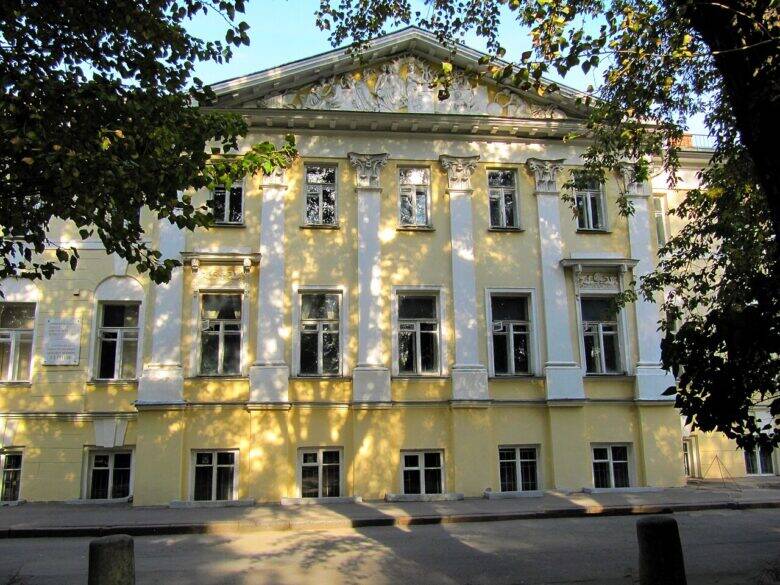
Herzen House and ‘Griboyedov’: What Bulgakov Invented for MASSOLIT
Griboyedov House in The Master and Margarita has a recognisable Moscow model: the estate known as Herzen House at 25 Tverskoy Boulevard. Bulgakov retained features of the real building and its literary use, but invented MASSOLIT, the story about the playwright’s aunt and the system of privileges portrayed in the book. Comparing the fictional scene with the estate’s history helps reveal where documentary evidence ends and satire begins.
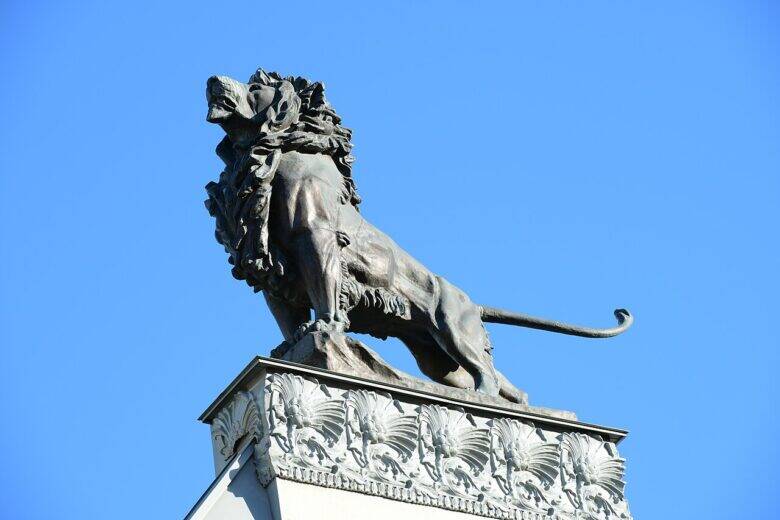
The Lion on Kekusheva’s Mansion: The Story of the Sculpture above Ostozhenka
The lion sculpture on the gable of 21 Ostozhenka Street was installed on 7 December 2017. Lev Kekushev conceived it for his family's early 20th-century mansion, but the original sculpture disappeared. The statue visible from the street reflects the architect's original vision; it was added during restoration.
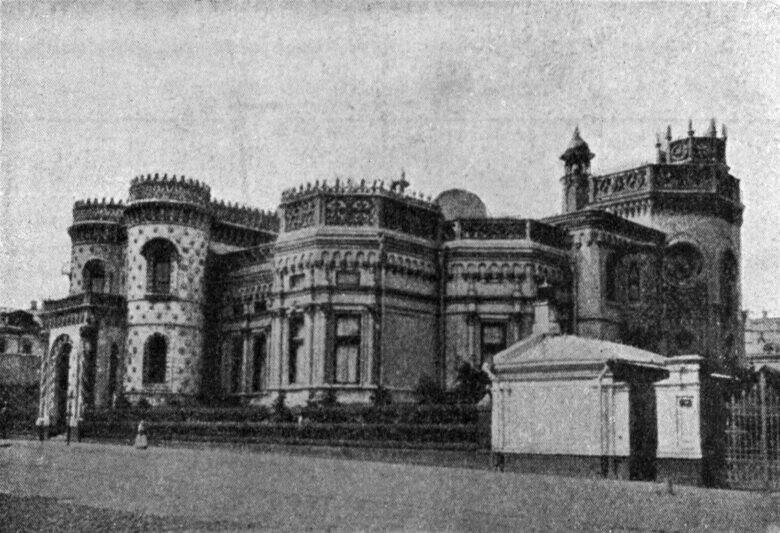
Arseny Morozov Mansion and Pena Palace: Similarities and Differences
The Arseny Morozov Mansion at 16 Vozdvizhenka has a connection with Pena Palace in Sintra: after travelling through Spain and Portugal, architect Viktor Mazyrin drew on romantic castle forms, Moorish motifs and decoration reminiscent of the Manueline style. Built in 1895–1899, the house was designed for a private Moscow property. Certain architectural devices bring the buildings together, while their layouts, settings and purposes differ.
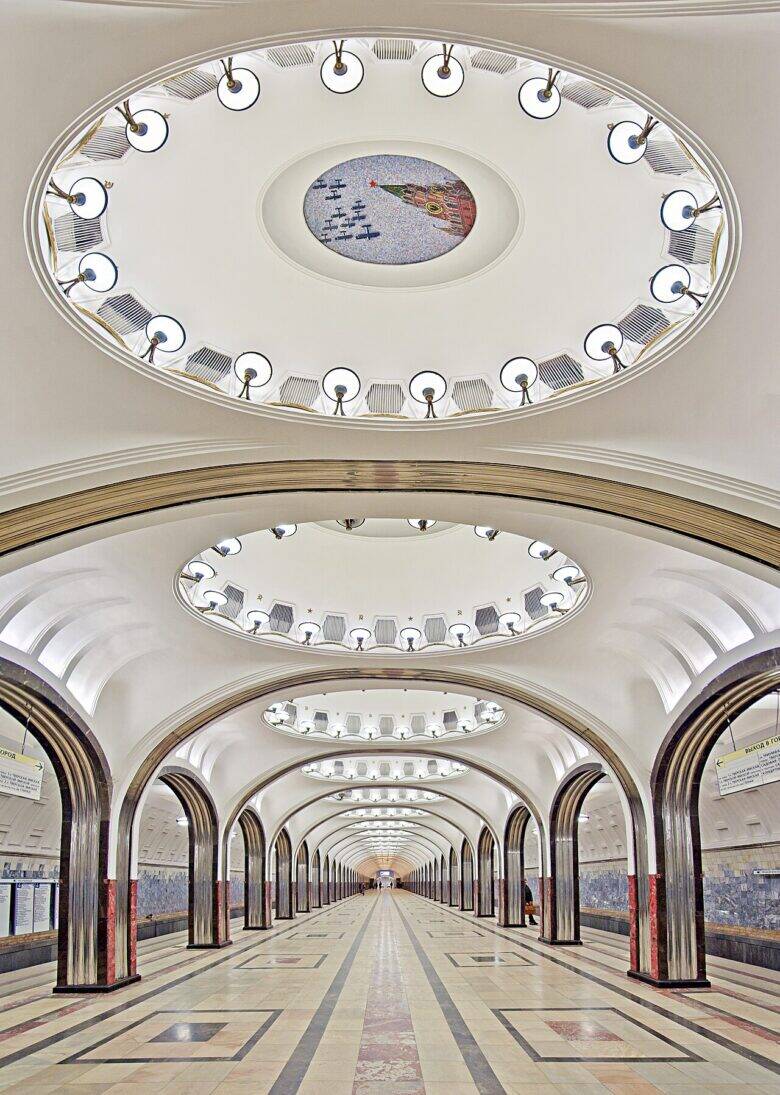
The Mosaics of Mayakovskaya Station: How to Read Deineka’s 34 Panels
The mosaics at Mayakovskaya station comprise 34 panels in the central hall, created from designs by Alexander Deineka. Starting from the original entrance, they form four sections: seven morning scenes, eight daytime scenes, five night scenes and fourteen panels depicting a new morning. This sequence is given in Moscow Heritage magazine. The changing light links scenes of sport, work and flight into the story of a si…
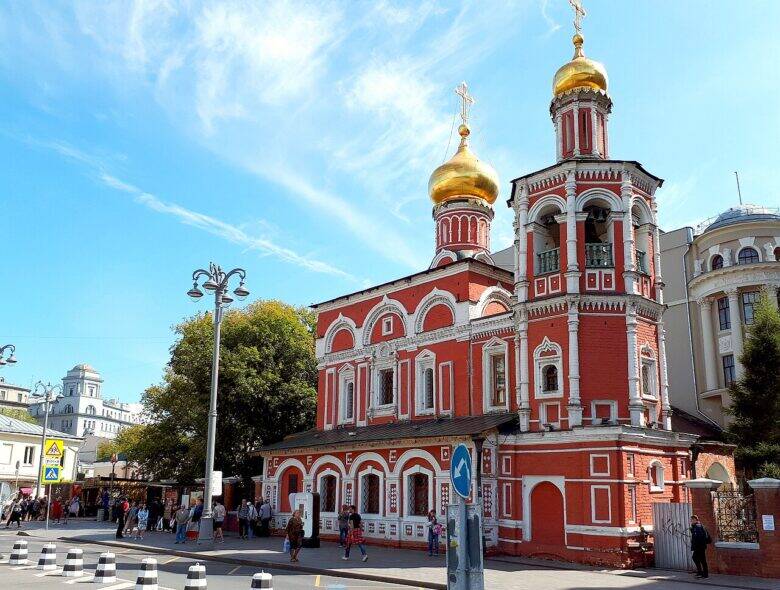
‘In the middle of nowhere’: what we know about a Moscow legend
The Russian expression ‘u chyorta na kulichkakh’ means a remote, inaccessible or unknown place. Moscow’s Kulishki is a real place name, and a story about a demon was being offered as an explanation of the phrase as early as the 19th century. Yet lexicographical and historical sources do not prove that the saying originated in this particular urban legend. Literary examples from the 19th century and heritage protection documents he…
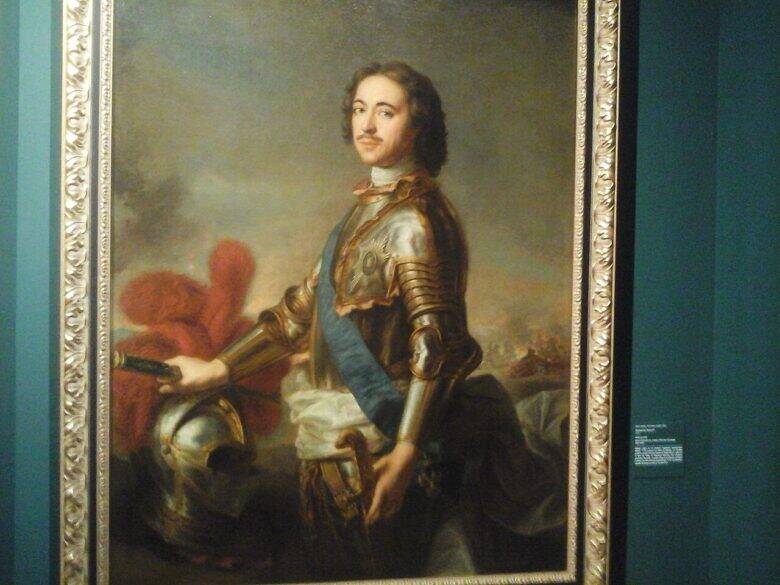
New Year under Peter I: why evergreen branches at the gates were not an indoor Christmas tree
Peter I’s New Year decree of 20 December 1699 declared 1 January the start of the year 1700 and ordered Moscow’s streets to be decorated with conifer trees and branches. The decorations were intended for gates and the exteriors of houses. The decree did not require decorated Christmas trees to be placed indoors: that custom spread in Russia later, in the 19th century.
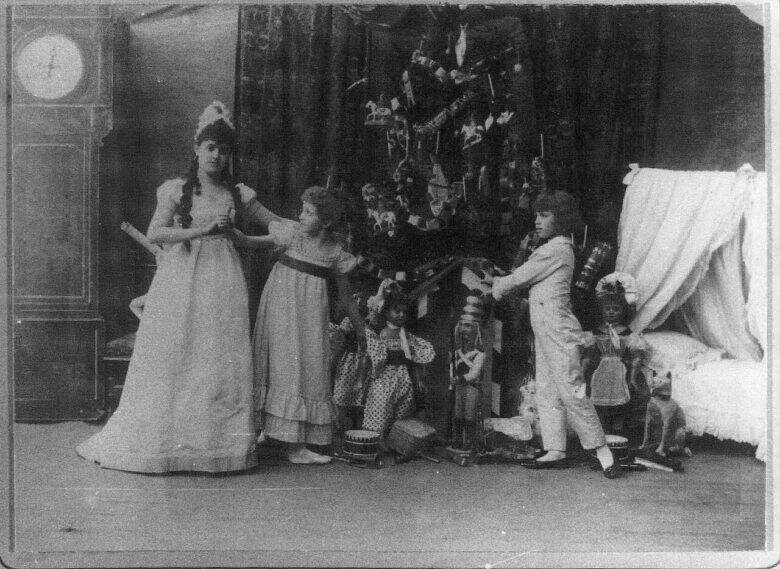
Why The Nutcracker Is Known as a New Year Ballet: The Story of Its March Premiere
Yuri Grigorovich’s The Nutcracker is described as a New Year ballet: in the published libretto for this version, guests visit the Stahlbaums for a New Year celebration, and the story ends after New Year’s Eve. The production’s Moscow premiere took place on 12 March 1966. The month of the first performance does not determine when the story is set.
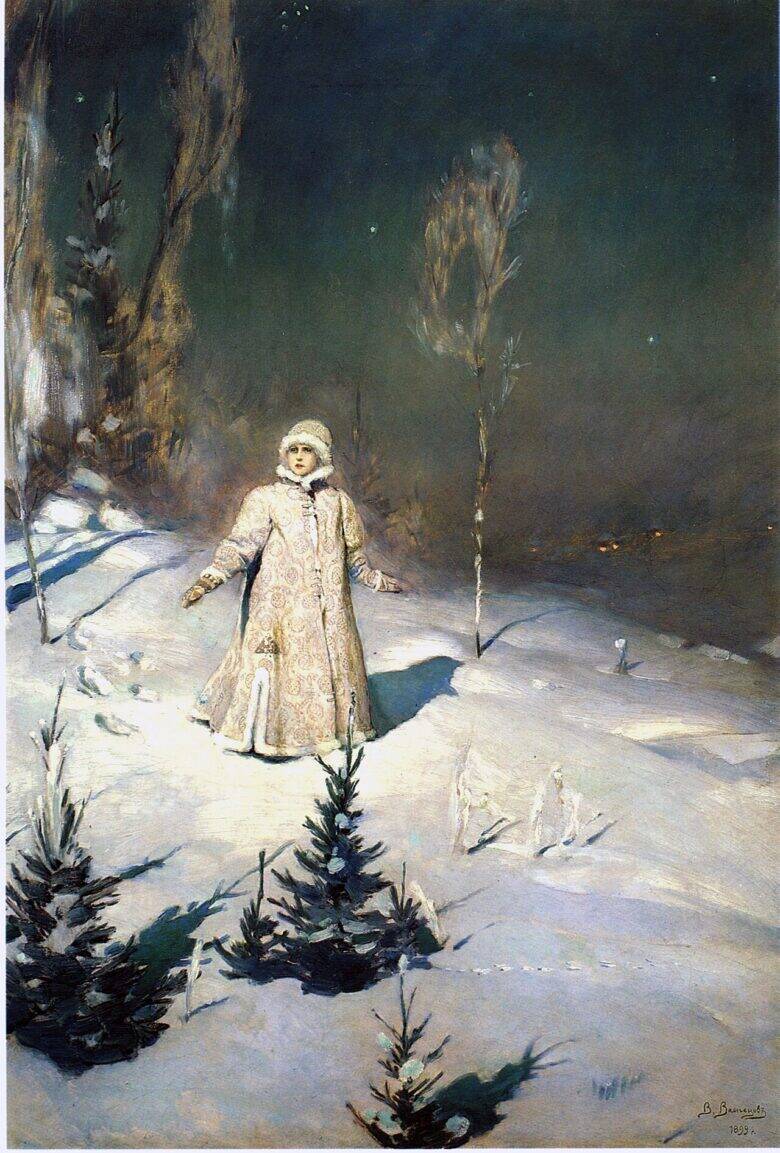
The story of the Snow Maiden: how Ostrovsky’s heroine differs from Father Frost’s granddaughter
Ostrovsky’s Snegurochka is the daughter of Frost and Spring the Fair in his 1873 play. She longs to learn how to love and perishes in the sun’s rays. The festive Snegurochka is Ded Moroz’s granddaughter and his helper at New Year celebrations. These roles emerged at different times: this family relationship already appeared in literature in the early 20th century, while the character bec…
Advantages of individual excursions over group ones
- All attention is on you. Answers to all your questions.
- An atmosphere of tranquility and privacy.
- We pay special attention to the places that interest you.
- Possibility of adapting the route to your preferences and interests.
- You hear everything the tour guide says.
- At individual excursion you dive deeper.
- No one is in a hurry. Take a good look at the sights - they won't leave without you.
- Without loud laughter and inappropriate jokes from other tour participants.
- Your photos will not be crowded with other participants.
- The opportunity to discuss personal impressions and emotions with the guide during the process.
- Take a break when needed - to rest or take photos.
- A personal guide remembers you, and you remember him. Such moments remain in memory.
- There is less strain on your hearing and attention, since the guide is literally right next to you and speaks only for you.
- The excursion can be either educational or easy, depending on your wishes.
- Opportunity to gain insight or exclusive information.
- Absence of outside pressure.
- The guide doesn't make stops at points of sale (at least we certainly don't).
- You don't have to get up early or come at an inconvenient time. You choose when.
- Possibility to visit places closed to large groups.
How much more expensive are personal tours than mass tours?
If you are alone or in pairs, then a sum of several thousand for a walking tour of the city or twenty thousand for a car excursion is significant.
But if you're going for a walk with family or friends, the cost for an individual participant approaches one or two thousand - the amount that each person would pay for a group excursion with strangers.
For your group of 8 or more people, the price becomes even lower when calculated per person, making a private tour truly attractive.
***
A mass excursion is tourism, an individual excursion is a journey through the city’s secrets with a personal guide.
The Radius excursion bureau offers fascinating excursions on the history of Moscow in Russian and foreign languages. You can choose a walking tour or a sightseeing trip by car, as well as order an individual route. Our stylish guides will provide a lively speech without cliches, immersing you in the rich history of the capital. In addition, we offer corporate excursions, and our experience of cooperation with such companies as Yandex and Faberlic confirms our competence.
For those who want to make an original gift, gift certificates for our excursions are available. This is the perfect way to give an educational walk around Moscow with a modern guide. Our excursions are conducted in Russian, English, German, Spanish and Hebrew, and can include walks, bike rides, scooter rides or a boat ride on the Radisson Royal on the Moscow River.