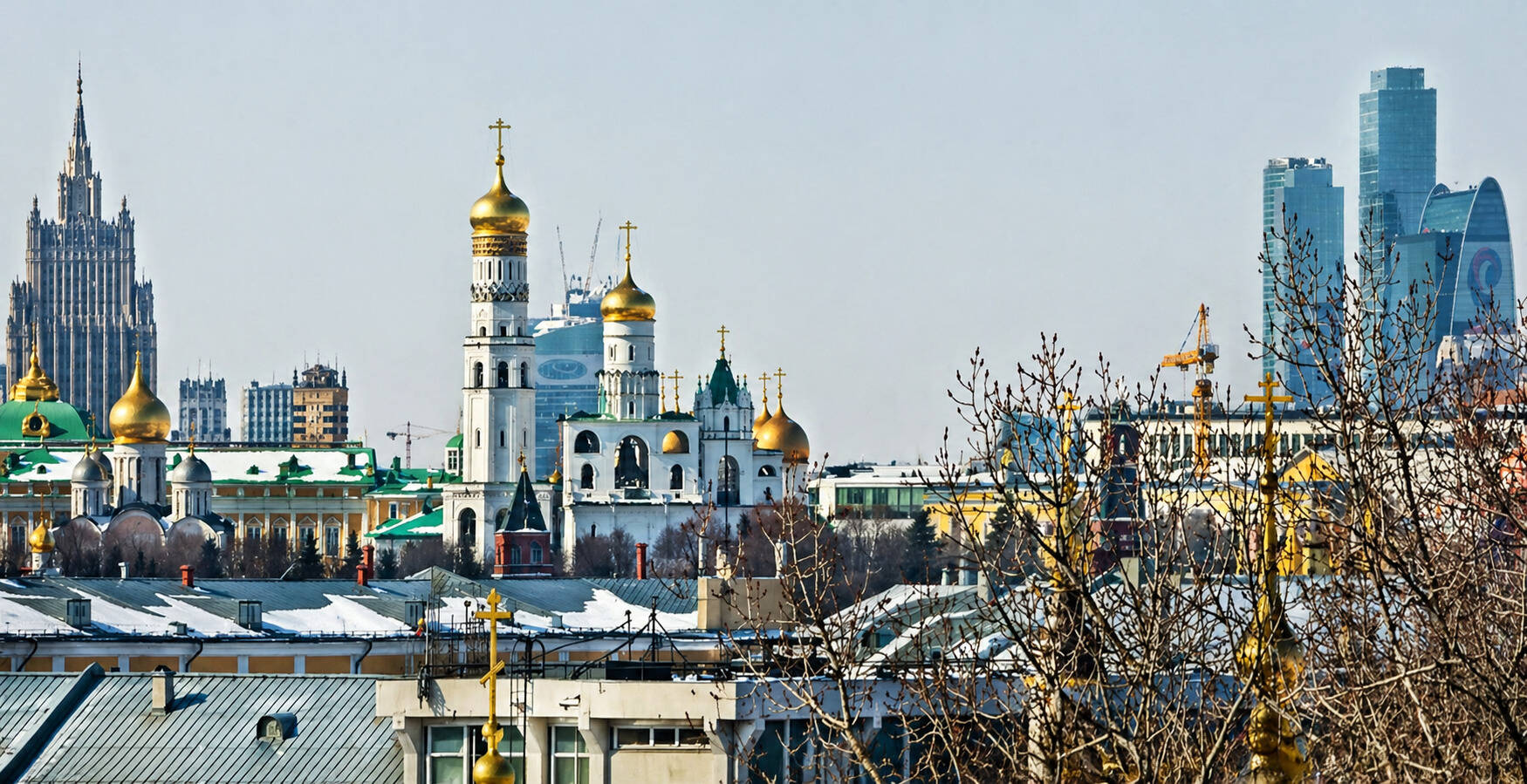
Articles on Moscow’s history and culture help you prepare for a guided walk and choose a private tour on a subject that interests you.
Historius (page 5)
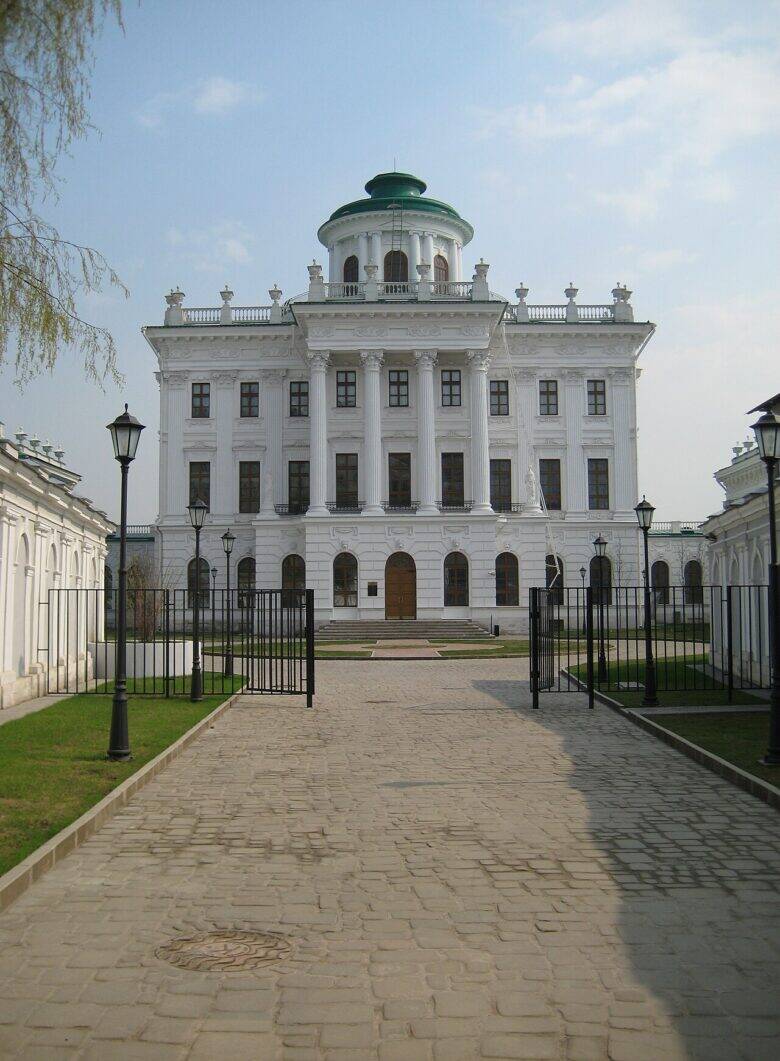
Pashkov House from the Courtyard: Why the Grand Entrance Is in a Side Street
The grand entrance to Pashkov House is on Starovagankovsky Lane, although the most recognisable view of the building is from Mokhovaya Street near the Kremlin. From the courtyard, you can see the gates and the court of honour, through which guests arrived at the main building. The Russian State Library describes both façades as principal façades: one faces the city panorama, the other the court of honour.
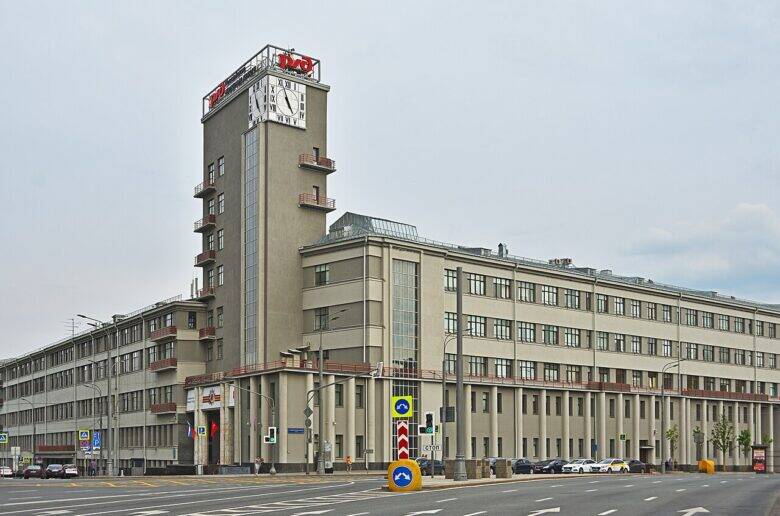
The Locomotive House on Novaya Basmannaya: What Remains of the Reserve Palace
Moscow’s Locomotive House is the former People’s Commissariat of Railways building at 2/1 Novaya Basmannaya Street; it retains parts of the 18th-century Reserve Palace. Its street-facing appearance, with a corner tower and clock, took shape during the 1932–1938 reconstruction designed by Ivan Fomin. Within this later shell, however, walls, vaults, elements of the layout and traces of earlier façades surv…
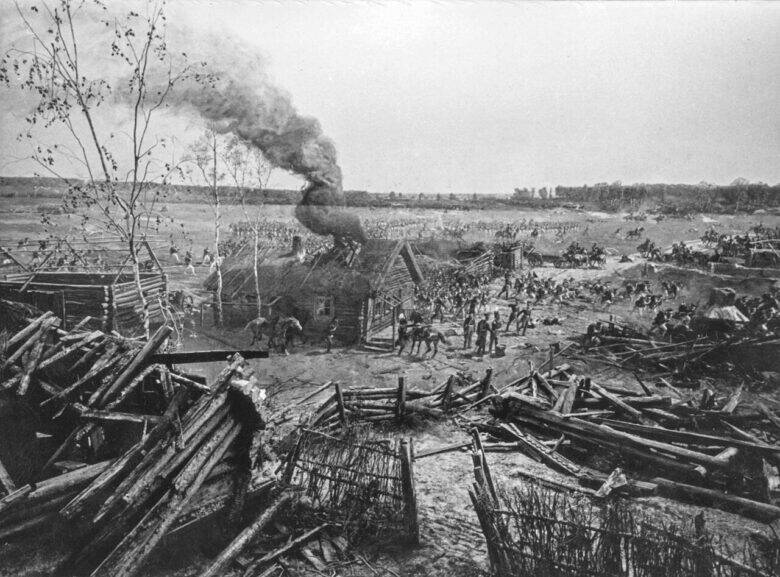
Roubaud’s Panorama: What Survives After the Restorations of 1962 and 1967
Franz Roubaud’s panorama ‘Borodino’, housed in the museum on Kutuzovsky Prospekt, is a work with several layers of history. The artist created it in 1912 to mark the centenary of the battle. Before the present museum opened in 1962, the canvas had already required restoration after years in storage; a fire on 27 June 1967 called for further, far more extensive work. The panoramic scene visitors see today therefore ca…
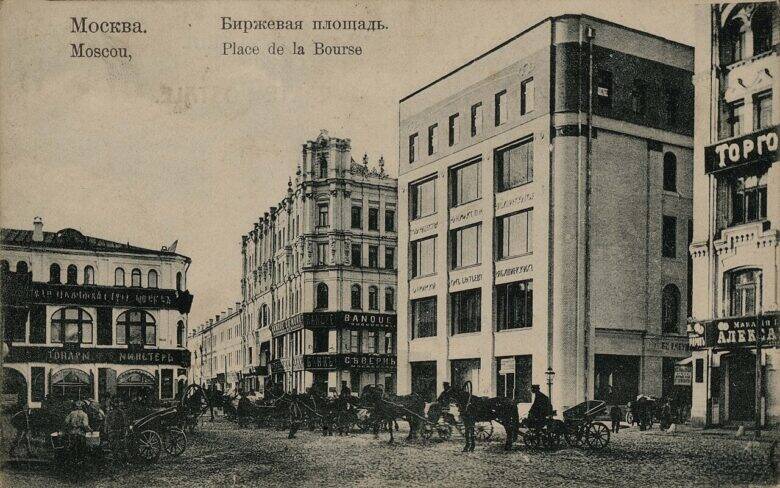
The Ryabushinsky Bank on Birzhevaya Square: Shekhtel and Later Alterations
The Ryabushinsky Bank on Birzhevaya Square is an early example of rationalist Art Nouveau. In 1903–1904, Fyodor Schechtel remodelled an existing brick building; its present upper section was added after his work. The façade should therefore be seen as the result of several phases of construction, rather than as a single design by Schechtel.
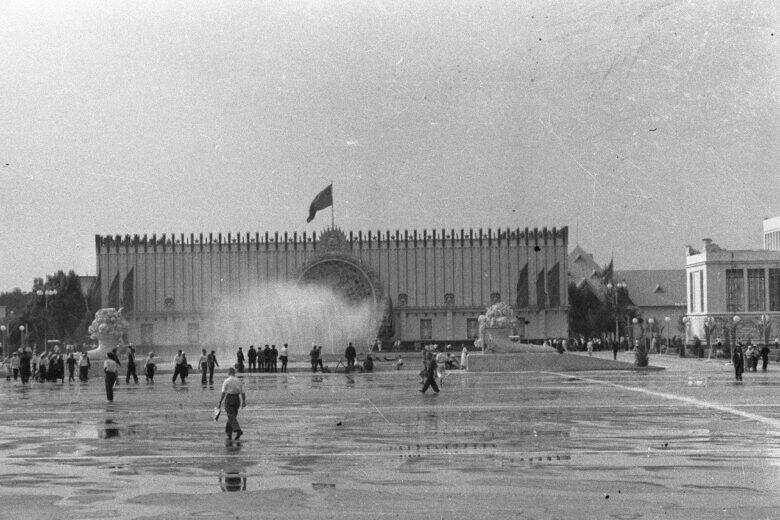
1939 All-Union Agricultural Exhibition Photo Album: Drainage, Cleaning and Sanitary Inspection
On the cover of the album on VSKhV is a reference to the State Sanitary Inspectorate’s report for 1939. The accompanying sheets include the construction of a drainage system, a table of pavilion cleaning arrangements and a photograph of a sweeping machine. The selection shows the work and maintenance methods presented by the compilers; it cannot be used to assess the exhibition’s cleanliness throughout the season.
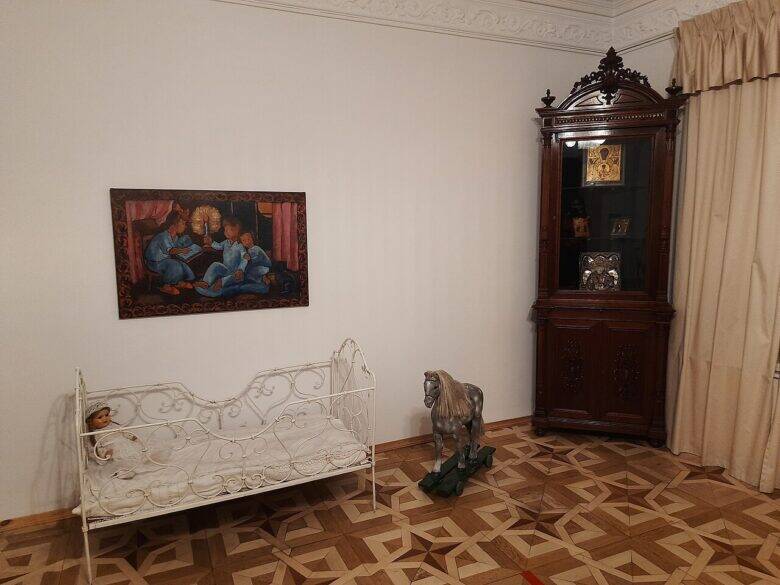
How Marina Tsvetaeva’s Flat Became a Communal Flat
Marina Tsvetaeva’s flat No. 3 at 6 Borisoglebsky Lane became a communal flat gradually. After 1917, the family first lost its former sources of income and reduced the space they occupied; by the final year before the poet’s emigration, other people were already living on the upper level. After Tsvetaeva left with her daughter in May 1922, all the flats in the building became communal. Museum documents and descriptions…
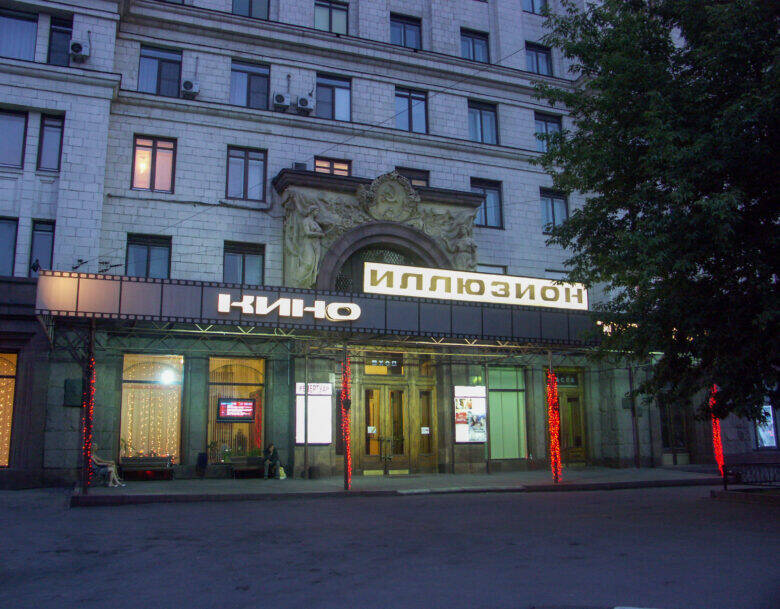
How Znamya became Illuzion: the history of the cinema in the Kotelnicheskaya Embankment skyscraper
The history of the Illuzion cinema in the Kotelnicheskaya Embankment skyscraper began on 18 March 1966, when Gosfilmofond opened a venue for archival screenings in the former Znamya cinema. Films from the archive’s collection began to be shown in the existing auditorium.
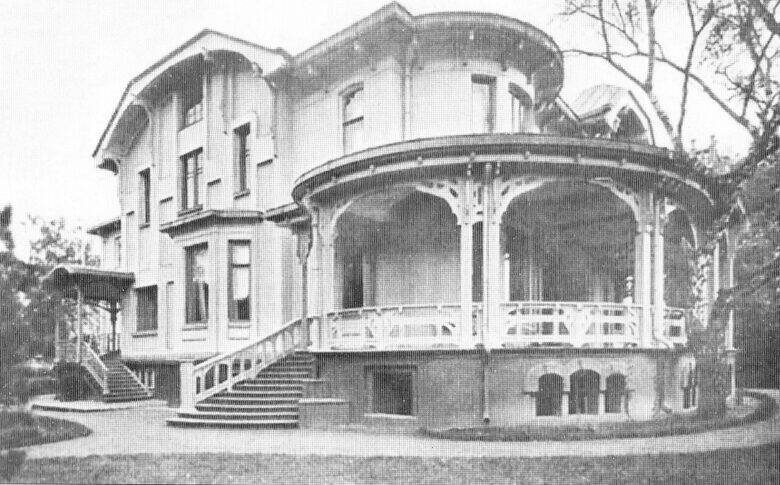
Nosov Mansion: How Kekushev Designed a Modern Wooden House
Vasily Nosov’s mansion on what is now Elektrozavodskaya Street was designed by Lev Kekushev and built in 1903. Wooden walls and terraces with carved detailing were combined with hot-water heating, ventilation, sewerage and electric lighting — the amenities of a modern urban home. The story of the commission and the layout explain how these features worked together in a single house.
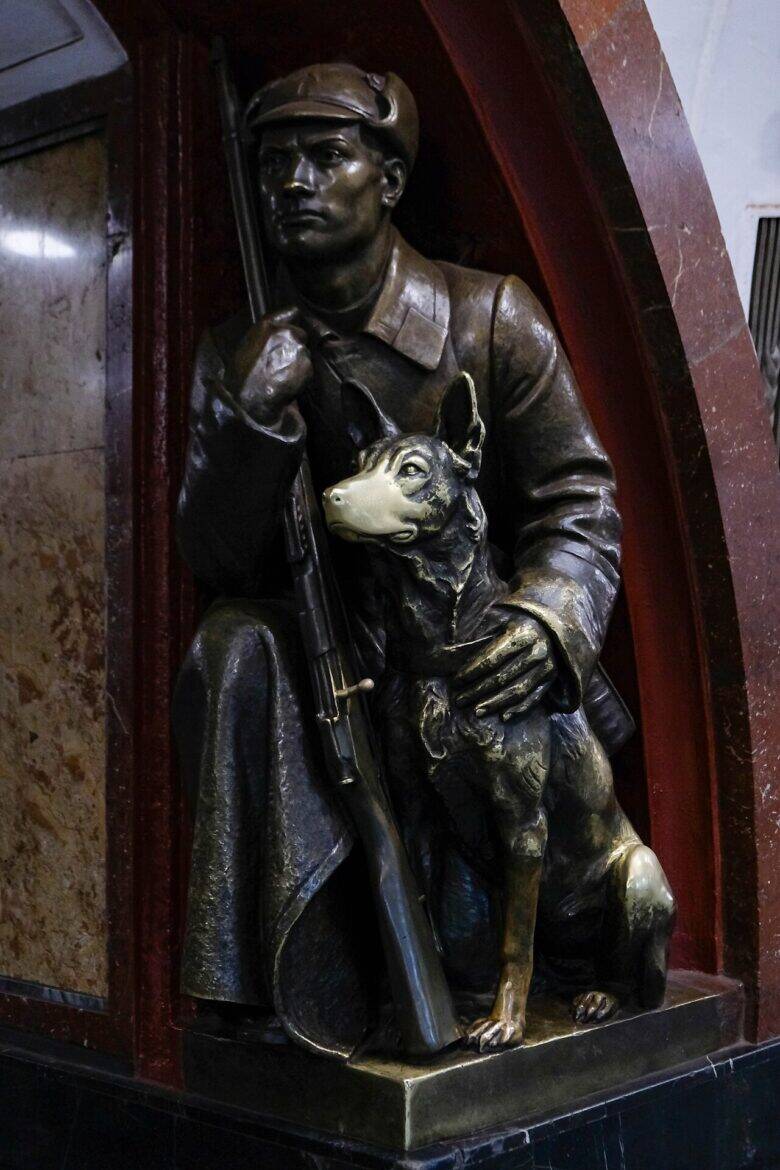
The Dog’s Nose at Ploshchad Revolyutsii: Why It Shines
The bronze dog's nose at Ploshchad Revolyutsii station has been worn down by passengers touching it. The Commission of the Russian Federation for UNESCO links the wear to a belief that touching it brings good luck in exams, while a city magazine urges people not to touch the sculpture. The shiny nose is a trace of this habit; the figure itself forms part of Matvey Manizer's sculptural ensemble, installed in December 1937.
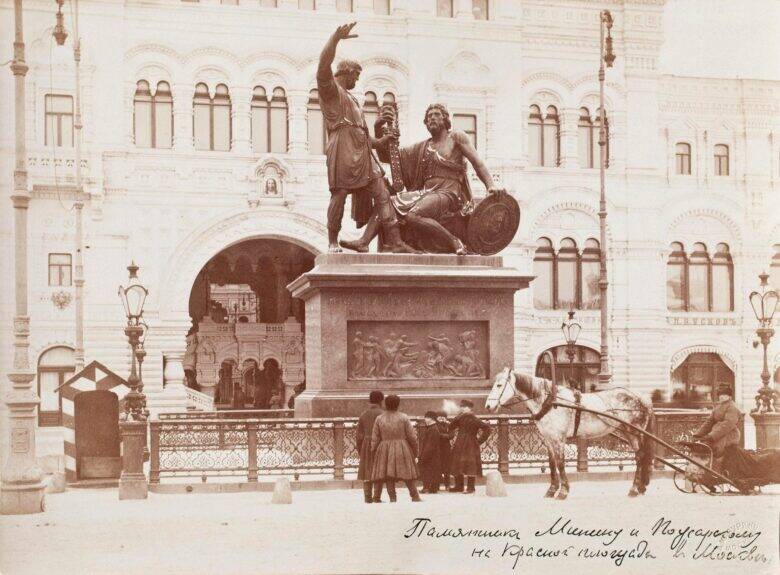
The ‘I Did What I Could’ section drawing: what we know about the competition design for the Upper Trading Rows
The published section drawing of a competition design for the Upper Trading Rows bears the motto ‘I did what I could’. The winning entry was ‘To the Merchants of Moscow’, which the magazine attributes to Alexander Pomerantsev. This is evidence of a separate competition proposal for GUM, rather than a drawing of the building as constructed.
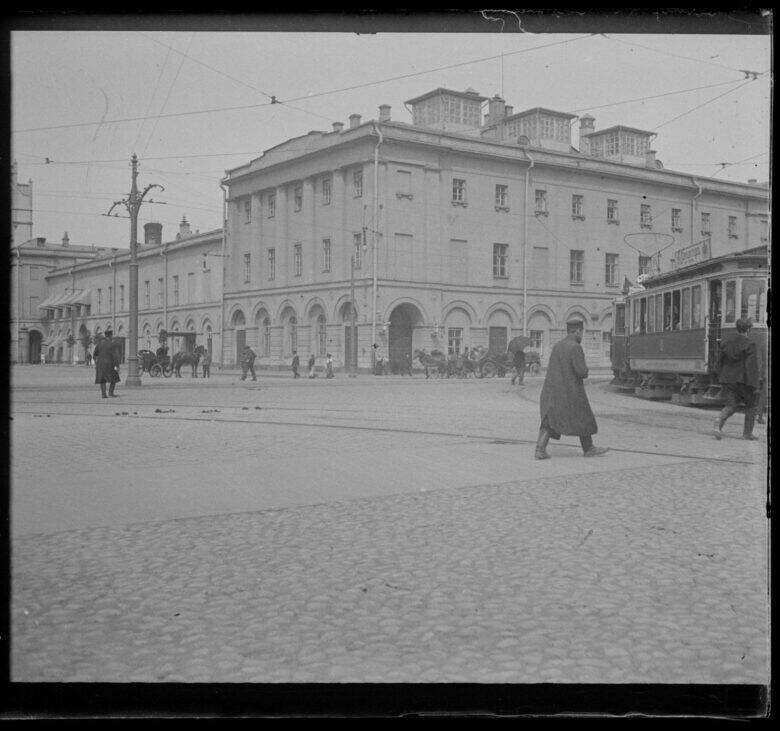
“It’s a Family Affair”: Publication in 1850 and the First Productions
Alexander Ostrovsky’s comedy ‘It’s a Family Affair — We’ll Settle It Ourselves!’ was published in full in Moskvityanin in 1850. The Irkutsk theatre staged it in 1857, while the ban was still in force; the Imperial Theatres received permission to stage an abridged version only in 1860 and presented it in 1861. The original version returned to the Moscow stage with official approval in 1881. The years of publication, the first public perfo…
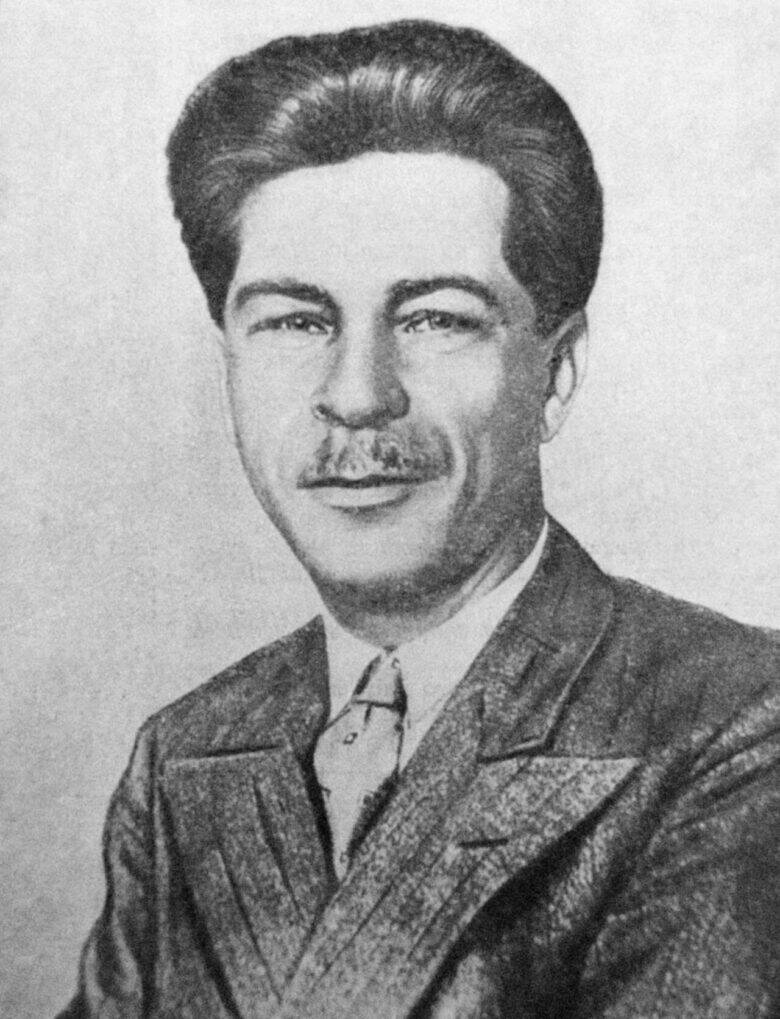
The First Kremlin New Year Celebration: Why the Move from the House of Unions Is Dated to Both 1953 and 1954
For many years, Moscow’s main New Year celebration for children took place in the Hall of Columns at the House of Unions. On 30 December 1953, a commission was preparing the festivities at the Grand Kremlin Palace, where the first documented children’s performance took place on 1 January 1954. The documents distinguish between the preparations and the date of the event; the date of the original decision to change the main venue remains unknow…
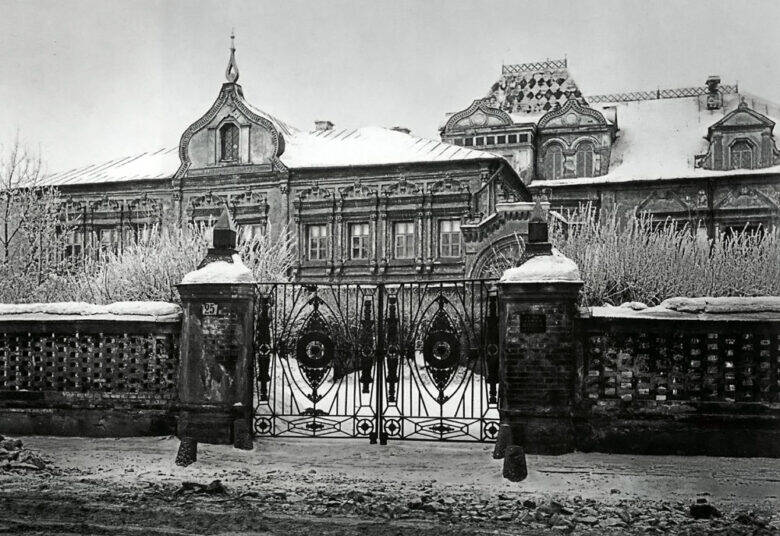
The Volkov-Yusupov Chambers: Was Ivan the Terrible’s Palace Once Here?
The Volkov-Yusupov Chambers in Bolshoy Kharitonyevsky Lane are associated with Ivan the Terrible’s hunting palace. This legend cannot be verified from the surviving building: a historical and cultural heritage assessment dates the earliest examined parts of the western wing to the 17th century, while the documents reviewed contain no evidence of construction commissioned by the tsar on this site. The falconry scenes in the interiors were added when the Yusupov residence w…
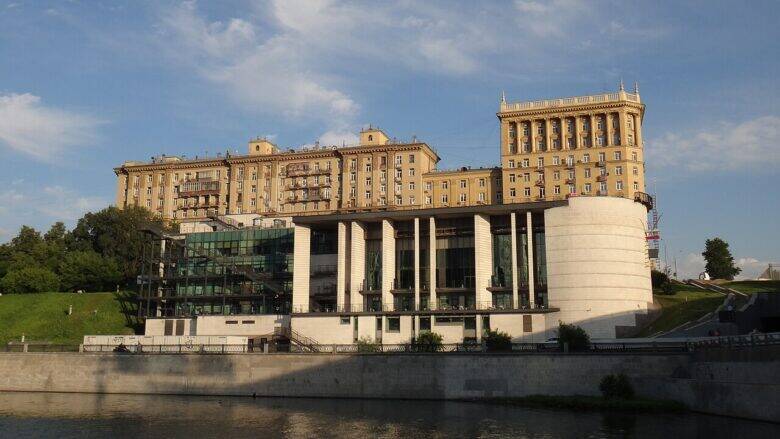
The Fomenko Workshop’s New Stage: How the Riverbank Slope Became Part of the Theatre
The New Stage of the Fomenko Workshop is built into the high bank of the Moskva River. Architect Sergei Gnedovsky and his design team used the change in ground level as the basis for the layout: the theatre was kept low on the side facing the residential buildings, while beyond the entrance they placed a foyer that descends towards the auditoriums across several levels. The audience’s route through the theatre thus helps them u…
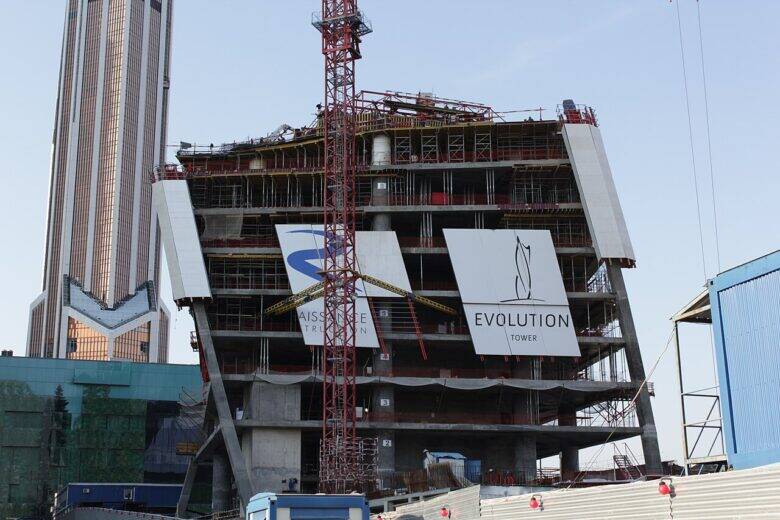
Evolution Tower: why the wedding palace disappeared and how the façade is constructed
Evolution Tower, beside Bagration Bridge, grew out of a proposed complex with a wedding palace at the foot of a commercial tower. In the completed scheme, a shopping arcade and public square took the place of the ceremonial venue, while the spiral silhouette remained. Rotating floor plans and insulating glass units bent within their façade frames create the appearance of a continuous glass spiral.
Advantages of individual excursions over group ones
- All attention is on you. Answers to all your questions.
- An atmosphere of tranquility and privacy.
- We pay special attention to the places that interest you.
- Possibility of adapting the route to your preferences and interests.
- You hear everything the tour guide says.
- At individual excursion you dive deeper.
- No one is in a hurry. Take a good look at the sights - they won't leave without you.
- Without loud laughter and inappropriate jokes from other tour participants.
- Your photos will not be crowded with other participants.
- The opportunity to discuss personal impressions and emotions with the guide during the process.
- Take a break when needed - to rest or take photos.
- A personal guide remembers you, and you remember him. Such moments remain in memory.
- There is less strain on your hearing and attention, since the guide is literally right next to you and speaks only for you.
- The excursion can be either educational or easy, depending on your wishes.
- Opportunity to gain insight or exclusive information.
- Absence of outside pressure.
- The guide doesn't make stops at points of sale (at least we certainly don't).
- You don't have to get up early or come at an inconvenient time. You choose when.
- Possibility to visit places closed to large groups.
How much more expensive are personal tours than mass tours?
If you are alone or in pairs, then a sum of several thousand for a walking tour of the city or twenty thousand for a car excursion is significant.
But if you're going for a walk with family or friends, the cost for an individual participant approaches one or two thousand - the amount that each person would pay for a group excursion with strangers.
For your group of 8 or more people, the price becomes even lower when calculated per person, making a private tour truly attractive.
***
A mass excursion is tourism, an individual excursion is a journey through the city’s secrets with a personal guide.
The Radius excursion bureau offers fascinating excursions on the history of Moscow in Russian and foreign languages. You can choose a walking tour or a sightseeing trip by car, as well as order an individual route. Our stylish guides will provide a lively speech without cliches, immersing you in the rich history of the capital. In addition, we offer corporate excursions, and our experience of cooperation with such companies as Yandex and Faberlic confirms our competence.
For those who want to make an original gift, gift certificates for our excursions are available. This is the perfect way to give an educational walk around Moscow with a modern guide. Our excursions are conducted in Russian, English, German, Spanish and Hebrew, and can include walks, bike rides, scooter rides or a boat ride on the Radisson Royal on the Moscow River.