Articles on Moscow’s history and culture help you prepare for a guided walk and choose a private tour on a subject that interests you.
Historius (page 8)
16 still lifes and four types: how the design of the Stone Flower fountain evolved
The Stone Flower fountain at VDNKh is surrounded by 16 bronze still lifes, but there are only four types of composition. Originally, each group was to depict the agricultural bounty of one of the 16 Soviet republics. The individual designs were later abandoned, and four variants were repeated around the perimeter of the basin. The journal of Moscow’s Department of Cultural Heritage records this change but does not explain the reason for it.
Moscow, Part by Part: How Ruban’s and Maksimovich’s Guidebooks Differ
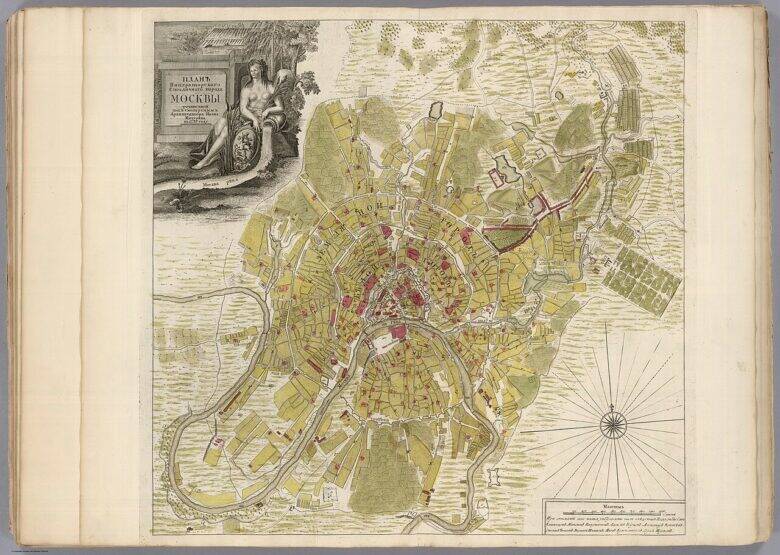
The earliest guidebooks to Moscow — Vasily Ruban’s book of 1782 and Lev Maksimovich’s work of 1792–1793 — presented different ways of describing the city. The 1782 edition arranges information by fourteen police districts, while the 1792–1793 work follows four historic areas: the Kremlin, Kitay-Gorod, Bely Gorod and Zemlyanoy Gorod. Their different structures show how the authors addressed different questions r…
The North Entrance Arch at VDNKh: how the Main Entrance became the North Entrance and what was restored
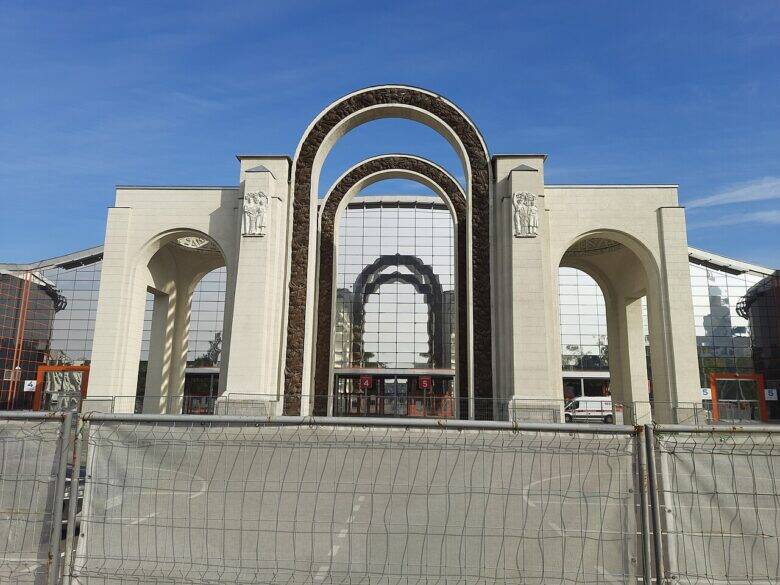
The Northern Entrance Arch at VDNKh was the main entrance to the All-Union Agricultural Exhibition when it opened on 1 August 1939. Following the reconstruction completed by 1954, it acquired its present name: the ceremonial entrance was moved to Prospekt Mira. This change is recorded in the exhibition’s 1954 master plan.
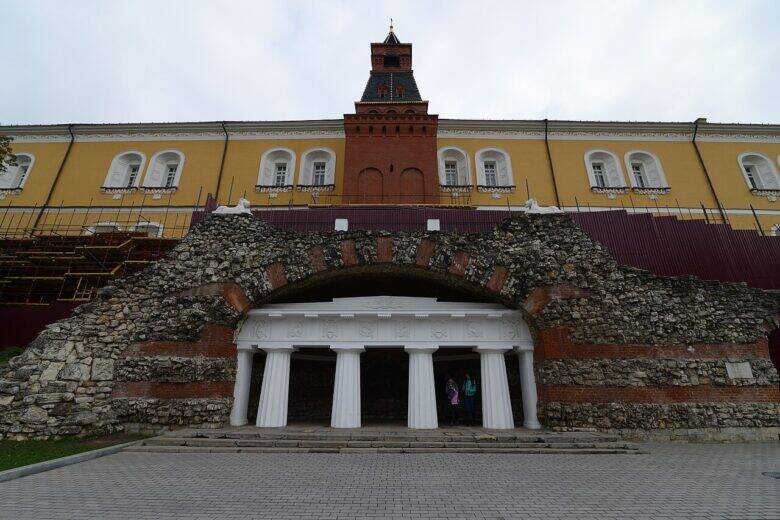
The ‘Ruins’ Grotto in Alexander Garden: remembrance of 1812 and the work of restorers
The grotto in Alexander Garden beside the Middle Arsenal Tower is known as the ‘Ruins’. It was built to a design by Osip Bove in the early 1820s. Its masonry incorporates carved architectural details from dismantled buildings in Moscow, including the Arsenal. The columned portico, lion figures and some of the decorative features were restored in the 20th century; the documents examined for this article do not est…
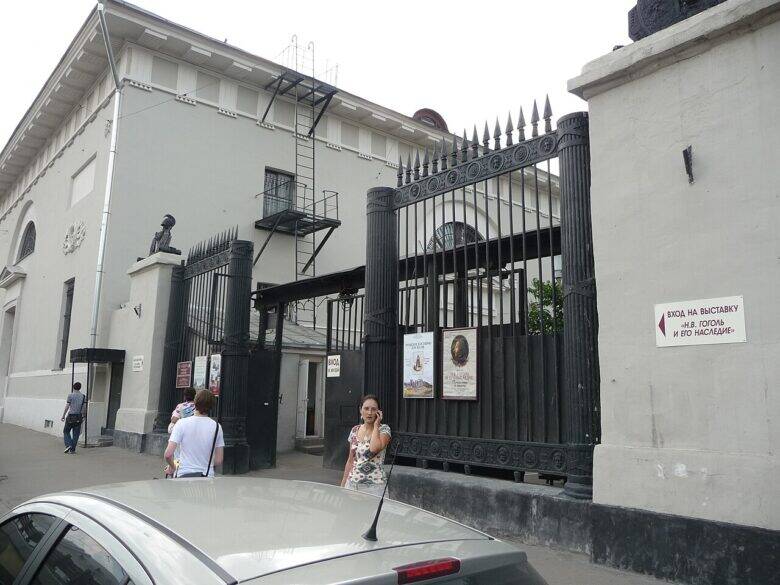
Tour guide certification in Moscow and museum accreditation: why both are needed
Tour guide certification in Moscow and museum accreditation serve different purposes. The former confirms a professional's qualifications to lead tours along city routes; the latter is required for a certified guide who intends to lead a group independently through the exhibitions or grounds of a participating cultural institution. The certificate alone does not entitle a guide to conduct tours independently inside such a museum. When choosing a tour programme…
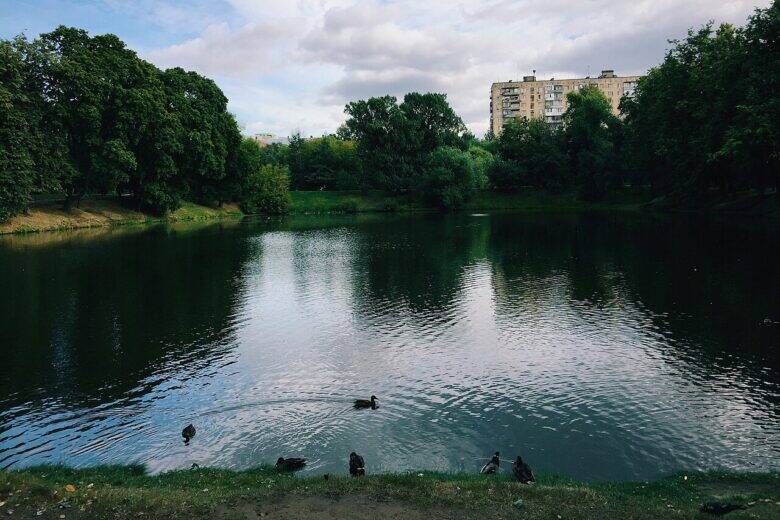
Five, seven or nine ponds: how Lefortovo Park is laid out
Sources give different counts for the ponds in Lefortovo Park. An account of the work carried out in 1722–1724 mentions five new ponds, a published reconstruction of the water system and a 1733 inventory of the Annenhof Garden give nine, while the current official page lists seven. These records refer to different periods and areas. It is therefore impossible to locate ‘Bidloo’s two vanished ponds’ on a modern plan by simple subtraction…
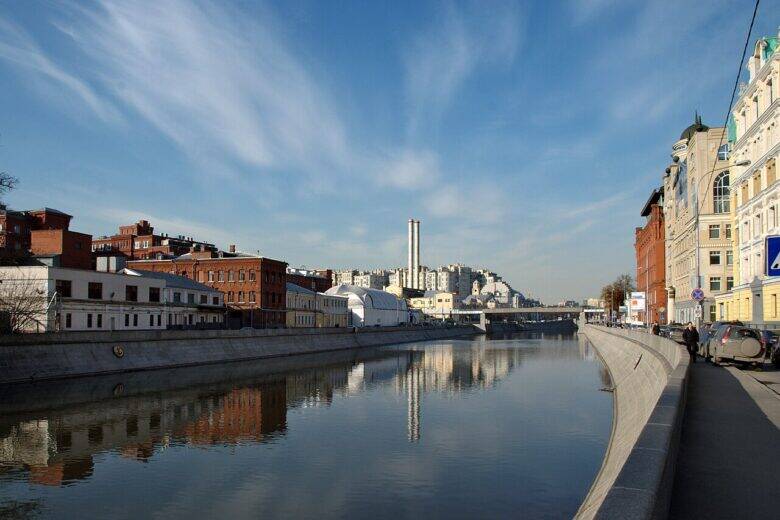
Patriarshy Bridge: How the Route to Yakimanka Was Built in Two Phases
The history of Patriarshy Bridge is the story of a pedestrian link built in two phases across two separate waterways. In 2004, the crossing from the Cathedral of Christ the Saviour spanned the Moskva River and reached Bersenevskaya Embankment on Bolotny Island. In 2007, the route was extended across the island and the Vodootvodny Canal: only then did a continuous route from the Prechistenka side to Yakimanka take…
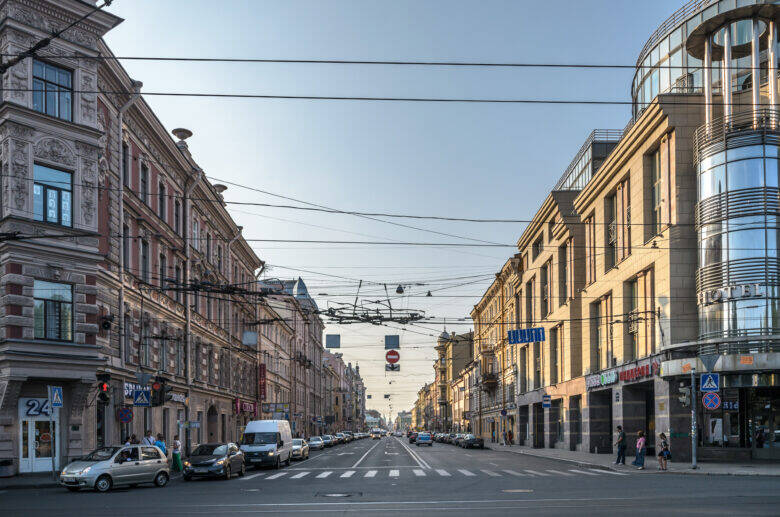
Why the Kumanin family’s Moscow estate is known as Rogozhin’s House
The house at 17 Bolshaya Ordynka is known as the Moscow house of Rogozhin from Fyodor Dostoevsky’s novel The Idiot. The name reflects a theory that it served as a literary model: the character’s address is on Gorokhovaya Street in St Petersburg. The estate belonged to the writer’s relatives, the Kumanin family; researchers compare its original layout with the description of Parfyon’s home. The present-day Moscow façade cannot be regarded as a literal depiction of the hou…
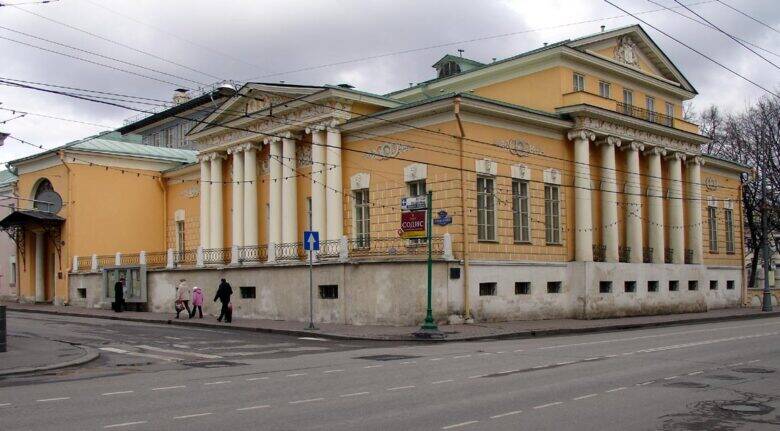
Pushkin and Goncharova’s first meeting: why the date and venue of the ball are disputed
When did Pushkin first meet Natalia Goncharova? One museum publication dates their first meeting at Pyotr Iogel’s ball to late 1828, another to spring 1829. Moscow historian Sergei Romanyuk also considers an earlier possibility: 1826–1827. The poet’s letter of 1 May 1829 establishes a firm latest possible date: by that day, they had already met, and Pushkin had received Natalia’s mother’s r…
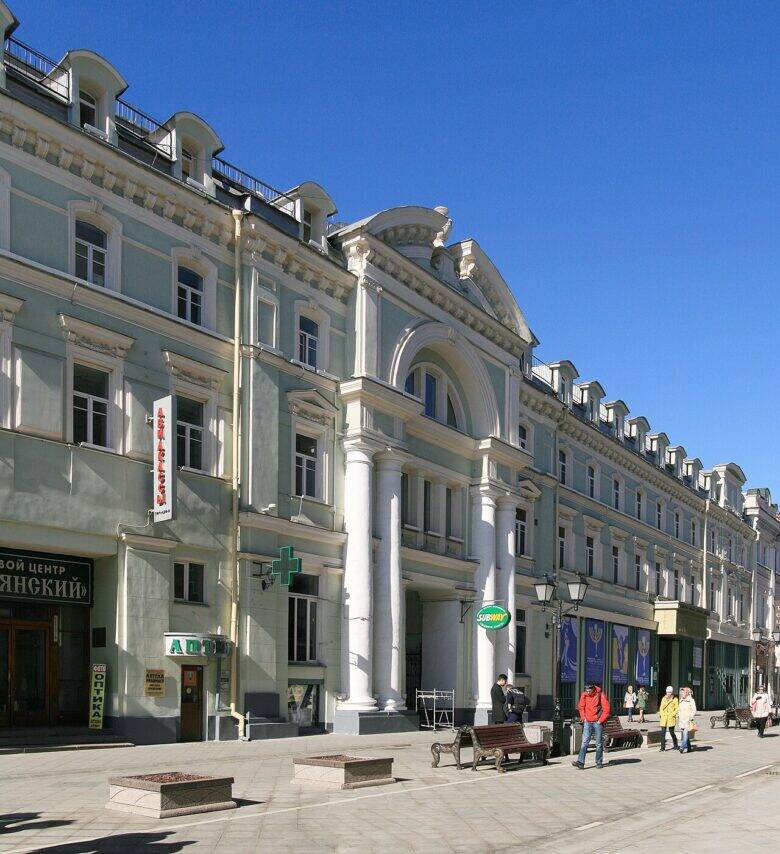
‘Until the Cranes’: Breakfast at the Slavyansky Bazar
The expression ‘to breakfast until the cranes’ referred to Moscow’s Slavyansky Bazar restaurant on Nikolskaya Street, where ‘cranes’ was the name given to a sealed decanter of cognac decorated with images of the birds. Once the bill was paid, the guest kept the decanter. This detail helps explain how a lengthy meal became an extension of business negotiations and a display of wealth.
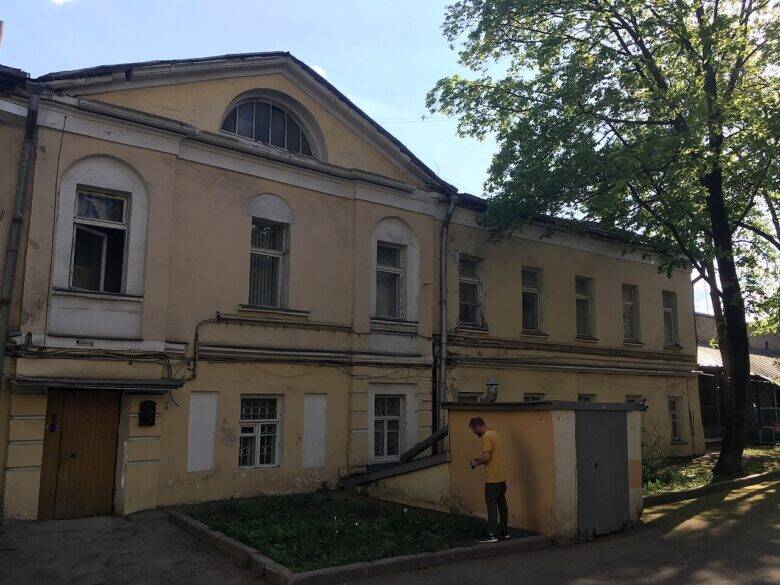
Khitrovka Market: how a market square became a labour exchange
Khitrovsky Market began in the 1820s as a market square with rows of meat and vegetable stalls. In the second half of the 19th century, workers arriving in Moscow began to be hired here, while cheap lodging houses opened in neighbouring buildings. Its reputation as a Moscow slum grew out of this close connection between the search for work, accommodation for people with no fixed abode and the criminal underworld. Building re…
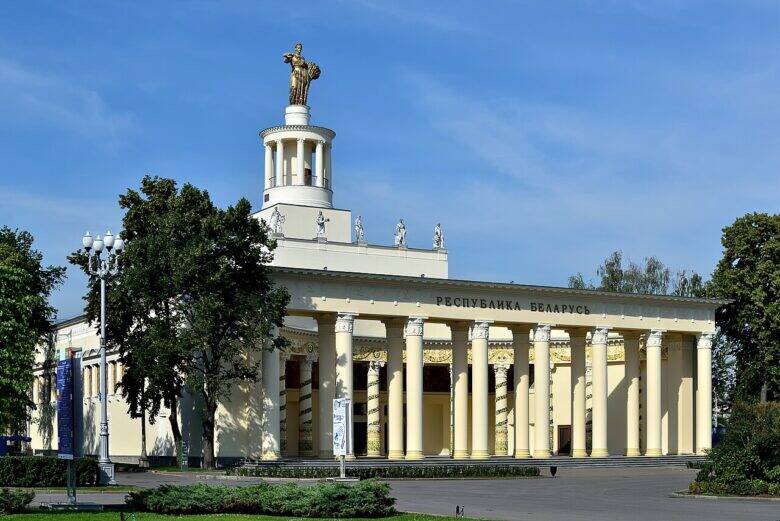
The Fresco in the Belarus Pavilion at VDNKh: Why It Was Thought to Be Lost
In the Belarus pavilion at VDNKh, the fresco ‘The People of Belarus Have Built Socialism’, located above the entrance, had been covered by a layer of plaster since the mid-1970s. The mural was no longer visible and, according to the exhibition’s official website, was considered lost. During restoration, it was returned to the ceremonial loggia. The entrance as it stands today incorporates elements from different periods: individual architectural details were recreated,…
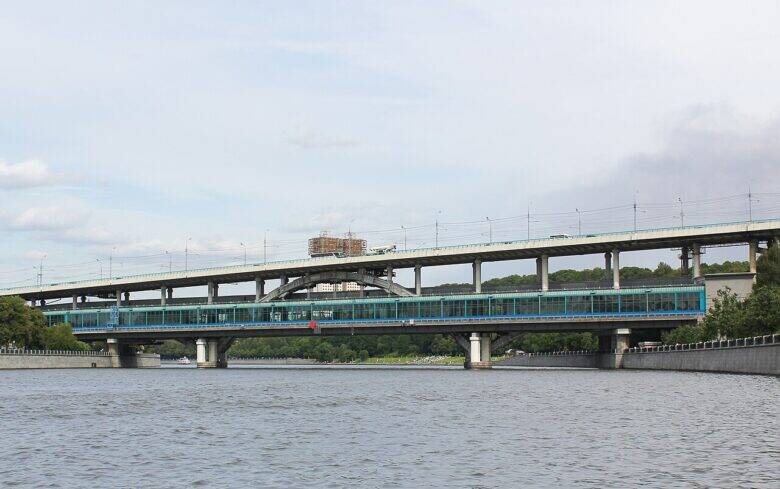
Why Vorobyovy Gory Station Was Closed for 19 Years and How the Metro Bridge Was Rebuilt
Vorobyovy Gory metro station closed to passengers on 20 October 1983 because the Luzhniki Metro Bridge was structurally unsafe. Following reconstruction, it reopened on 14 December 2002. The phrase ‘19 years of closure’ refers to passengers boarding and alighting at the station. For most of that period, trains on the Sokolnicheskaya line continued to cross the Moskva River: first through the empty station hall, and later on b…
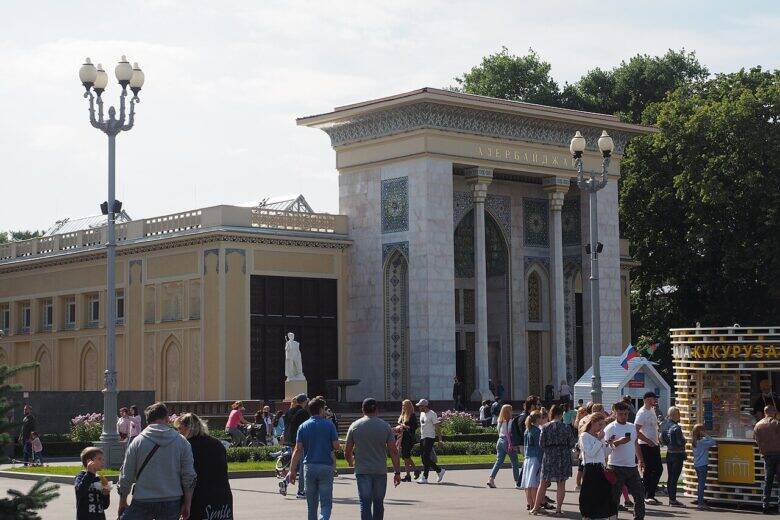
How the Azerbaijan Pavilion at VDNKh Swapped Cotton for Computers and Returned to Culture
The Azerbaijan Pavilion at VDNKh changed its exhibition theme three times. In 1939, its halls presented the agriculture and everyday culture of the Azerbaijan SSR; in 1959, industry and oil extraction took over much of the space; after the pavilion was repurposed in 1963, it showcased Soviet computing equipment. The Azerbaijan Centre, which opened following restoration in 2019, brought back a national programme, but did not recreate the displays of 1939.
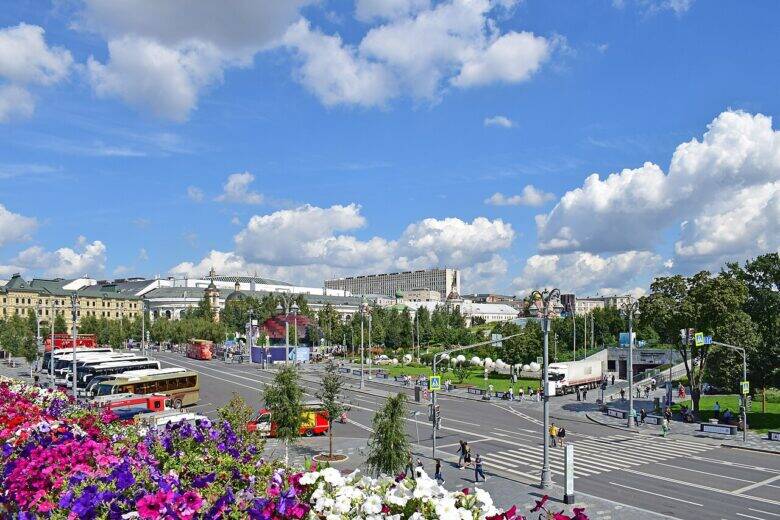
Archaeological finds in Zaryadye: what a letter, seals and a hoard reveal about life in Moscow
Archaeological finds from Zaryadye offer a glimpse of life in medieval Moscow’s trading and artisan quarter through a letter about an unsuccessful journey to Kostroma, lead seals, wooden drains and a hoard of silver coins. These pieces of evidence come from different centuries and different parts of the district. Together, they reveal the variety of activities along the Moskva River, but they do not form the history of a single house or prove that a market…
Advantages of individual excursions over group ones
- All attention is on you. Answers to all your questions.
- An atmosphere of tranquility and privacy.
- We pay special attention to the places that interest you.
- Possibility of adapting the route to your preferences and interests.
- You hear everything the tour guide says.
- At individual excursion you dive deeper.
- No one is in a hurry. Take a good look at the sights - they won't leave without you.
- Without loud laughter and inappropriate jokes from other tour participants.
- Your photos will not be crowded with other participants.
- The opportunity to discuss personal impressions and emotions with the guide during the process.
- Take a break when needed - to rest or take photos.
- A personal guide remembers you, and you remember him. Such moments remain in memory.
- There is less strain on your hearing and attention, since the guide is literally right next to you and speaks only for you.
- The excursion can be either educational or easy, depending on your wishes.
- Opportunity to gain insight or exclusive information.
- Absence of outside pressure.
- The guide doesn't make stops at points of sale (at least we certainly don't).
- You don't have to get up early or come at an inconvenient time. You choose when.
- Possibility to visit places closed to large groups.
How much more expensive are personal tours than mass tours?
If you are alone or in pairs, then a sum of several thousand for a walking tour of the city or twenty thousand for a car excursion is significant.
But if you're going for a walk with family or friends, the cost for an individual participant approaches one or two thousand - the amount that each person would pay for a group excursion with strangers.
For your group of 8 or more people, the price becomes even lower when calculated per person, making a private tour truly attractive.
***
A mass excursion is tourism, an individual excursion is a journey through the city’s secrets with a personal guide.
The Radius excursion bureau offers fascinating excursions on the history of Moscow in Russian and foreign languages. You can choose a walking tour or a sightseeing trip by car, as well as order an individual route. Our stylish guides will provide a lively speech without cliches, immersing you in the rich history of the capital. In addition, we offer corporate excursions, and our experience of cooperation with such companies as Yandex and Faberlic confirms our competence.
For those who want to make an original gift, gift certificates for our excursions are available. This is the perfect way to give an educational walk around Moscow with a modern guide. Our excursions are conducted in Russian, English, German, Spanish and Hebrew, and can include walks, bike rides, scooter rides or a boat ride on the Radisson Royal on the Moscow River.