A tour of VDNKh in Moscow has long since transcended the confines of a stroll through a single historical site. In 2026, this place is more conveniently perceived as a sprawling cultural district, merging Soviet architecture, museums, space themes, children's and adult spaces, landscaped areas, and adjacent locations. Therefore, the most reasonable question is not "what to see here in an hour," but "which specific approach should I choose: historical, architectural, family-oriented, with an emphasis on exhibition halls, space-themed, or neighborhood-themed."
The value of a good tour of VDNKh The advantage of this tour is that it helps you grasp the scale of the territory and understand how the pavilions, fountains, museum spaces, Ostankino Park, the Cosmonautics Museum, the Botanical Garden, the Rostokinsky Aqueduct, and the VGIK Cinema Line are interconnected. A wide variety of rhythms are possible here: you can take a short, hour-and-a-half stroll, or you can pack a full day of intense city exploration into one.
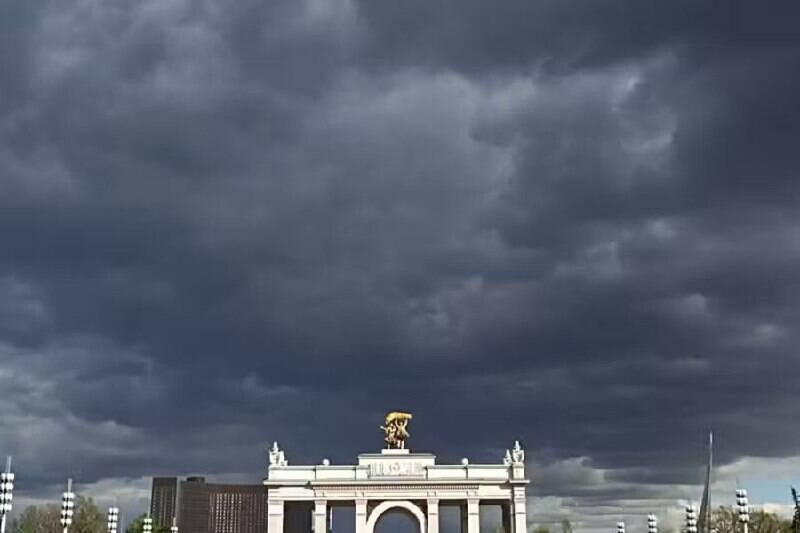
What is VDNKh and why does it need more than one route?
VDNKh was historically created as an exhibition of the country's achievements, but over time it has evolved into a much more complex space. Today, it is a monument to an era, a cultural center, a large promenade, and a family attraction. According to the museum and exhibition complex itself, its portfolio comprises over 30 objects. This is an important detail: at VDNKh, it's impossible to see everything meaningful in a short visit, but several highly targeted programs can be tailored to specific interests.
For some, the experience begins with the monumental entrance, the central alley, and the fountains. For others, it unfolds through the republic pavilions and discussions of the Soviet vision of the future. For others, the main entry point is the Cosmonautics and Aviation Center. For families with children, this area often evokes the Moskvarium, its interactive spaces, and a long walk without the dryness of a museum. And all these interpretations of the exhibition are valid, because the entire complex truly exists in several registers.
A historical overview: why VDNKh is important not only as a recreational destination
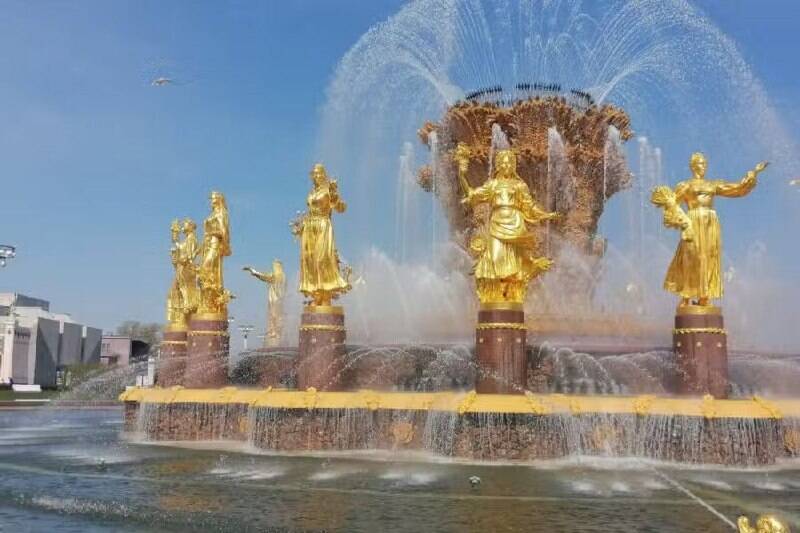
Such a route almost always benefits from a historical framework. Without it, the pavilions are easily read as simply beautiful buildings, while in reality, they embody the history of ideas about the state, labor, progress, republics, science, and the ideal urban culture. This ensemble is interesting because it presents not a single monument, but an entire system of images: the ceremonial main entrance, the sweeping perspective of the central axis, the fountains as a symbolic center, and the thematic buildings as an architectural language of achievement.
This spatial analysis is especially useful for those who enjoy reading the city through detail. It's important not only to look at the facades but also to understand their genre: where we see a near-palace representation, where a national pavilion, where a late-Soviet modernization, and where a contemporary museum adaptation of historical buildings. Such a tour transforms this territory from a collection of postcards, but rather a clear narrative of how the country changed and how these changes were engraved in stone, mosaics, and exhibition design.
What kind of tours are available at VDNKh?
The most obvious format is a sightseeing walking tour of VDNKh. It's suitable for a first acquaintance and typically centers around the central part of the site: the main entrance, key alleys, fountains, several key pavilions, and a discussion about the history of the exhibition itself. This format is equally convenient for both visitors to Moscow and Muscovites who haven't been to VDNKh in a while and want to revisit it. For those who enjoy a longer walking pace, it helps them get a sense of the overall scale without rushing. This is the most convenient way to begin your acquaintance, when you need to get a feel for the layout of the place on foot and decide which VDNKh tours are most interesting to you.
The second format is an architectural tour of the site. It's slower and more thorough than a general overview. There's less rushing around to find the exact number of points and more pleasure in the details: the decor, the symbolism, the restoration solutions, the differences between the pavilions, and the very language of the exhibition space. If a discerning adult audience needs a guide to VDNKh, this route often proves the most informative, because an experienced city guide helps them see not only the facades but also the hidden logic of the entire exhibition.
The third format is primarily related to the exhibitions within this area. It can be constructed as a route within the Museum City: the VDNKh Museum, the Cosmonautics and Aviation Center, the ATOM Museum, the Moscow Municipal Economy Museum, the Moscow Model, the Smart City Pavilion, the Cinema Museum, and other venues depending on the group's interests.
The fourth format is a family tour, with less dry lectures and more change of pace, visual material, and interactivity. The fifth is an extended walk through VDNKh and the surrounding area, with a visit to Ostankino Park, the space route, the aqueduct, and green spaces.
The main museums and spaces inside VDNKh
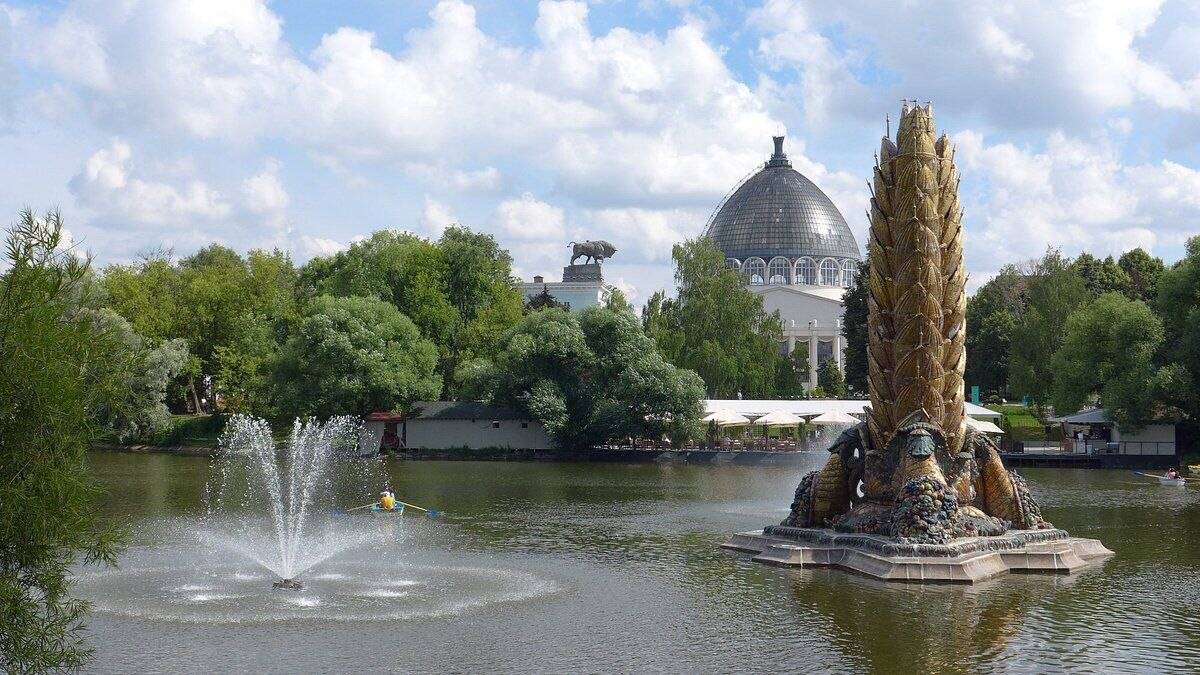
A comprehensive overview of this area must begin with the structure of the space itself. The central axis and fountains remain the heart of the exhibition. Even if the group is focusing on a highly specialized topic, it would be wrong to ignore this framework: it is here that the project's scale and its ceremonial logic are best felt. Only then does it make sense to branch out into thematic branches.
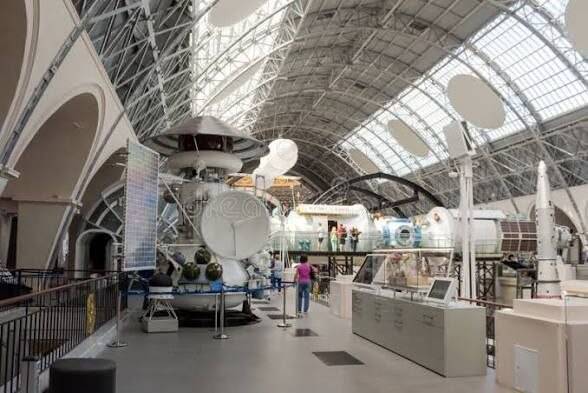
One of the most important objects is Cosmonautics and Aviation CenterAfter restoration, it became one of the largest museum venues in Russia in its field. According to the exhibition complex's official documentation, its collection comprises over 120 unique examples of aircraft and space technology and over 2,000 archival documents, photographs, and video materials. It's one of those museums where you can build both a stand-alone tour and a major section within a general walk around the grounds.
The VDNKh Museum is also very important. It helps provide context: how the exhibition came about, how it evolved, what was symbolic, what was practical, and why the country needed such a grand project.
The ATOM Museum deserves special attention. It works well on itineraries for those interested not only in the past but also in contemporary scientific narratives. If the group is interested in technology, industrial history, and large-scale engineering systems, this site becomes a key attraction.
For those interested in the city as a whole, it's worth adding the "Moscow Model" pavilion to your walk. According to the complex, it features a 1:400 scale model of the capital's central part, including over 23,000 objects. It's a useful tool for discussing Moscow's urban fabric, its axes, topography, ensembles, and development logic.
The "Smart City" pavilion is a logical addition nearby. Officially, it's a 1,600-square-meter multimedia space divided into six thematic zones dedicated to socially significant aspects of the city's life. This pavilion is useful if the tour focuses on how Moscow combines historical heritage with modern technology.
Itineraries for film lovers should appropriately include the Cinema Museum on the exhibition grounds. It demonstrates that the entire complex is not only about achievements and space, but also about cultural memory, the visual history of the country, and the conversation about cinema.
Space Route: VDNKh and the Cosmonautics Museum
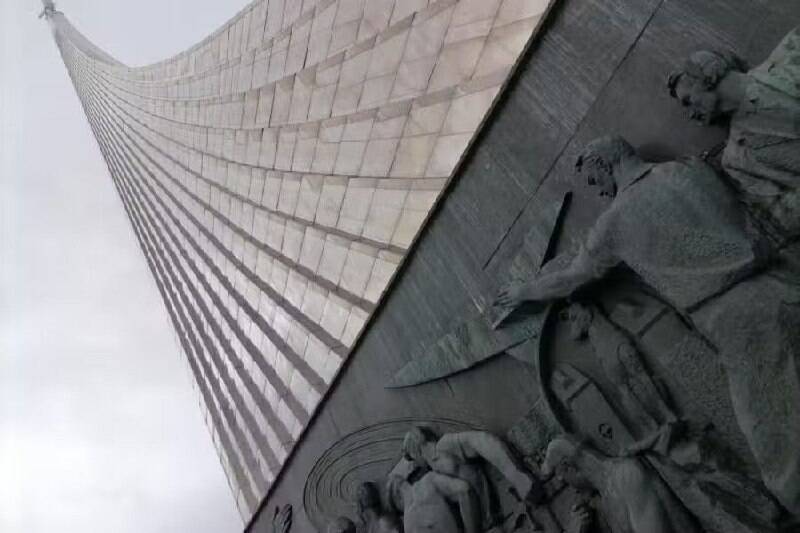
One of the strongest themes in this theme is the space theme. Within the exhibition itself, the main focal point is the Cosmonautics and Aviation Center, but a full-fledged exhibition almost always benefits from also taking the group to the Cosmonautics Museum near the monument "To the Conquerors of Space." According to the venue's official information, its permanent exhibition has been open to visitors since April 10, 1981, and is structured around key stages in the history of orbital exploration: from the first satellite to international exploration and lunar programs.
Here, this theme is seen as part of the Soviet project for the future and a larger public narrative about science. At the Cosmonautics Museum, it becomes more focused and museum-like: spacesuits, equipment, stages of exploration, real artifacts, and visually striking objects. This tour is especially suitable for teenagers, adults with an interest in engineering, and visitors to Moscow who want to experience a comprehensive topic in one day.
Family VDNKh: Where children and adults alike will truly enjoy themselves
A family itinerary here shouldn't try to turn children into patient listeners to a long lecture. Its strength lies in the fact that it allows for a variety of experiences. The most obvious family attraction is the Moskvarium. According to the complex's official materials, it's one of the largest oceanariums in Europe, and the walk through the Aquarium exhibits follows a path approximately 600 meters long.
If you're interested in technology and robotics, the RoboStation and its adjacent science and technology areas are often a logical addition to family itineraries around the area. This interactive format helps keep children and teenagers engaged. This area's strength lies in its ability to blend humanities and engineering: architecture, history, and symbolism coexist comfortably with technological entertainment and applied education.

The "Moscow Model," "Smart City," individual exhibitions at Museum City, Soyuzmultpark, and the Orion amusement park are also convenient for a family itinerary. Just don't try to squeeze everything in at once. A family would be better off with one coherent half-day schedule than a chaotic marathon across the entire area.
What to see near VDNKh: surroundings that enrich a tour
A very powerful idea is to not confine the tour within the VDNKh perimeter. One of the reasons the area is so beautiful is its proximity. Right next door is Ostankino Park, described on VDNKh's official website as a natural and historical park. It offers a rare opportunity in Moscow to seamlessly transition from the complex's formal architecture to a more relaxed, green, and pedestrian-friendly atmosphere.
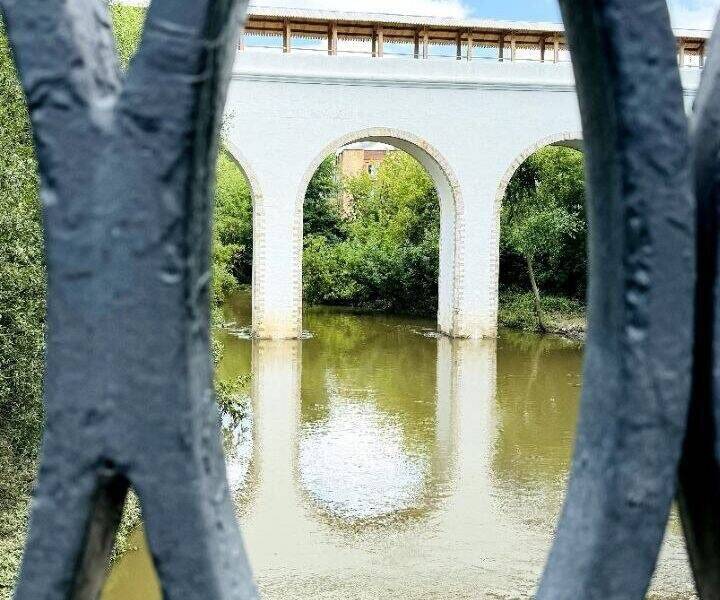
For those looking to explore less obvious, yet quintessentially Moscow landmarks, the Rostokinsky Aqueduct is worth including in your itinerary. According to Yauza Park, it's 356 meters long and was once the largest stone bridge in Russia. Today, it's an almost romantic urban backdrop and one of the rare sites where Moscow also reveals its long history of infrastructure.
A walk through Yauza Park pairs well with the Rostokinsky Aqueduct. This route is especially suitable for those who enjoy long walks and don't want to limit themselves to the central tourist spots. It gives the area a different dimension: not a formal one, but a landscape and a local one.
Finally, the VGIK film program is also important for the exhibition's surroundings. Even without turning this into a separate history of Russian film education, the very proximity provides cultural depth. According to the institute's official materials, it continues to draw on a unique pedagogical tradition shaped by the greatest masters of Russian cinema.
VDNKh as an open-air architectural textbook
Even for those who don't consider themselves architectural experts, this area offers a rare opportunity to see how different artistic intonations coexist within a single space. Here, one can literally trace step-by-step how the state changed its language of self-presentation: from an emphatically solemn and almost imperial gesture to the more technological and modernist plasticity of the later period. In this sense, VDNKh is useful to view not only as a museum tour but also as a textbook on the visual politics of the 20th century.
A good guide in such a territory helps one notice things that, without guidance, easily disappear into the overall impression. For example, some pavilions speak to visitors through decorative abundance, while others speak to visitors through the language of engineered confidence. Some facades are designed to be viewed from afar, while others demand a closer look to appreciate the relief, ornamentation, typography, sculpture, and industry symbols. It is these details that create the sense that VDNKh is not simply a park with beautiful buildings, but a complex, intellectually charged backdrop to the era.
The contrasts are particularly interesting here. After the ornate pavilions and fountains, the new wave of spaces feels less like an alien intrusion and more like a continuation of the old idea of showcasing achievements. At the same time, the language has changed: while previously the republics, industry, and agriculture were showcased as almost theatrical performances, now science, multimedia, urban technologies, and new museum methods of engaging with the public take center stage. For the advanced reader, this is one of the most compelling reasons to visit VDNKh more than once, returning via different routes.
Time-Based Routes: How to Pack VDNKh Without Feeling Overwhelmed
The most practical way to explore the area is by dividing it not only by theme but also by the length of your walk. If you only have two hours, it's best not to spread yourself too thin. In this case, the "VDNKh main entrance" scenario makes sense: the main entrance, the central axis, two fountains, several key pavilions outside, and one key focal point—for example, the VDNKh Museum or a short museum stop in an area closer to your interests. This format provides a cohesive first impression and prevents the walk from becoming a rush.
If you have half a day, you can plan a more intelligent route. For example, a tour of the city center, then the Cosmonautics and Aviation Center, followed by a walk toward the Cosmonautics Museum or a leisurely stroll to Ostankino Park. It's important that this scenario allows you time not only to see but also to digest the material. For those who value quality of experience over just checking off a box, this pace is often optimal.
A full day in this area is a whole new genre. It's appropriate to construct a route as a sequence of different states: grand architecture in the morning, a large museum midway through, a break for rest, and then a retreat to a quieter landscape—to Ostankino, the Botanical Garden, the Yauza River, or the aqueduct. This is how the area truly unfolds in its entirety. An exhibition in this format ceases to be a single point and becomes an entire cultural district with its own internal dramaturgy.
Errors and limitations: what most often spoils the impression
The main mistake is trying to cover VDNKh as a list of must-see attractions. In practice, this approach almost always leads to fatigue and the feeling that you've spent the entire day simply moving between points. VDNKh is better perceived not as a list of "must-sees," but as a space where you need to choose your perspective in advance. For the architecture, explore the pavilions and axes. The space theme is best explored separately. A family day out shouldn't be overloaded with a heavy historical component.
The second typical mistake is underestimating distances. On the map, many points appear close, but in reality, the area is vast, and time flows differently after museums and stops for conversation. Therefore, at VDNKh, it's important to allow for some extra time: for photos, for walks, for coffee, for a sudden interest in something not originally planned. The higher the expectations for the quality of the experience, the less rushed a good itinerary should be.
The third mistake is coming here without understanding what your group is specifically interested in. For some, VDNKh is primarily a museum town, for others, a family destination, for others, Soviet architecture, and for still others, a gateway to a longer walk through northeast Moscow. When this goal isn't discussed in advance, the route disintegrates into compromise stops. This is precisely why a personalized format works especially well in such a place: it eliminates the generalization and allows you to tailor your day to the visitor's actual interests, not to some abstract visitor.
Practice: How to Plan a Walk through VDNKh
For this route, it's important to decide in advance whether you're simply looking for some fresh air and a beautiful view or a full cultural day. If you're going for the first time, it's wise to allow at least three hours, even for a basic tour without a deep museum visit. If your plan includes the space pavilion, one or two museums, and a trip to Ostankino, the day can easily stretch to five or six hours.
Logistics are convenient, but it's best to plan ahead. The easiest way to get to the exhibition is by metro, and those traveling by car should check the entrance and parking map on the official website on the day of their trip. For up-to-date information, it's helpful to remember that there's a multi-level parking lot with 999 spaces at the Khovansky checkpoint. The complex itself is accessible 24/7, but individual museums and pavilions have their own schedules. For example, the Cosmonautics and Aviation Center is open from 11:00 AM to 10:00 PM, with Mondays being a maintenance day. The Moskvarium has its own schedule, but the Aquarium is usually open until 9:00 PM.
Seasonality at VDNKh is also important. In summer, the route naturally expands: it's easier to walk around the entire area, reaching Ostankino Park and further into the landscaped areas. In autumn and spring, VDNKh is especially good for architectural walks and museum programs. In winter, the site still serves as a strong cultural route, but it's worth allowing more time for transitions and avoiding trying to connect too many distant points in one trip.
A short reminder before your visit
- For a long route, you need comfortable shoes: the cobblestones and long distances quickly take their toll.
- If you're going with children, it's best to alternate long visual blocks with interactive activities and breaks for food.
- If your goal is museums, booking tickets in advance is almost always wiser than making an impulse purchase on the spot.
- If you want to photograph architecture without the crowds, it's best to come in the morning or late afternoon on weekdays.
On your own or with a guide
| Format | When it suits | The main limitation |
|---|---|---|
| On one's own | It works well if the goal is atmosphere, a photo, one or two clear objects, and a walk without a dense historical layer. | It is easy to see the facades, but it is not possible to make semantic connections between the pavilions, museums and surrounding areas. |
| With a guide | It's best to choose when the exhibition's history, architectural details, route logic, and precise customization to the interests of a family, couple, or adult group are important. | Requires prioritization: architecture, space, family scenario, museums, or a long walk around the neighborhood. |
In this area, the difference between these formats is particularly noticeable. A self-guided tour offers a beautiful experience, but often disintegrates into isolated images. The personalized format works differently: a private guide in Moscow distills the territory into a coherent text, making it clear why the exhibition's axis is structured this way, why the space pavilion and the Cosmonautics Museum exist side by side, and how to read the surrounding area after the central alley. For those who typically choose customized tours around the capital, this approach is especially convenient: a private tour of VDNKh allows you to tailor the pace, depth, and length of the route to the specific interests of the group.
How to evaluate the quality of a tour of VDNKh
- Route composition
- A strong tour is built not by a list of points, but by dramaturgy. First, the visitor is given the framework of the territory, then the theme, then a more intimate or museum-like layer. Without this, even the most beautiful objects are perceived in a disjointed manner.
- Pace
- For discerning audiences, it's not just the volume of information that matters, but also the pace. An overcrowded route can be tiring and turn VDNKh into a mere collection of facts. A good pace leaves room for questions, pauses, and visual appreciation of the architecture.
- Subject emphasis
- A tour becomes expert when it has a clear focus. This could be a Soviet representation, a space theme, a family route, or a museum day. Trying to cover everything at once usually reduces the quality rather than enhances it.
- Working with the surrounding area
- A route's high quality is demonstrated by its ability to meaningfully take visitors beyond the central alley. Links with Ostankino, the Cosmonautics Museum, Yauza, or Rostokino transform the walk into a true urban experience, not just an isolated visit to an exhibition.
What time frame is considered comfortable for the first expert route around VDNKh?
It's almost never worth planning for less than two and a half hours if the goal is not just to walk around but to understand the territory. For an adult audience interested in the content, a more natural range is three to four hours, with one strong museum focus.
When is it best not to turn VDNKh into a "big all-day excursion"?
If your group includes small children, elderly participants, or people who prioritize a comfortable pace over maximum reach, it's smarter to split the area into two visits. In this case, it's not a compromise, but a smart strategy: it allows you to explore the place more deeply and without fatigue.
Essentially, the quality of the entire excursion is determined not by the number of facts mentioned, but by the ability to combine the scale of the territory, the group's interest, and the appropriate length of the route. This is what distinguishes a truly powerful excursion from a perfunctory tour of beauty spots.
FAQ on routes and visiting
Is it possible to see VDNKh in one go?
Technically yes, but it's better to split the site into several visits. VDNKh is too vast for a single day to provide a thorough understanding of the architecture, museums, and surrounding area.
Does it make sense to go in winter?
Yes, if you're looking for museums, atmosphere, and a more relaxed pace. For very long walking trips, winter is less convenient than dry autumn or summer.
Is VDNKh suitable for children?
Yes, but it's best to tailor the route to the child's age. A family with small children might prefer a short walk with one or two interactive points rather than a challenging historical marathon.
What to choose if you have little time?
The main entrance, the central area, the fountains, and one major attraction: either the Cosmonautics and Aviation Center, the Moskvarium, or the VDNKh Museum. It's better than trying to do everything at once.
How to put together a truly great tour of VDNKh
The best way to create a strong program here is to choose a walking tour in advance, not a list of points, but a specific vision. For a first visit, it's best to choose a general tour with a historical framework and several main pavilions; for a museum day, two or three major sites at a leisurely pace; for a family itinerary, a mix of architecture and interactive activities. Personal format at VDNKh This is especially convenient because it allows you to tailor the pace and depth of conversation to the group's actual interests, rather than to a generic format. This approach is especially useful for those who choose private tours of Moscow and appreciate the ability to fine-tune the entire experience.
Ready-made scenarios for a walk around VDNKh
First acquaintance. The main entrance, the central alley, fountains, a story about the exhibition's history, one key museum object, and a short conclusion in the park or near gastronomic outlets.
With children. A small historical block, followed by the Moskvarium, one interactive technology area, a leisurely stroll without overload, and time to rest.
With access to the surrounding area. The central part of the exhibition, the Cosmonautics and Aviation Center or the complex's history museum, then a transition to the Cosmonautics Museum, after which - Ostankino Park or a longer route towards the Rostokinsky Aqueduct.
A busy day with exhibitions. The Space Pavilion, the ATOM, the Moscow Model, a historical exhibition of the area itself, and one or two additional sites without rushing.
Walking routes around VDNKh: how to expand the route wisely
When an article or tour aspires to be comprehensive, it's important to demonstrate that VDNKh doesn't exist in a vacuum. After the central part of the exhibition, the route can develop in at least three directions. The first is natural: through Ostankino Park to a more leisurely stroll away from the museum hustle and bustle. The second is cosmic: through the monument and the Cosmonautics Museum to a discussion of Moscow's scientific mythology. The third is regional and landscape-based: toward Rostokino, Yauza, and longer city walks, where the very tone of the route changes.
Such foot connections These are especially valuable for those who enjoy walking tours, have already seen the main pavilions, and don't want to retrace the first tourist route. They allow you to see the exhibition as a hub on a major northeastern route, rather than as a closed exhibition space. This is the real strength of the site: it seamlessly connects the ceremonial capital, scientific Moscow, Soviet monumentality, green promenades, and quiet neighborhood fragments that rarely make it into superficial collections.
For a large review material This is also crucial. If we limit ourselves to fountains, pavilions, and a couple of museums, the text will be useful but not exhaustive. Completeness emerges when the reader understands how to assemble different types of routes: a short two-hour city outing, a packed museum day, a family walk with interactive activities, or a long walking tour that includes the aqueduct, the Yauza River, Ostankino, and the surrounding cultural attractions. Then the area is perceived not as a standalone attraction, but as one of Moscow's most meaningful walking clusters.
Why does a large piece about VDNKh inevitably extend beyond the exhibition itself?
VDNKh can only truly be understood in conjunction with the surrounding area: Ostankino, the Space Line, the Botanical Garden, the Yauza River, and longer walkways. That's why a comprehensive overview can't be limited to the pavilions alone. For a Muscovite, this is a rare place where a meaningful walk and a museum day combine into a single, seamless itinerary. For a visitor to the capital, it's one of the most convenient ways to understand northeast Moscow not through individual points, but as a unified urban environment. If, after such an overview, you'd like to move on to a more comprehensive thematic scenario, the logical next step would be VDNHa and Space — a private program in which the space line of the exhibition becomes the main theme.
We had a corporate group of 10 people. Our guide was Anton, and we had a tour of Bulgakov. I would like to point out the excellent organization; everything went smoothly. The managers were very accommodating to our changes in the number of participants. The bus was very comfortable. Anton is a super-engaged and motivated guide.
He lives this story and takes great pleasure in sharing his knowledge and creating impressions.
Everything went well. I recommend it!
Note: Review of the excursion Zamoskvorechye with guide Maria
Note: Review of the tour "Modern Residential Complexes, Factory Past, and Avant-Garde" around the ZILART residential complex with guide Maria. prepared and conducted a tour based on an individual request for employees of the development company GC "Samolet"
Note: Review on corporate excursion "The Heart of the Capital" with guide Maria
Note: Review of the excursion "The Soul of Moscow" with guide Maria
Note: Review of the excursion Palace Dungeons with guide Maria
I'd like to express my gratitude and that of my supervisor for organizing the tour! We were very pleased.
We would like to repeat this in October, but on a different route – ZIL.
Note: This is about a tour for developers of the Samolet Group of Companies, conducted by guide Maria.
Was on excursions along Sukharevskaya Square - we reached Tsvetnoy Boulevard, I didn’t expect it to be so interesting!
For those who are in doubt whether to go or not - go, it really has become one of the cool summer memories!!!
Thank you and Masha for yesterday!
The speakers are happy. The connection in the headphones often failed, especially at the checkpoint, but this is our current life situation. It was audible if they were standing close, no further than 1.5 meters. Colleagues have already asked for your contacts. I will gladly share and will be glad to have a new opportunity to work with you. Special thanks to the Director for the Bureau
Note: excursion "Heart of the capital» for participants of the Moscow Oncology Forum 2025. Guides - Anastasia and Maria
It was very interesting to hear how the Krasnaya district developed. Presni, how Prokhorov's figure influenced the development of our city. A pleasant dive into a quiet, previously unexplored area!
Note: we are talking about the excursion with the guide Anton
There was a great tour of the area. Patricks.
We learned a lot of new things. Anastasia is a master of her craft. The tour was exciting, not boring at all, lively and interesting. Everyone was satisfied. Full of new impressions. I definitely recommend it. You will be satisfied!
Overall, this wasn’t the first time I’ve walked around Moscow with Anton, and each time it was a real adventure!
I wanted to express my gratitude once again for the wonderful excursion on Saturday - we really enjoyed the walk, the information and the communication with you, then we discussed for a long time what everyone remembered and what struck them. It would seem that you have lived in Moscow all your life, there was Moscow studies at school, but it turns out that you still don’t know so much!! In general, thank you very much, my mother said it was the best gift for her birthday!
Note: this is about the excursion "Soul of Moscow«
I will definitely recommend this company to my friends and we will use its services ourselves.
Excellent organization of excursions, all wishes were taken into account, punctuality at the highest level
Note: Review of the excursion-performance, which the guide Alexander specially developed as part of the order "Dream Tour".