
On a gloomy autumn evening, when the crimson leaves, as if in a slow dance, fell from the trees, the old Shekhtel's mansion At Patriarch's Ponds, I was immersed in a mysterious atmosphere. This house, once built in the Moscow Art Nouveau style, concealed a mystery hidden in its stone curves and stained-glass windows that even the most seasoned researchers couldn't solve.

Came here this evening Alexander Griboyedov, the great playwright and poet, whose name is forever linked with the brilliant work "Woe from Wit." They say he was close to Masonic circles, so his appearance here was no coincidence. He sought solitude, not just any solitude, but one that would allow him to connect with eternity and art. However, the silence of this place proved deceptive, for a secret lurked in every shadow.

Griboyedov, dressed in a black cloak, slowly ascended the stairs leading to his study, where portraits of his predecessors hung on the walls. A lamplight, flickering as if afraid to disturb the peace, illuminated the room. Suddenly, in the corner where an antique carved chest of drawers stood, something appeared that made his heart stop. It was a ghost, dressed in the garb of a bygone era, its face veiled in a faint haze.
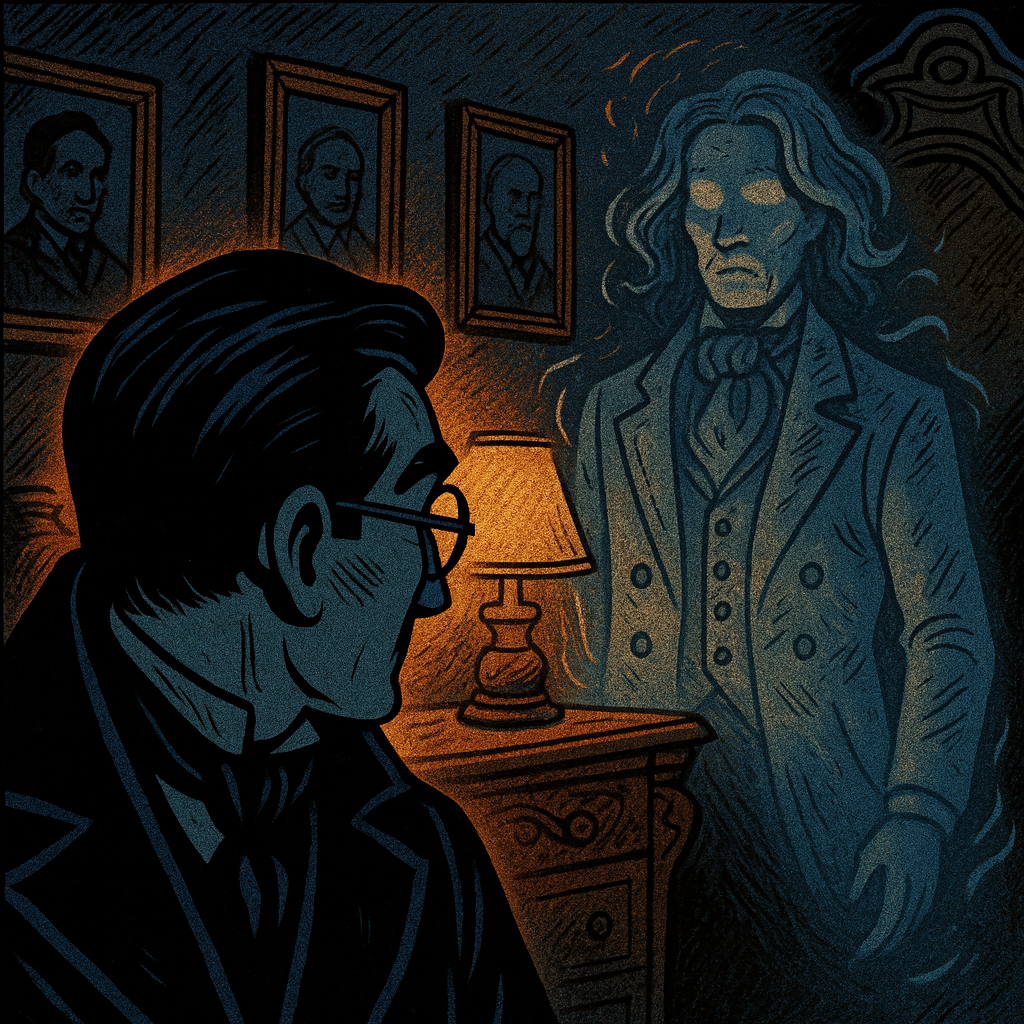
“Who are you?” asked Griboyedov, with difficulty restraining the trembling in his voice.
The ghost, without uttering a word, pointed to the manuscript lying on the table. It was his own work, but it contained corrections he had never made. Envy, that eternal companion of great minds, overwhelmed him. He felt his soul fill with bitter discontent, for someone had dared to intrude on his work.
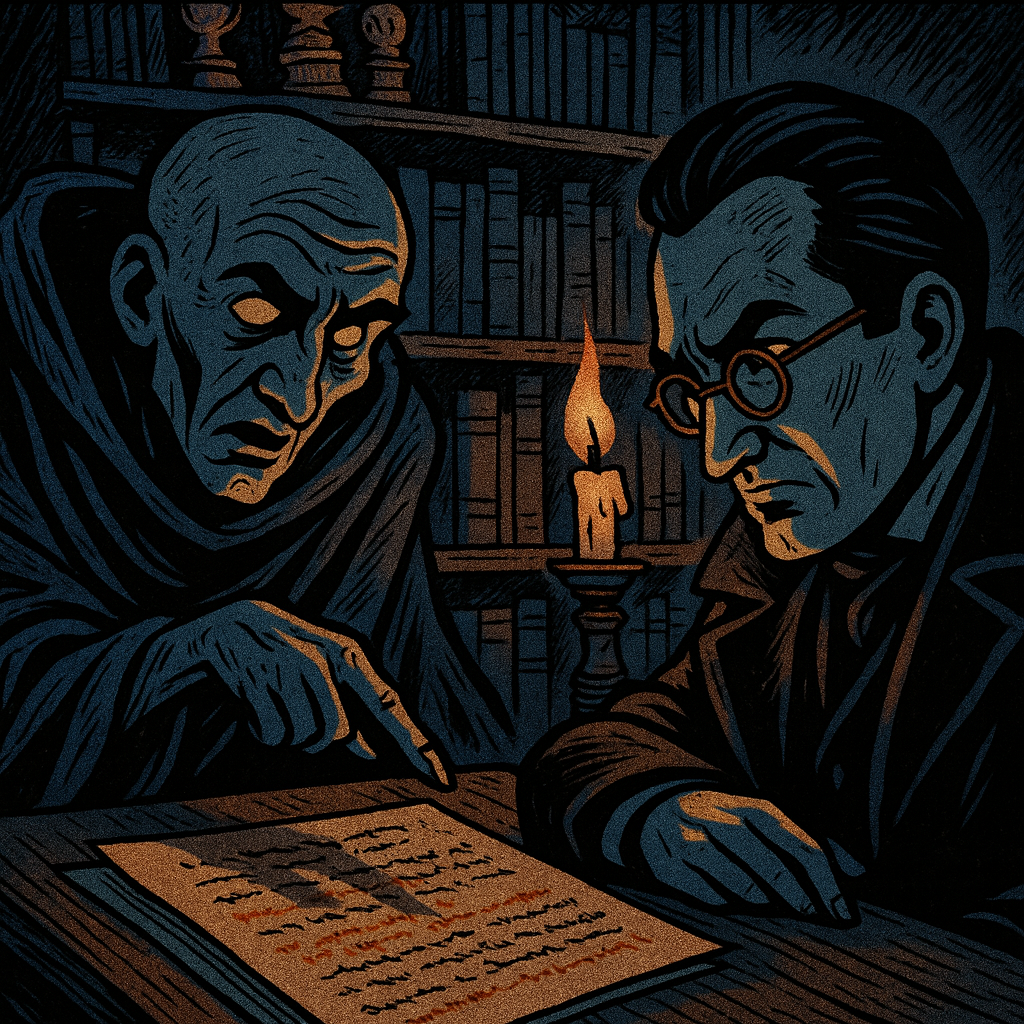
That night, Griboyedov realized his envy wasn't directed at the talent of others, but at himself. He envied what he could have become if he weren't limited by the confines of time and space. The ghost, as if understanding his thoughts, vanished, leaving the poet with only a quiet whisper: "Art knows no bounds, and your words will live forever."
In the morning, as the first rays of sun illuminated the mansion, Griboyedov, inspired by a new thought, sat down at his desk and began to write. He no longer feared the ghosts of the past, for they had become his allies in his search for truth and beauty.

Thus, in Shekhtel's old mansion, envy turned into a creative impulse, and the shadows of the past became a source of inspiration for future generations.
***
Of course, this is fiction, although with meaning - just for the sake of your cultural and historical emotions! And if you are interested in real facts and events, we invite you to the excursions of the "Radius" bureau, where real history comes to life!