If you want to spend a day richly and educationally, but not in the banal and hackneyed locations of the capital, then the North-Eastern Administrative District of Moscow (SVAO) is an excellent choice. Here you will find unique parks, historical sites and modern cultural centers that will not leave anyone indifferent.
Ostankino TV Tower
One of the tallest television towers in the world (540 meters), built in 1967 according to the design of architect Nikolai Nikitin. It serves not only as a symbol of television and radio broadcasting in Russia, but also as one of the main attractions of Moscow. Having become a symbol not only of television broadcasting, but also of scientific and technological progress, at the time of its completion it was the tallest building in the world and held this title until 1976, when it was surpassed by the CN Tower in Toronto.
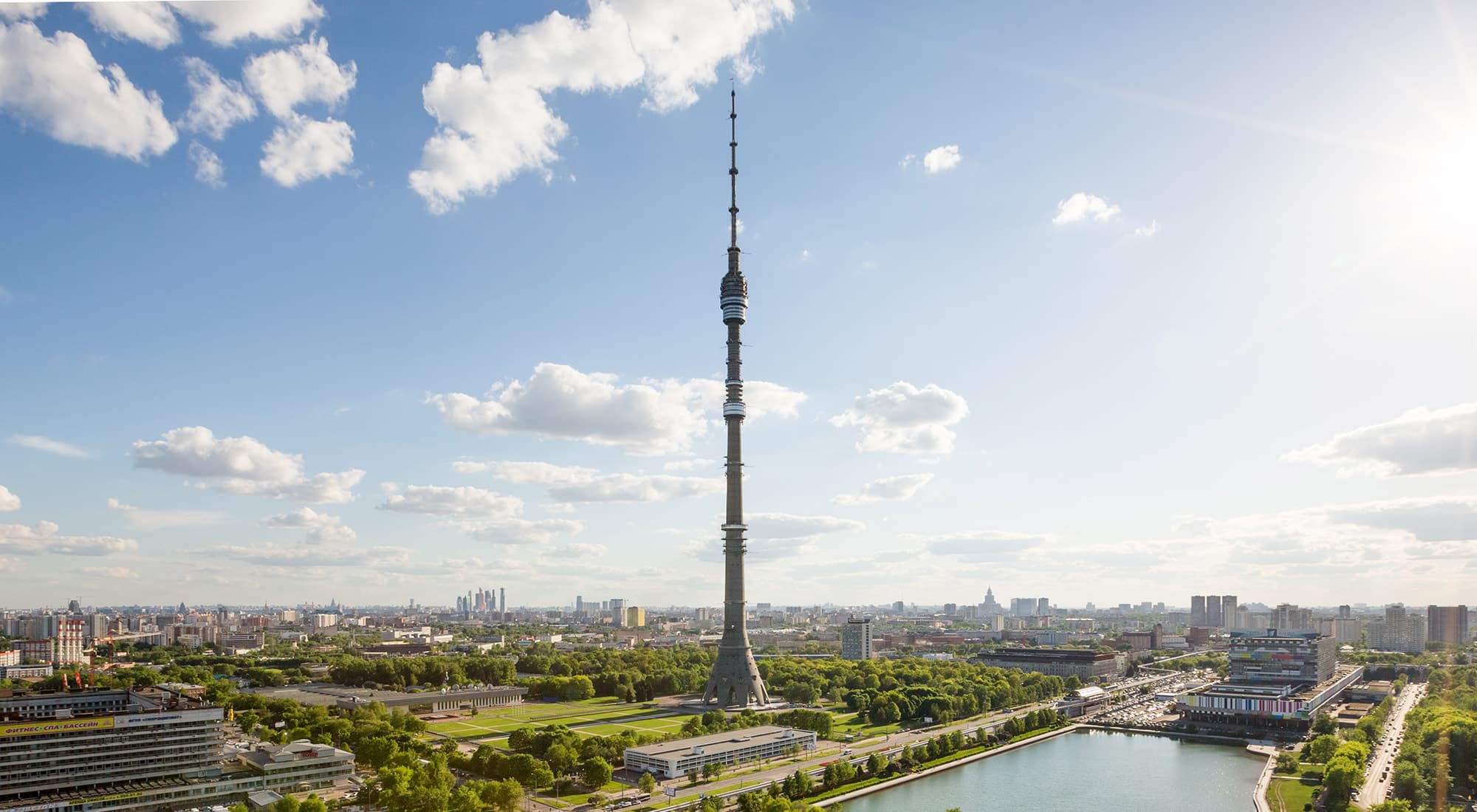
An amazing height of 540.1 meters.
- An observation deck at a height of 337 meters with a panoramic view of Moscow. Part of the floor is made of transparent glass, which allows you to feel the entire height of the tower.
- The Seventh Heaven restaurant with a revolving hall makes a full rotation in 40 minutes.
- Excursions, including visits to technical areas.
- The tower is designed in the shape of a flower, reminiscent of an inverted lily - this unique engineering solution made it possible to reduce the pressure of the structure on the foundation and increase its stability.
- Architect: Nikolai Nikitin, a famous Soviet engineer who also designed the Moscow State University high-rise building.
- Design: The main shaft is made of pre-stressed reinforced concrete. The mass of the tower is about 55 thousand tons. To increase stability, the tower uses guy ropes made of high-strength steel.
- Functions: The TV tower transmits television and radio signals to Moscow and the region. Today it is an important communications facility that covers more than 20 million people.
- The TV tower has elevators that rise to the observation deck in a matter of minutes at a speed of 7 m/s.
- The tower is built to withstand hurricanes, earthquakes and extreme temperature changes. It is capable of deflecting several meters under the influence of the wind, which ensures its stability.
- In August 2000, a major fire broke out in the TV tower. The fire destroyed several floors, and the observation deck and elevators were damaged. Restoration work lasted for several years.
The Ostankino TV Tower is regularly used as a venue for light shows and festive installations. Its image has become a symbol of modern Moscow, found on souvenirs and postcards. Today it is an important tourist attraction, attracting thousands of tourists every year. Guests can not only visit the observation deck, but also learn the history of the tower, its architectural features and role in the development of television during the excursion. By the way, sometimes non-standard events are held on the tower, such as running up the stairs to a great height. We also take tourists to the tower upon individual request.
Losiny Ostrov National Park
A unique natural area that combines the functions of a national park and a nature reserve. It is located in the north-eastern part of Moscow and partly in the Moscow region, occupying an area of more than 12 thousand hectares. It is one of the largest urban natural parks in Europe and the only national park in Russia that borders a metropolis.

The protected area "Losiny Ostrov"
Landscape and nature
The park includes forests, swamps, meadows, rivers and ponds. Most of the territory is covered by mixed forests, where pine, spruce, oak and birch trees dominate. Swamps and river floodplains create conditions for rich biodiversity.
Animal world
Elks are the symbol of the park, their number reaches several dozen individuals. Elks can be found deep in the forest, and sometimes even at the borders of residential areas. Beavers actively build dams on rivers and streams, creating entire ecosystems, and more than 150 species of birds live here, including rare ones such as the gray crane, buzzard, black stork and owl. Foxes, hares, wild boars, as well as small rodents and amphibians are also present.
Rivers and reservoirs
The Yauza, Pekhorka, Ichka and Kamenka rivers flow through the park. Lakes and ponds serve as habitats for waterfowl and recreation areas for visitors.
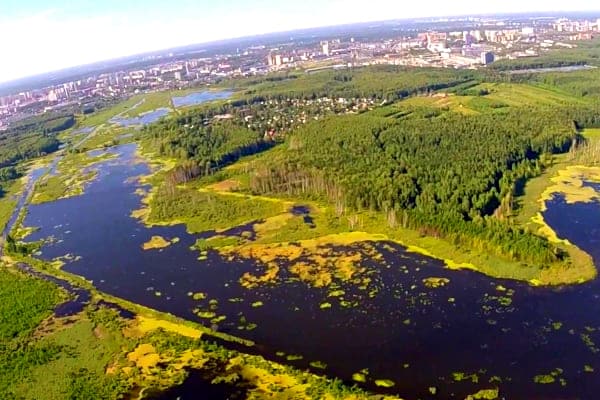
Losiny Ostrov is one of the first parks of national significance that combines scientific research and educational projects, while remaining in harmony with nature and forest inhabitants.
Walking routes and recreation areas
The park has kilometers of eco-trails suitable for walking, cycling and sports. Information stands are installed on the trails, telling about the plants and animals of the park. Well-equipped recreation areas with benches and gazebos will help you enjoy the moment, and there are places for picnics and nature observation near the ponds. Excursion trails allow you to get to know the park's ecosystem and its inhabitants in more detail.
Scientific and ecological significance
The park plays an important role in preserving natural ecosystems in a metropolitan environment. Programs to protect rare species of plants and animals are conducted here. The park organizes excursions, lectures, and events for children and adults aimed at developing ecological thinking. Scientists study biodiversity, ecological processes, and the impact of the urban environment on nature.
Facts
- The park got its name from the moose that historically inhabited this territory and are still its main inhabitants.
- Losiny Island is called the “lungs of Moscow” because it plays a huge role in cleaning the air and maintaining the ecological balance of the city.
- The territory of Losiny Island was used for royal hunting as early as the 15th century.
- In the 19th century, the park became a popular place for walks for Moscow aristocracy.
- In 1983, Losiny Island became the first national park in Russia.
Losiny Ostrov remains a popular vacation spot for Muscovites and tourists. It is a place where you can enjoy nature without going far outside the city, see rare animals, learn more about natural ecosystems and spend time outdoors.
VDNH
Tour of VDNKh — is like a walk on a stage where the sky meets the architectural dream of the Soviet Union. Grandiose pavilions framed by green alleys, fountains shining in the sunlight, and the eternal spirit of progress — everything here inspires reflections on the future. A space where the history of the Soviet era meets modernity, creating a unique contrast.

In 1939, VDNKh debuted as an exhibition of the achievements of the national economy of the USSR. The Friendship of Nations fountain, decorated with 16 gilded statues, became a symbol of Moscow and the exhibition.
- VDNKh opened in 1939 as an exhibition of achievements of the national economy of the USSR.
- The complex covers more than 300 hectares, making it one of the largest exhibition venues in the world.
- The famous fountain "Friendship of Nations" has become a recognizable symbol of Moscow.
- On the territory there is a museum of cosmonautics, which amazes with its collection.
- VDNKh is home to more than 49 unique pavilions.
- The complex is included in the list of cultural heritage of Russia.
- One of the largest aquariums on the planet, Moskvarium, is located here.
Much has already been said about VDNKh, so we will not dwell on it in detail. Let us just remind you that we have a wonderful excursion — “VDNHa and Space«.
Botanical Garden of the Russian Academy of Sciences named after Tsitsin
The Main Botanical Garden of the Russian Academy of Sciences (RAS) named after N. V. Tsitsin is the largest botanical garden in Europe, occupying about 330 hectares. Founded in 1945, it has become not only a scientific center, but also a unique natural area of Moscow. It organically combines plant collections from all over the world, natural forests, lakes and landscaped recreation areas. The garden's collection contains more than 20 thousand plant species, which makes it one of the largest collections in Europe.
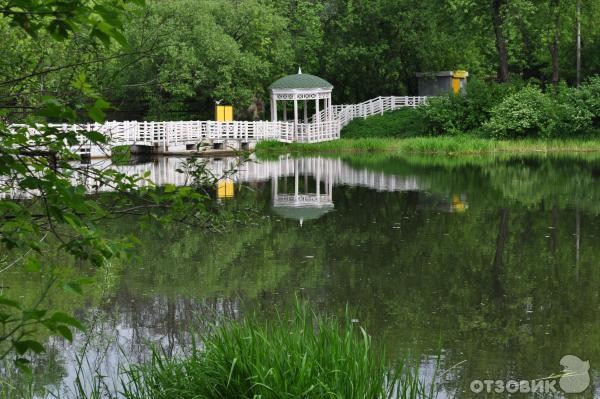
The area of the Main Botanical Garden of the Russian Academy of Sciences named after N. V. Tsitsin is about 330 hectares. It is recognized as the largest botanical garden in Europe.
The Japanese Garden is one of the most popular corners of the garden, created in collaboration with Japanese specialists. A landscape garden with sakura, Japanese maples, stone lanterns and bridges. The center of the composition is a pond with koi carp, which is surrounded by flowering trees in spring and autumn. Sakura festivals, traditional tea ceremonies and lectures on Japanese culture are held here.
The open areas of the botanical garden represent flora from various climatic zones of the world, including plants from the tropics, subtropics, deserts and steppes. Rare species of orchids, succulents, tropical trees and palms are housed in the greenhouses. Collections of alpine plants, including edelweiss, are gathered in the rock garden.
The garden includes several natural forest areas where you can see birches, firs, pines and oaks.
Lakes, streams and swamps on the territory of the garden create a unique ecosystem for birds, amphibians and small animals.
The garden has kilometers of walking paths suitable for leisurely walks, sports and cycling. There are equipped recreation areas with benches and gazebos.
Scientific activity:
- The Botanical Garden of the Russian Academy of Sciences is an important scientific center where research is conducted on the conservation of biodiversity and acclimatization of plants.
- Here, programs for the protection of rare and endangered species are developed, and training for undergraduate and graduate students is conducted.
- The garden contains areas stylized as traditional Russian gardens, including rare varieties of fruit trees and berry bushes.
Excursions and activities:
- We do not offer tours of the Botanical Garden, but the Garden itself offers themed walks dedicated to exotic plants, the history of the garden and Japanese garden art.
- Flower festivals, gardening master classes and environmental events are held periodically.
The Botanical Garden of the Russian Academy of Sciences is not only a natural treasure of Moscow, but also a popular place for recreation for city residents and tourists. It attracts nature lovers, families with children, photographers and everyone who seeks peace and beauty in the metropolis.
The North-Eastern District of Moscow offers an impressive mix of history, nature and modern culture. Spending time here on a walk or a guided tour will not only allow you to enjoy the beauty of these places, but also to discover a lot about the unique corners of the capital.
The best way to learn about history and culture is to take a guided walk through the actual sites of these events. You can also book a tour «VDNHa and Space" and others.
We had a corporate group of 10 people. Our guide was Anton, and we had a tour of Bulgakov. I would like to point out the excellent organization; everything went smoothly. The managers were very accommodating to our changes in the number of participants. The bus was very comfortable. Anton is a super-engaged and motivated guide.
He lives this story and takes great pleasure in sharing his knowledge and creating impressions.
Everything went well. I recommend it!
Note: Review of the excursion Zamoskvorechye with guide Maria
Note: Review of the tour "Modern Residential Complexes, Factory Past, and Avant-Garde" around the ZILART residential complex with guide Maria. prepared and conducted a tour based on an individual request for employees of the development company GC "Samolet"
Note: Review on corporate excursion "The Heart of the Capital" with guide Maria
Note: Review of the excursion "The Soul of Moscow" with guide Maria
Note: Review of the excursion Palace Dungeons with guide Maria
I'd like to express my gratitude and that of my supervisor for organizing the tour! We were very pleased.
We would like to repeat this in October, but on a different route – ZIL.
Note: This is about a tour for developers of the Samolet Group of Companies, conducted by guide Maria.
Was on excursions along Sukharevskaya Square - we reached Tsvetnoy Boulevard, I didn’t expect it to be so interesting!
For those who are in doubt whether to go or not - go, it really has become one of the cool summer memories!!!
Thank you and Masha for yesterday!
The speakers are happy. The connection in the headphones often failed, especially at the checkpoint, but this is our current life situation. It was audible if they were standing close, no further than 1.5 meters. Colleagues have already asked for your contacts. I will gladly share and will be glad to have a new opportunity to work with you. Special thanks to the Director for the Bureau
Note: excursion "Heart of the capital» for participants of the Moscow Oncology Forum 2025. Guides - Anastasia and Maria
It was very interesting to hear how the Krasnaya district developed. Presni, how Prokhorov's figure influenced the development of our city. A pleasant dive into a quiet, previously unexplored area!
Note: we are talking about the excursion with the guide Anton
There was a great tour of the area. Patricks.
We learned a lot of new things. Anastasia is a master of her craft. The tour was exciting, not boring at all, lively and interesting. Everyone was satisfied. Full of new impressions. I definitely recommend it. You will be satisfied!
Overall, this wasn’t the first time I’ve walked around Moscow with Anton, and each time it was a real adventure!
I wanted to express my gratitude once again for the wonderful excursion on Saturday - we really enjoyed the walk, the information and the communication with you, then we discussed for a long time what everyone remembered and what struck them. It would seem that you have lived in Moscow all your life, there was Moscow studies at school, but it turns out that you still don’t know so much!! In general, thank you very much, my mother said it was the best gift for her birthday!
Note: this is about the excursion "Soul of Moscow«
I will definitely recommend this company to my friends and we will use its services ourselves.
Excellent organization of excursions, all wishes were taken into account, punctuality at the highest level
Note: Review of the excursion-performance, which the guide Alexander specially developed as part of the order "Dream Tour".