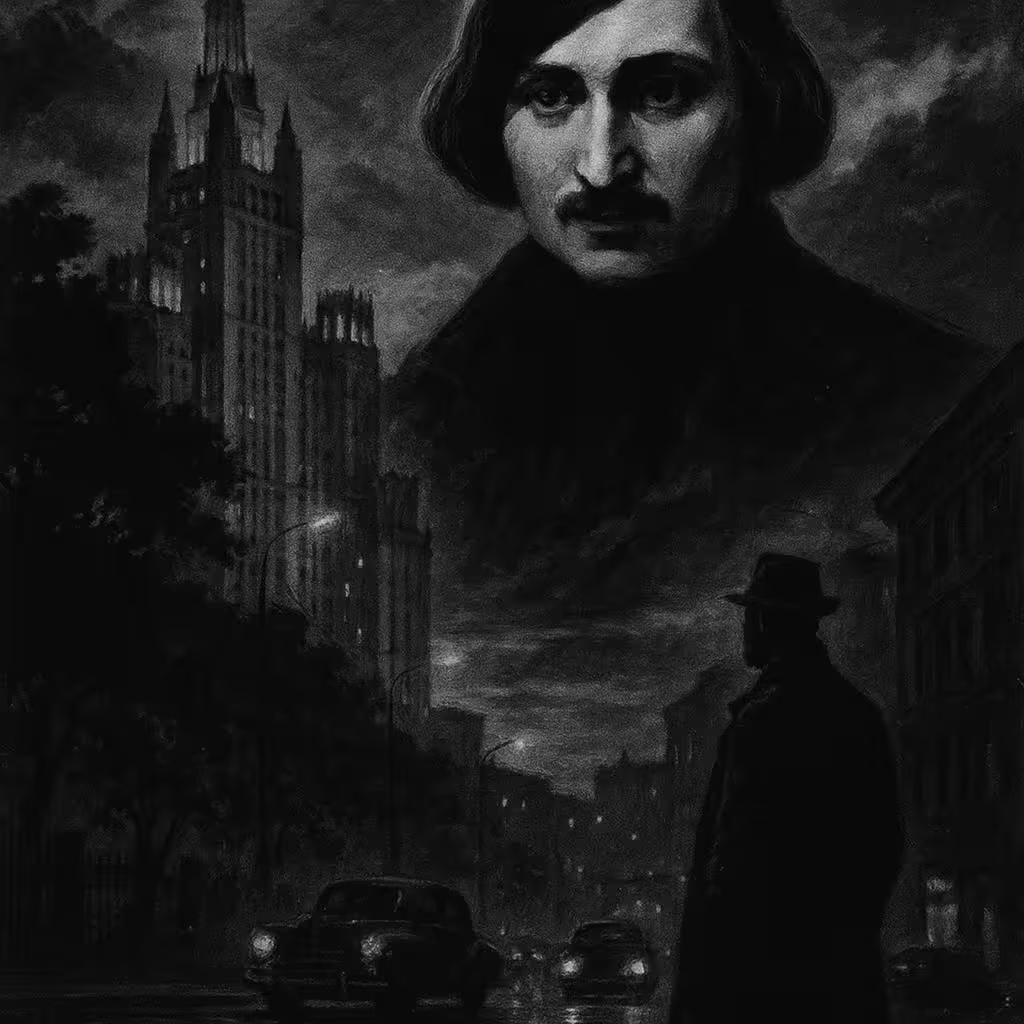
On a summer evening in Moscow, when a warm breeze barely stirred the leaves of the trees, the ancient streets of the city came alive with the sound of passersby's footsteps and the rhythmic hum of cars. The high-rise building on Krasnye Vorota, a majestic symbol of Stalinist Empire style, towered over the city, as if peering into its history. And on that evening, amidst shadows and light, an unusual encounter took place—a meeting of past and present, art and history.

Against the backdrop of the sunset sky, Nikolai Gogol, writer, known for his dark humor and profound reflections on human nature, appeared before the eyes of astonished visitors. His dark silhouette, as if stepped from the pages of his own works, seemed to hover above the ground, surrounded by an aura of mystery.
Gogol, like no one else, understood the city's contradictory soul, its hidden secrets and pent-up passions. Walking the streets of Moscow, he unwittingly stumbled upon a high-rise building where a showdown was taking place—a noisy discussion filled with arguments and objections.

It turned out that the building was being used to discuss a new exhibition dedicated to literary giants of the past. Architects and curators were engaged in heated debate, trying to determine how best to express the spirit of the times that Gogol so skillfully captured in his works.
In the silence that followed the heated debate, Gogol stepped forward. His presence unexpectedly calmed the heated debaters. He began to speak of the importance of art as a bridge between different eras, of the unifying power of literature, which can connect people living in different times and places.

Listening to his words, the participants in the discussion suddenly realized that the exhibition project must reflect not only the grandeur of the past but also its living connection to the present. As if following an invisible decree, everyone reached agreement, and a feeling of harmony and shared inspiration hung in the air.
Thus, beneath the vaults of Stalin's Empire style, where history and modernity converged in a single moment, a solution was found to preserve and convey the spirit of the times so dear to the heart of every Muscovite. And Nikolai Gogol, the writer, returned to the shadows, leaving behind only a faint trace of his mystical presence.

***
Of course, this is fiction, although with meaning - just for the sake of your cultural and historical emotions! And if you are interested in real facts and events, we invite you to the excursions of the "Radius" bureau, where real history comes to life!