In autumn 2026, the Battle of Borodino Panorama Museum presented a miniature portrait of Pyotr Konovnitsyn by his former aide-de-camp, Pyotr Olenin. The exhibition announcement dates the miniature to 1839, while a caption in another section of the website gives 1836. Both dates refer to a later copy, while the painting thought to have served as its model is associated with Alexander Varnek and the year 1819. The published materials do not explain the discrepancy in dating.
To understand the portrait’s provenance, it is necessary to distinguish between several works: Olenin’s watercolour in the Panorama Museum, the large canvas from the Borodino Museum Reserve and other depictions of Konovnitsyn, including works by George Dawe. The museum webpages and V. E. Anfilatov’s study allow us to trace the connections between them, but do not provide the inventory records needed to establish the reason for the discrepancy between the dates 1836 and 1839.
What does the single-exhibit exhibition show?
The Battle of Borodino Panorama Museum presents a miniature portrait of Count Pyotr Petrovich Konovnitsyn by Pyotr Alexeyevich Olenin. According to the exhibition page, the miniature is dated 1839; the exhibition is scheduled to run from 24 October to 19 November 2026. As of 10 November 2026, these details are confirmed by the museum’s exhibition listing and description; the announced dates should be understood as the published plan, rather than a guarantee that the schedule will remain unchanged.

Pyotr Petrovich Konovnitsyn in a general’s uniform. A portrait by an unknown artist from the collection of the State Historical Museum, not the miniature by Pyotr Olenin. Wikimedia Commons, Petr Petr. Konovnitsin by anonymous after Kiprenskiy (1810s, GIM).jpg, author: Shakko, licence: CC BY-SA 3.0 source, license
The miniature depicts Konovnitsyn in a general’s uniform with gold embroidery, epaulettes and decorations. The museum states that Olenin made a reduced copy of an earlier portrait, which it associates with Alexander Grigoryevich Varnek. This statement by the museum establishes a link between the two images, but without comparing the works themselves, it does not prove which particular canvas served as the model.
The museum states that the miniature spent many years in private collections before entering its collection in 1974. The exhibition description gives neither the names of previous owners nor an inventory number. Any comparison with the caption ‘1836’ on another museum webpage therefore remains a comparison of published accounts: without the collection records, it is impossible to establish whether both descriptions refer to the same object.
Why are the events of 1812 important in Konovnitsyn’s life?
Pyotr Konovnitsyn commanded the 3rd Infantry Division, which was sent to the Bagration flèches during the Battle of Borodino. According to the museum’s account, ‘The General’s Frock Coat’, after Bagration was wounded, Konovnitsyn temporarily took command of the 2nd Army and withdrew the troops beyond the Semyonovsky ravine. These actions explain why his memory endured among those who fought in the war: the portrait recalls a commander who, at a critical moment, was entrusted with more than his own division.

Obelisk commemorating General P. P. Konovnitsyn’s 3rd Infantry Division on the Borodino battlefield. The monument was erected in 1912. Wikimedia Commons, 3rd Infantry Division.jpg, author: Msakimkin, licence: CC BY-SA 3.0 source, license
After the Battle of Borodino, Konovnitsyn served on Mikhail Kutuzov’s staff: the museum’s exhibition page dates his appointment as general on duty to the army’s stay at the Tarutino camp. He later commanded the Grenadier Corps in the campaigns abroad of 1813–1814 and served as Minister of War. The Hermitage catalogue confirms the principal stages of his service and his lifespan, 1764–1822. Olenin turned to the commander’s likeness only after his death, so the miniature reflects a later choice of a commemorative image rather than a portrait painted during the war.
The museum’s account, ‘The General’s Frock Coat’, recounts a family episode from the Battle of Borodino: Konovnitsyn sent his wife, Anna Ivanovna, a letter and a frock coat with its tails torn off by a cannonball. According to the museum, he himself was unhurt; the letter and parcel date from 1812. They help explain how the family preserved the memory of the general’s wartime experiences, but do not establish the date of the portrait painted by Olenin after his death.
Before Borodino, Konovnitsyn’s division fought at Ostrovno and covered the Russian army’s retreat; after Smolensk, he was given command of the combined rearguard, according to the Borodino Museum-Reserve’s entry. This experience explains why he was entrusted with temporary command of Bagration’s troops after Bagration was wounded. The likeness associated with 1819 depicts the general seven years after Borodino, rather than during the battle.
The entry for the large portrait in the Artefact project states that, at the Council at Fili, Konovnitsyn argued in favour of fighting a battle outside Moscow. His subsequent appointment as general on duty at the Tarutino camp belongs to a different stage of the campaign. These events are important to the sitter’s biography, but neither provides evidence for the date when Olenin’s copy was made.

Pyotr Konovnitsyn in a general’s uniform. An engraving by Francesco Vendramini after a drawing by Louis de Saint-Aubin, published in 1813. Wikimedia Commons, Petr Petrovich Konovnitzyn by Francesco Vendramini.jpg, author: Francesco Vendramini, licence: Public domain source
By 1819, Konovnitsyn’s standing had changed considerably: according to the State Hermitage Museum, he was promoted to General of Infantry in 1817 and granted the title of Count in late 1819. In the large portrait from the Borodino Museum, associated with Warneck, he is shown in an 1815-pattern uniform, wearing the decorations described in the museum’s catalogue entry on Artefact. This depiction cannot be treated as a direct record of the commander’s appearance on the day of the battle. Without knowing the month in which the canvas was painted, it is also impossible to assert that he had already been granted the title of Count when the artist was working on it.
What was Pyotr Olenin’s relationship to Konovnitsyn?
Pyotr Olenin fought at the Battle of Borodino and later served as Konovnitsyn’s aide-de-camp, according to the Battle of Borodino Panorama Museum. The exhibition text describes him as an amateur artist and the miniature as a tribute to his commander’s memory. If the date of 1839 is accepted, it was created seventeen years after Konovnitsyn’s death. For this reason alone, it cannot be regarded as a drawing made from life during the fighting of 1812.
Borodino Museum researcher V. E. Anfilatov also describes Olenin as a participant in the battle who knew the general personally, and identifies a copy he made in 1839 in the Panorama Museum’s collection. The biographical connection between artist and sitter supports the possibility of a personal motive, but does not reveal the circumstances of the commission or where the image was created. Anfilatov suggests that the copy may have been made at Kyarovo, the Konovnitsyn family estate; the published study presents this as a possibility.
The exhibition page describes the miniature as an aide-de-camp's testimony about the general. This museum interpretation is understandable given Olenin's service, but the image primarily shows which existing depiction he chose to reproduce years later. It does not tell us what Konovnitsyn looked like on the day of the Battle of Borodino: according to the exhibition text, it was based on an earlier portrait.
Olenin's biography in the materials of the Priyutino Museum Estate clarifies the chronology. In 1812, he served in the Semyonovsky Life Guards Regiment and suffered a severe concussion at Borodino. In 1818, Olenin was aide-de-camp to Mikhail Vorontsov; he became Konovnitsyn's aide-de-camp only in December 1819, after a trip to Italy. He remained with the general after transferring to the Life Guards Jaeger Regiment in January 1821. Seven years separated his combat experience from his appointment to serve under his future commander.

Orest Kiprensky. Portrait of Pyotr Alexeyevich Olenin, 1813. Wikimedia Commons, Orest Kiprensky 007.jpeg, author: Orest Kiprensky, licence: Public domain source
His service as the general's aide-de-camp dates to 1819–1822. Both took part in the war of 1812, but Olenin's biography from Priyutino does not confirm that he was serving under his future commander at that time. Whichever published date is correct — 1836 or 1839 — the miniature was created after their service together and after the general's death. The museum provides no information about who commissioned it, so the specific occasion for its creation remains unknown.
Olenin painted other people besides Konovnitsyn. According to Priyutino, in 1825 the Academy of Arts admitted him as a 'candidate for the title of academician' for his portrait of Ivan Krylov, and in 1827 elected him an honorary free associate. The institution also presents portraits of Nikolai Gnedich and people from Olenin's family circle. This shows that, by either possible date of the miniature, the artist had already been working in portraiture for many years.

Nikolay Gnedich. A pastel portrait by Pyotr Olenin, 1824. Wikimedia Commons, Nikolay Ivanovich Gnedich (by P. A. Olenin).jpg, author: Pyotr Olenin, licence: Public domain source
The museum estate reports that Pyotr Alexeyevich copied Varnek’s portraits not only of Konovnitsyn, but also of his own father, Alexei Nikolaevich Olenin. This is a specific link between the two artists through the family collection and the practice of copying; it carries more weight than a general assumption about artistic fashion. It does not, however, reveal in which house or under what circumstances the miniature of the general was created. Anfilatov’s hypothesis that it was painted at Kyarovo remains a hypothesis.
Pyotr Olenin himself was depicted by Karl Bryullov in a watercolour dating from 1821–1822, now held at the Priyutino Estate Museum. It shows his aide-de-camp’s uniform, epaulettes and aiguillette; both the artist and the sitter are explicitly identified in the museum’s catalogue entry. For this piece, the museum provides a specific account of its acquisition: in 1970, its first director purchased the watercolour through a Moscow collector from Olenin’s great-granddaughter, Anna Bulashevich. The exhibition description of the miniature of Konovnitsyn mentions only private collections and its acquisition in 1974. This difference shows precisely which details of the second work’s provenance remain unavailable to the reader.
In 1833, Olenin retired with the rank of major general, according to the Priyutino Estate Museum. Both published dates for the miniature, 1836 and 1839, fall after his military service. The Panorama Museum also states that the portrait was not an official commission. It is therefore appropriate to view it as a later work by a former officer, without speculating about who commissioned it or the circumstances of its creation.
How are Olenin’s miniature and Varnek’s portrait connected?
The museum dates the painting believed to have served as Olenin’s model to 1819 and identifies it as a work by Alexander Varnek. This is a separate, earlier portrait painted during Konovnitsyn’s lifetime; the miniature is a later version of his likeness. The distinction between the works is crucial: 1819 refers to the presumed original painting, while 1836 and 1839 appear in descriptions of Olenin’s copy.
In his article ‘Materials for the Attribution of the Painted Portrait of P. P. Konovnitsyn’, V. E. Anfilatov examines a large canvas in the Borodino Museum Reserve, transferred there from the State Historical Museum (GIM) in 1953 as the work of an unknown artist. The researcher studied labels on the stretcher, publications featuring the painting and a list of Varnek's works. This evidence concerns the large painting, rather than the miniature in the Panorama Museum.
Alexander Varnek's own list of works, published by the art historian V. S. Turchin, includes a portrait of Konovnitsyn dated 1819 as entry No. 125. Turchin regarded the whereabouts of this work as unknown, so his entry does not establish that the surviving canvas at Borodino is the original mentioned in the list. Anfilatov compared the painting's provenance with that of Olenin's copy; he also considers their visual similarity an argument in favour of attributing the painting to Varnek. At the end of the article, the researcher proposes a technical and scientific examination and comparison with securely attributed works by the artist to reach a definitive conclusion.
The attribution of the large canvas has changed over time. Anfilatov stresses that it bears neither the artist's signature nor a date. In the 1905 publication ‘Russian Portraits of the 18th and 19th Centuries’, the image was reproduced under the name of Orest Kiprensky, with no explanation of the grounds for this attribution. The 1979 guide to the Borodino Museum retained his surname with a question mark and suggested that the work might be a copy. The researcher rejects this interpretation, but the absence of a signature means that the attribution cannot be changed without examining the canvas itself.

George Dawe. A replica of the 1821 portrait of Pyotr Konovnitsyn, painted no later than 1825. Wikimedia Commons, George Dawe — Portrait of Pyotr P. Konovnitsyn.jpg, author: George Dawe, licence: Public domain source
Anfilatov cites a further argument against the earlier attribution: Kiprensky was in Italy from 1816 to 1823, whereas Varnek's list dates the portrait of Konovnitsyn to 1819. This chronological argument calls into question the attribution to Kiprensky in the 1905 publication, but does not establish Varnek's authorship of the surviving canvas. The researcher also draws on the painting's provenance and a comparison with the smaller image made by the former aide-de-camp; he reserves a final judgement until the painting's materials and technique have been examined.
In Anfilatov's study, Olenin's copy provides a link between the record of Varnek's 1819 work and the large canvas at Borodino. However, the similarity of the images can establish the source for the miniature only insofar as the large portrait itself has been correctly identified. The Panorama Museum explicitly names Varnek as the artist of the original; Anfilatov's research explains how this attribution arose while also defining the limits of the evidence. A separate question is which of the two published dates applies to the copy itself.
What is known about how the large portrait came to the museum?
According to research by V. E. Anfilatov, the large portrait from the Konovnitsyn family collection featured in the 1912 centenary exhibition and passed through the State Historical Museum before entering the Borodino Museum-Reserve. The author dates the transfer to 1953, while the entry for the same canvas in the Ministry of Culture’s Artefact project gives 1964. Both sources describe a similar sequence of movements, but the exact date cannot be established without a transfer record or an inventory register. This discrepancy does not concern the Olenin miniature.
Anfilatov describes two labels on the stretcher of a large canvas. The first lists the anniversary exhibition ‘1812’, the Hall of Heroes and the number 66; the second refers to the proposed Museum of 1812, the number 2671 and a gift from the Konovnitsyn family. The researcher links the reference to the Hall of Heroes to a display at the State Historical Museum, and the number 2671 to the separate institution that was never established. The labels help trace the painting’s exhibition history in the early 20th century, but do not in themselves establish when it was originally painted. Nor are the numbers on them inventory numbers for the Olenin miniature.
The researcher reports that the large portrait was lent to the anniversary exhibition by the Moscow Assembly of the Nobility and had previously been kept at Kyarovo, the Konovnitsyn family estate. The museum’s catalogue entry on Artefact describes the painting’s presence at Kyarovo more cautiously: ‘it is believed’. The difference in the degree of certainty matters. The labels confirm a stage in its exhibition history; establishing the precise chain of ownership before that requires separate family and museum records.
According to Anfilatov’s study, the canvas was restored in 1953 and subsequently displayed at the Borodino Museum; from 2002, it was on display in the exhibition ‘Borodino. Battle of the Giants’. The Artefact entry names Varnek in its heading, but the description states that he ‘probably’ painted the portrait. This qualification is consistent with Anfilatov’s conclusion that technical examination is needed and carries more weight for an accurate attribution than the entry’s brief heading.
According to Artefact, the large portrait in the Borodino Museum measures 82 by 70 centimetres and is painted in oil on canvas. The general is depicted in an 1815-pattern uniform with the insignia of his orders and commemorative medals. These details help distinguish the large canvas from the small copy. The old museum label identifies the medium of Olenin’s miniature as watercolour on cardboard; its dimensions are not given in the published descriptions compared here.

The Borodino Museum building, with cannons at the entrance. Photograph taken on 22 June 2005. Wikimedia Commons, The Borodino Museum 2005-06-22.jpg, author: Mike1979 Russia, licence: CC BY-SA 3.0 source, license
On the large canvas, Konovnitsyn is depicted in a post-war uniform wearing his decorations. ‘Artefact’ identifies the Orders of St Alexander Nevsky, St Vladimir, First Class, and St George, Second Class, as well as commemorative war medals. This list helps distinguish this particular museum object from other depictions of the general. The decorations alone cannot establish whether the artist painted from life or when Olenin made the smaller copy.
Other works confirm Varnek’s connection with the Olenin family. According to the Priyutino Museum Estate, he portrayed Elizaveta Markovna Olenina in her home in 1824. The museum also holds a smaller copy by an unknown artist of Varnek’s 1820 portrait of her husband, Alexei Nikolaevich. This is a documented example of the painting being copied within the Olenin circle; it confirms the family’s familiarity with the artist’s work, but does not establish who painted the large portrait of Konovnitsyn.
A detail in the portrait of Elizaveta Markovna illustrates the complexity of attribution. The Priyutino Museum Estate dates Varnek’s canvas to 1824, yet the bust of her husband, Alexei Nikolaevich, depicted beside her, was not created by the sculptor S. I. Galberg until 1831. The museum concludes that the bust was added to the painting later and tentatively suggests that Varnek himself may have been involved. The stated year therefore does not reveal when every detail was painted. This is, however, a different portrait: the example does not explain why the museum has dated Olenin’s miniature to both 1836 and 1839.
The Olenin family’s familiarity with Varnek’s work does not in itself establish who painted the large portrait of Konovnitsyn. Anfilatov compares the list of the artist’s works, the canvas’s provenance and Olenin’s miniature. The researcher considers an examination of the painting technique necessary for final verification. The museum’s statement that Varnek painted the original should therefore be read with the caveat that the surviving canvas at Borodino had not yet been definitively identified as the 1819 portrait recorded in the list.

Alexey Nikolayevich Olenin (1763–1843). A printed reproduction after a portrait by Alexander Varnek, published in 1905–1909; the date 1824 in the description refers to the portrait, rather than the publication of the print. Wikimedia Commons, Alexis Nikolaewitch Olenine.jpg, author: After Alexander Varnek, licence: Public domain source
Why do the museum’s web pages give the dates 1836 and 1839?
The available publications record the discrepancy but do not explain its cause. The page for the single-object exhibition explicitly dates Olenin’s copy to 1839. In the ‘The General’s Frock Coat’ section of the same museum’s website, the caption for ‘Portrait of Pyotr Petrovich Konovnitsyn’ reads: ‘P. A. Olenin, after an original by A. G. Varnek’, ‘Watercolour on cardboard. 1836’. Anfilatov also dates the version in the Panorama Museum’s collection to 1839.
Both museum publications identify Pyotr Olenin as the artist behind the portrait of Konovnitsyn, and Varnek as the artist behind the earlier version. These dates refer to the work of the former aide-de-camp, while the large canvas is associated with 1819. A typographical error, a revised dating and the existence of two copies remain possible explanations: without the collection records, it is impossible to determine whether the same object is being described.
The exhibition description states that the miniature entered the collection in 1974, but the caption on the history page gives neither an inventory number nor any provenance. The matching artist, sitter, collection and cited model therefore make the comparison reasonable, but do not prove that the two references describe the same object. If they do, the museum needs to clarify the dating or explain the change to the record; if they describe two objects, separate catalogue records and images are needed. The public pages do not yet provide an answer.
The miniature’s overall appearance does not allow us to determine whether it dates from 1836 or 1839. The exhibition description lists Konovnitsyn’s uniform, epaulettes and decorations, but makes no mention of Olenin’s signature or a date on the object itself. These features help describe the depiction of the general, but the dating of the copy needs to be checked against the museum’s inventory and acquisition history.
The term ‘miniature’ indicates a small format, but does not reveal the material used as the support. In its overview of the genre, the Panorama Museum notes that many portraits of the period were painted on ivory panels. The old caption for Olenin’s work, by contrast, specifies watercolour on card; the current announcement does not specify the material. To cross-check the two publications, details of the support used for the particular object are needed: a general description of the genre does not help determine whether it dates from 1836 or 1839.
Verification requires a catalogue record with the miniature’s inventory number, its dimensions and material, photographs of the front and reverse, the record of its acquisition in 1974 and old catalogues. These would establish whether the exhibition page and the caption in the ‘General’s Frock Coat’ section refer to the same museum object. If the inventory numbers match, the basis for each date would still need to be established; if they differ, the two works and their provenance would need to be compared.
Anfilatov also dates Olenin’s miniature to 1839 and places it in the collection of the Panorama Museum. However, in this publication he provides neither the object’s inventory number, nor a description of the dated inscription, nor a reference to its collection record; the reproduction of a copy in the album cited in the note does not, in itself, explain the origin of the date either. The scholarly article cannot be regarded as independent verification of the exhibition caption until it is known whether both authors relied on the same museum record. It is additional published evidence in favour of 1839, rather than grounds for declaring 1836 a misprint.
The publication history makes the discrepancy more significant than a chance difference between the current announcement and an old caption. Anfilatov cites the 1986 album ‘Not for Nothing Does All Russia Remember’, which reproduces Olenin’s copy. The researcher gives the date as 1839, as does the 2026 exhibition page; the old museum caption retains 1836. The album and article help establish when the image was already known to readers, but do not yet provide a dated inscription on the object or a collection record explaining the choice of year.
How does comparison with other depictions of the general change our understanding?
The miniature by the former aide-de-camp is just one of several surviving depictions of the general. The State Hermitage catalogue describes a signed portrait by Dawe dated 1821 and, separately, a portrait of Konovnitsyn for the Military Gallery. These are distinct works with different histories of creation and custody. The very existence of several depictions of the same military commander shows why simply writing ‘portrait of Konovnitsyn’ is insufficient when discussing dates: the artist’s name, material, collection and, where possible, inventory number are needed.

Pyotr Petrovich Konovnitsyn. A signed portrait by George Dawe, dated 1821, from the Hermitage collection. Wikimedia Commons, Petr Petrovich Konovnitzyn by George Dawe (version 1821) — Hermitage.jpg, author: George Dawe, licence: Public domain source
A comparison with the Hermitage catalogue makes the distinction between the objects particularly clear. It describes a signed canvas by George Dawe dated 1821, measuring 73 × 62.5 cm. A separate entry covers a version painted for the Military Gallery of the Winter Palace no later than 1825, measuring 70 by 62.5 centimetres and bearing a different inventory number. Even within a single artist’s work, an identical title does not necessarily refer to a single object.
The Hermitage catalogue also distinguishes Dawe’s canvases by their inventory numbers: the signed portrait of 1821 is listed as TE 6459, while the replica for the Military Gallery is listed as GE 7844. The entry for the gallery painting cites an archival file documenting its purchase from the artist in 1825; the first work retains the date inscribed by the artist. The relationship between the works and their chronology are thus supported by documents relating to the individual objects. The available museum pages do not yet provide such a body of information for the Olenin miniature.
The Hermitage states that Dawe’s portrait in the Military Gallery bears an inscription indicating that it was painted from life. However, the description of E. E. Moiseenko’s copy, prepared by the Borodino Battle Panorama Museum for the Artefact project, leaves the circumstances of the sitting unresolved: Konovnitsyn died in 1822. An inscription on one canvas does not establish the circumstances in which Olenin’s miniature was created in the 1830s. The former aide-de-camp’s acquaintance with the general is confirmed by his service under Konovnitsyn in 1819–1822.
The Hermitage also notes that the composition of the portrait in the Military Gallery derives from a drawing by Louis de Saint-Aubin, which Francesco Vendramini turned into an engraving published in 1813. The catalogue tentatively suggests that Dawe may also have used another portrait, published under Kiprensky’s name. These details concern the development of Dawe’s work and do not establish his influence on Olenin’s miniature. They merely show how a single likeness of the general passed between a drawing, an engraving and several painted versions.

Pyotr Petrovich Konovnitsyn in an engraving by Thomas Wright after a portrait by George Dawe. The print was published in 1823. Wikimedia Commons, Petr Petrovich Konovnitzyn by Thomas Wright — Hermitage.jpg, author: Thomas Wright, licence: Public domain source
The panorama museum’s own collection contains another copy: Artefact dates E. E. Moiseenko’s depiction of Konovnitsyn to 1964. It is an oil painting on canvas, whereas the old caption for Olenin’s work specifies watercolour on cardboard. Their different materials, artists and centuries preclude grouping these works under the single vague title ‘portrait of Konovnitsyn’.
What does the portrait tell us about how those who took part in the war are remembered?
Olenin, Konovnitsyn’s former aide-de-camp, reproduced his commander’s likeness in a smaller format years later. The panorama museum interprets this choice as a tribute to his memory. The artist’s biography confirms that he knew the general personally in 1819–1822, but the published sources neither identify who commissioned the work nor preserve Olenin’s own words about his intentions.
This memory was passed down in various ways. The museum’s account of the frock coat preserves a specific episode from the Battle of Borodino; the large portrait is linked to a family collection and the exhibition history of the early 20th century; the Olenin miniature entered a public museum collection in 1974 and became the subject of a dedicated exhibition in 2026. Each piece of evidence relates to a particular object and has its own degree of reliability. It would be premature to combine these objects into a single, undisputed chain of provenance.
A publication by the panorama museum and V. I. Budko’s book ‘Tales of Kyarovo’ discuss the Konovnitsyn family’s correspondence. After the Battle of Borodino, the general sent home his frock coat, damaged by a cannonball, while Anna Ivanovna sent him warm clothing. These details of their wartime correspondence do not reveal the intention behind Olenin’s miniature, created after Konovnitsyn’s death. They help distinguish the family episode of 1812 from the later depiction.
V. I. Budko provides details of a portrait of Anna Ivanovna Konovnitsyna: Vladimir Borovikovsky painted it between 1815 and 1820, and the painting is held at the National Museum of the Republic of Buryatia. This is a separate work by another artist; it provides context for the family’s history but establishes neither where Olenin worked on the miniature nor when it was created. This distinction separates the portrait of the general’s wife from the later portrait of Konovnitsyn himself.

Anna Ivanovna Konovnitsyna in a portrait by Maksimov, reproduced in the publication ‘Russian Portraits of the 18th and 19th Centuries’. Wikimedia Commons, La Comtesse Anne Ivanowna Konovnitzyne.jpg, author: Maksimov, licence: Public domain source
According to the current exhibition page, Olenin’s miniature entered the exhibition organiser’s collection in 1974. The large canvas attributed to Varnek reached a different institution — the Borodino Museum-Reserve — via the State Historical Museum; published museum materials give conflicting dates for its transfer. Their separate histories provide no grounds for claiming that they were held together or displayed at the same time.
Comparing museum publications helps distinguish established facts from possibilities. Konovnitsyn commanded troops in 1812; his former aide-de-camp Olenin later created a copy of the portrait; researchers associate the large canvas that may have served as its model with Varnek. Identifying the surviving work with the 1819 entry, like dating the miniature, requires further verification. Until published museum descriptions compare the inventory numbers given in the two captions and explain the discrepancy, 1836 and 1839 should be presented as conflicting dates given by the sources for Olenin’s work.
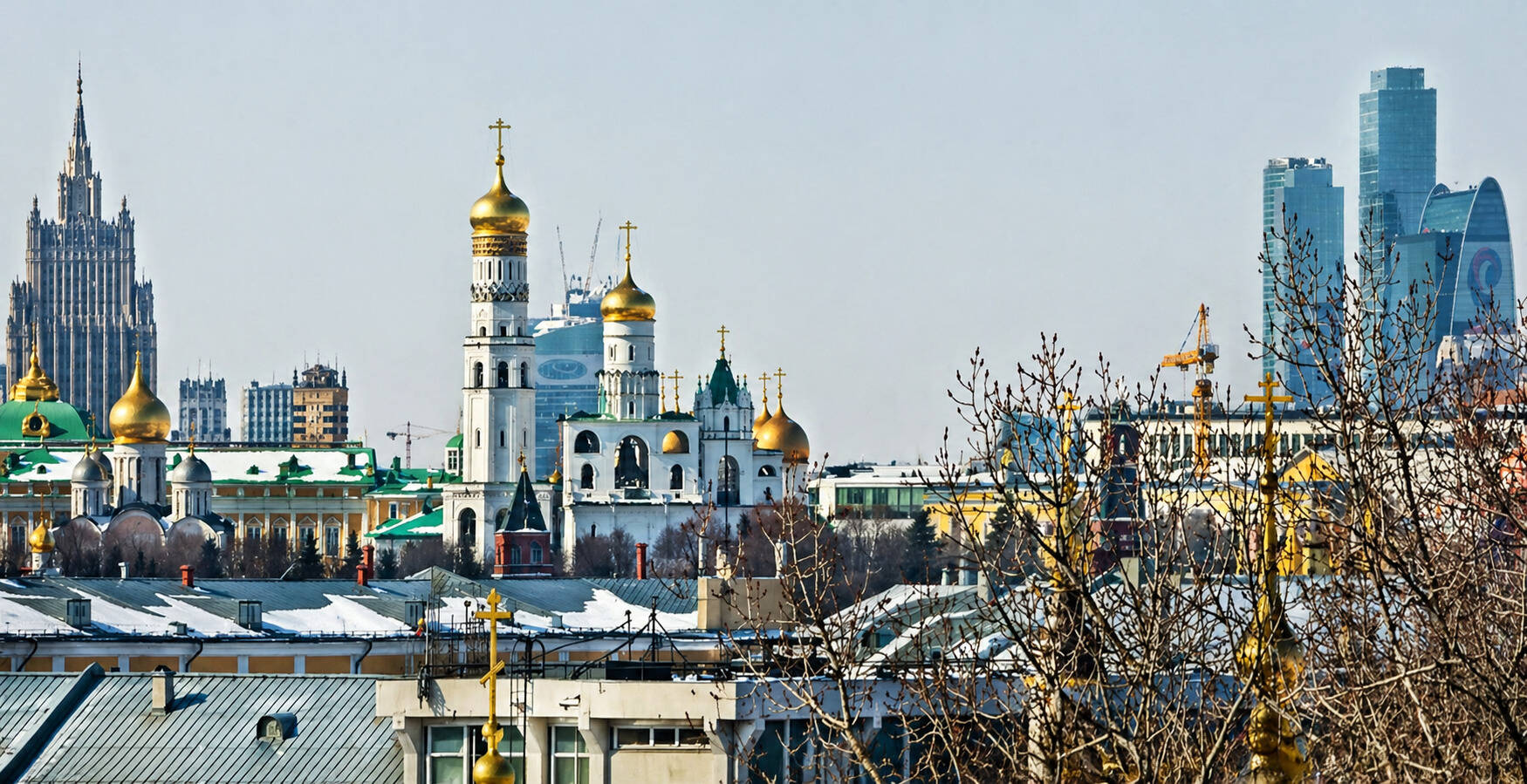
The theme of remembrance of 1812 continues beyond the exhibition hall: the ‘Poklon City’ tour runs from Poklonnaya Hill past the Battle of Borodino Panorama Museum and Kutuzov’s Hut to Moscow City. The route reveals how historic sites sit alongside a new urban district; its description does not list a visit to the exhibition.
Sources
- Battle of Borodino Panorama Museum: ‘Single-Exhibit Exhibition’
- Battle of Borodino Panorama Museum: ‘The General’s Frock Coat’
- V. E. Anfilatov. ‘Materials for the Attribution of a Painted Portrait of P. P. Konovnitsyn’
- The State Hermitage Museum: catalogue of works by George Dawe
- Battle of Borodino Panorama Museum: What’s On
- Priyutino Museum Estate: portrait and biography of Pyotr Alexeyevich Olenin
- Borodino Museum-Reserve: catalogue entry for the large portrait of Konovnitsyn on Artefact
- Borodino Museum Reserve: catalogue entry for a 1989 drawing by Yu. V. Ivanov and a biography of Konovnitsyn
- Priyutino Museum Estate: portrait of Elizaveta Markovna Olenina by Varnek
- Priyutino Museum Estate: portrait of Alexey Nikolayevich Olenin
- Battle of Borodino Panorama Museum: 1964 copy of the portrait of Konovnitsyn
- ‘Poklon City’ tour: route description
- V. I. Budko. ‘Stories of Kyarovo’ (2024), information on the portrait of Anna Ivanovna Konovnitsyna and correspondence
- Irina Kurnakova. ‘Top Exhibitions. How to Visit Moscow’s Best Museums for Free in November’, Argumenty i Fakty, 5 November 2026
- Borodino Battle Panorama Museum: ‘Empire in Miniature. Well Known in High Society’
We took a tour of Taganka designed for 12-year-old children. It was an excellent programme. We covered a great deal of ground and learnt so much. We discovered the story of Dryanaya Street and discussed the Vladimir Highway, the surrounding monasteries and churches, and the Old Believers. We now know where Korovin was born, where Stanislavsky was born and raised, where the Morozov merchant children lived, and why Arseny Morozov was considered such an outrageous figure in his day. We also discussed Solzhenitsyn, discovered where Stalin Avenue was supposed to be built, saw the bunker, walked to the Russian metochion of the Mount Athos Monastery, and learnt why the Illuzion cinema made Taganka famous. Of course, no tour would have been complete without Vysotsky and Lyubimov. We also touched briefly on Taganka Prison, although naturally we did not go there. All in all, it was an exceptionally rich and informative tour! Our guide Alexander was superb!
Our thanks to our guide Alexander for a magnificent sightseeing tour. Alexander’s love for Moscow and its history, his wide-ranging knowledge, elegant and engaging delivery, and personal charm make the tour not merely interesting and informative, but truly delightful! Thank you, Alexander! Tatiana and Tatiana, St Petersburg
On July 18th, we participated in the "Soul of Moscow" group tour led by Alexander. Kitay-gorod and its surroundings revealed a new side to us, and everyone thoroughly enjoyed it. Some of us began intensively studying related materials to broaden our horizons. We'll be back, and we highly recommend it! You won't regret it.
Good afternoon, on June 23rd we had a tour called " The Soul of Moscow ," led by Alexander. He's a very pleasant young man. We visited such lovely courtyards and alleys with him that we never even knew existed, and we learned so much. We really enjoyed everything, and we hope to continue our acquaintance. Alexander! Thank you! We had a great time with you, and we thoroughly enjoyed it. See you there!
This isn't my first time with Radius. This time, I took the Moscow metro . The goal was not only to admire the underground palaces but also to learn how to navigate the metro. As a resident of a region without a metro, I was a bit apprehensive and didn't understand how to navigate the metro. Of course, the internet helps, but live communication is much better. Tour guide Yulia handled this task perfectly. The information was accessible and interesting, the presentation was calm, and the communication style was very friendly. Thank you very much for the tour and the practical experience.
Good afternoon! I gave the "Soul of Moscow" tour to some of the capital's guests. We were thrilled to hear our guide, Anton. It was so informative and engaging, and very warm. To say we were absolutely delighted is an understatement. It turned out to be a truly family-friendly excursion. We learned so many interesting facts. The material was presented professionally, all our questions were answered, and we saw so much. It was simply WOW! Thank you so much, Anton, he's the best!!!!! From now on, I'll only come to you, the Radius team. I highly recommend it. I promise we'll see each other again soon on other tours.
Overall, the tour left a positive impression! Thanks to Alexander for the walk through the courtyards and atmospheric spots of Kitay-Gorod; we certainly wouldn't have done it on our own. The tour was comfortable, and the guide spoke confidently and calmly. One thing we personally missed: we would have liked more of the historical part, relating to ancient Moscow and the history of Kitay-Gorod. There were quite a few stories about the Soviet period and the bar scene, but for our group, this wasn't particularly relevant. We think the program could be a little more tailored to the age and interests of the group. It would also have been interesting to add more historical facts, monuments, and details about old Moscow and the area itself. That said, the tour was still interesting, and some places and churches were truly memorable. These aren't really "cons," but rather suggestions for an even more comprehensive program.
Hello! We had a corporate group of 10 people. Our guide was Anton, and we had a tour of Bulgakov. I would like to point out the excellent organization; everything went smoothly. The managers were very accommodating to our changes in the number of participants. The bus was very comfortable. Anton is a super-engaged and motivated guide. He lives this history and is delighted to share his knowledge and create an unforgettable experience. Everything went well. I highly recommend it!
Thank you for a fascinating tour! It gave me so much food for thought to explore! Note: Review of the "Zamoskvorechye" tour with guide Maria.
I'd like to express my gratitude on behalf of our team! Thank you for keeping to our scheduled schedule despite our lack of organization. Our colleagues appreciated your preparation for the tour! It was informative. Note: Review of the "Modern Residential Complexes, Factory Past, and Avant-Garde" tour of the ZILART residential complex with guide Maria. Maria prepared and conducted a customized tour for employees of the Samolet Group of Companies development company.
Thank you! You have great talent. Good luck! ☺️ You're a wonderful guide! Thank you again! Note: This is a review of the corporate tour "The Heart of the Capital" with guide Maria.
Thank you for a wonderful day today!!)) Note: review of the excursion "The Soul of Moscow" with guide Maria
On behalf of the whole family, I want to thank you for a very informative and interesting tour! Note: This is a review of the "Palace Dungeons" tour with guide Maria.
Good afternoon! I'd like to express my gratitude and that of my guide for organizing the tour! We were very pleased. We'd like to do it again in October, but on a different route — ZIL. Note: This refers to the tour for Samolet Group developers, led by guide Maria.
Thanks to Alexander for the bar tour of Baumanka ! It was fun, exciting, and we discovered so many new places! Awesome! May we reach new heights!
Good afternoon! I was on a tour of Sukharevskaya Square — we went all the way to Tsvetnoy Boulevard. I didn't expect it to be so interesting! For those wondering whether to go — go for it! It truly became one of my most memorable summer memories!
Anastasia, good morning! Thank you and Masha for yesterday! The speakers are happy. The connection through the headphones was often lost, especially at the checkpoint, but that's just our current situation. You could hear if you were standing close, no more than 1.5 meters away. Colleagues have already asked for your contact information. I'd be happy to share it and look forward to another opportunity to work with you. Special thanks to the Director for the Bureau . Note: " Heart of the Capital " tour for participants of the 2025 Moscow Oncology Forum. Guides: Anastasia and Maria.
We'd like to thank Anton and Alexander for leading the tour! It was fascinating to hear how the Krasnaya Presnya district developed and how Prokhorov's influence on our city's development. It was a pleasant immersion into a quiet, previously unexplored area!
Good afternoon, thank you so much, Anastasia. The " Uncle Gilyai " tour was fantastic. Even though we're Muscovites and know a lot about Moscow, the experience was amazing, so much new and interesting happened. We'll definitely be back.
Thank you for the " Heart of Moscow " and " Khamovniki " tours. Anton, a knowledgeable and passionate Moscow guide, gave me the tour. He's a great storyteller, intelligent, well-read, and captivating. You've truly opened up my Moscow to me! I'll definitely be back next summer to explore Moscow with you. I'll recommend your wonderful tour program to all my friends!
Excursions with the Radius travel agency are always a positive experience if you choose them. We planned a tour of Zamoskvorechye on our next visit. We've worked with our guide, Anton, before. We'll definitely recommend him to everyone we know. The tour is informative, not overloaded with dates, and the information is comprehensive yet easy to understand, as it's presented in a light, narrative manner, not like a history textbook, dry and academic. Thank you for this approach. We'll definitely use the Radius agency again on our next visit to Moscow.
Thank you so much for the tour of Zamoskvorechye . Despite the weather, it was very interesting and informative! Note: this refers to the tour with guide Anton.
A huge thank you to Anastasia. We had a fantastic tour of the Patriki district. We learned so much. Anastasia is a true master of her craft. The tour was captivating, not at all boring, lively and interesting. Everyone was delighted. We were full of new impressions. I definitely recommend it. You won't be disappointed!
We explored the Soul of Moscow with my family and Radius on my birthday. Everyone thoroughly enjoyed the walk! Anton shared so many interesting facts about the capital and its history, taking us into spiritual depths no one else had even suspected. Most of us were either born or longtime Moscow residents who spent a lot of time walking around. It was educational, heartwarming, and unforgettable. 🙂 Overall, this wasn't my first time walking around Moscow with Anton, and each time was a real adventure!