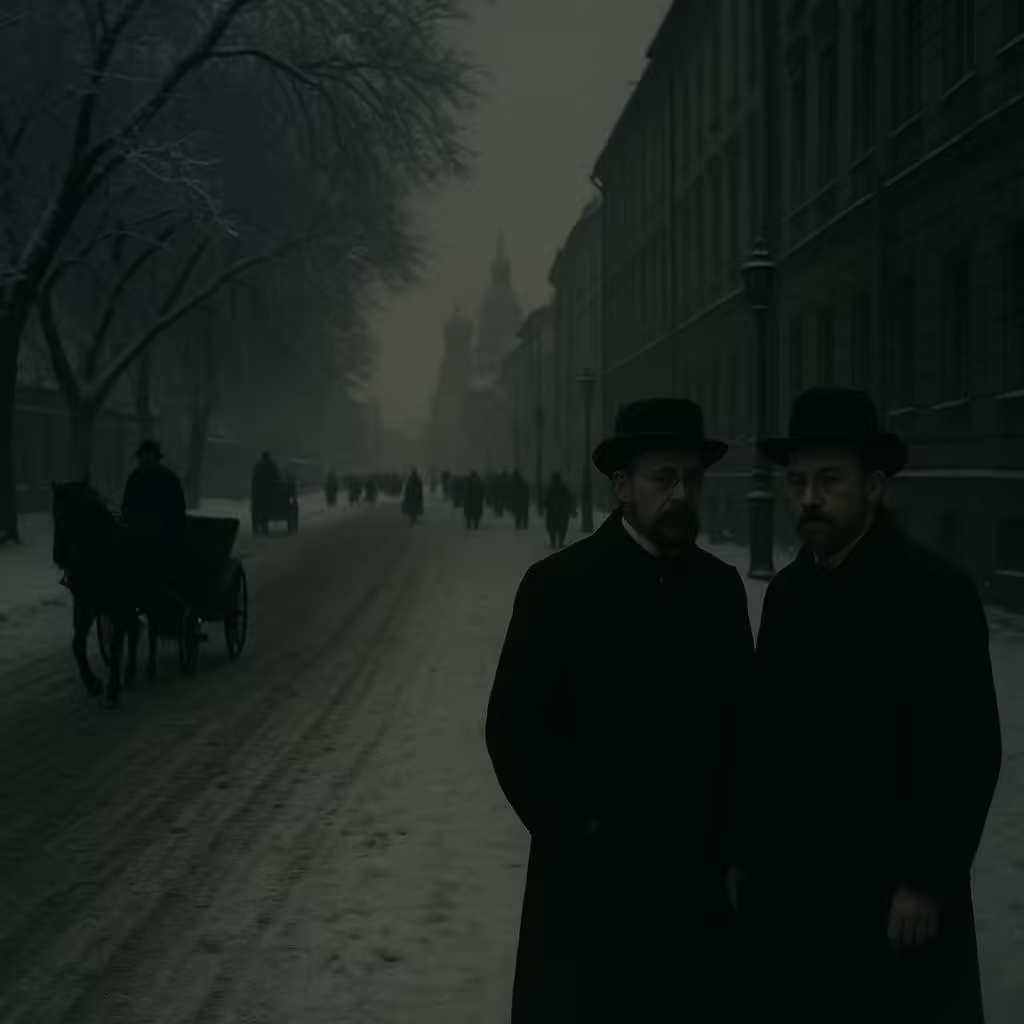
The clock. Inexorable and strict, it ticked on the wall of Konstantin Stanislavsky's office, reminding him of the passage of time. On that day, when a soft white blanket of snow fell from the sky over Moscow, Konstantin Stanislavsky was preparing for a meeting with Anton Chekhov on Prechistenka Street. The tree branches, as if covered with frost, reflected the coolness and silence of a winter morning.
The streets of Moscow were bustling with their usual bustle: cabbies hurriedly drove their horses, passers-by, wrapped in warm scarves, hurried about their business. In this urban whirlwind, among the stone facades, something special was hidden - the friendship of two great people, which, like snow, enveloped their lives in something pure and real.
Stanislavsky and Chekhov, two titans of Russian art, met for the first time several years ago at a theatre premiere. At that time, Chekhov was just beginning to gain recognition as a writer, and Stanislavsky was already a famous director and actor. They were united by a passion for art and a desire for truth, which became the basis of their strong friendship.
On that winter day on Prechistenka, Stanislavsky held a ticket in his hands. This modest piece of paper seemed to symbolize all their creative endeavors and plans. He was waiting for Chekhov at the entrance to a small café where they often spent their evenings talking about life and the theater.
When Chekhov finally appeared, slightly out of breath from the cold, his eyes were shining with genuine joy. They embraced like old friends who had not seen each other for ages. In the café, a corner by the window awaited them, from where a view of the snow-white roofs of houses and snow-covered streets opened up.
They talked about many things: about new plays, about ideas, and about how important it is to be honest with yourself in your work. Chekhov, with his subtle humor and deep thoughts, always inspired Stanislavsky to new theatrical experiments, and Stanislavsky, in turn, helped Chekhov to reveal the inner experiences of his characters on stage.
Hours passed, and when evening fell on the city, they left the cafe to stroll along Prechistenka. Snow fell quietly on their shoulders, and in this winter silence there was something immeasurably important, elusive, like the friendship itself that bound their souls.
They stopped at an old lantern, the light of which seemed especially warm against the cold Moscow sky. Stanislavsky, looking at Chekhov, said: "Dear Anton, how important it is to have a friend like you. You are the light of this world for me." Chekhov only smiled, nodding in response, and they continued on their way along the snowy street, leaving behind them tracks that would soon be hidden by the snow.
That evening on Prechistenka remained in the memory of both as a symbol of their friendship, which neither time nor distance could eclipse. After all, true friendship, like snow, comes quietly, but leaves traces in the hearts forever.
***
Of course, this is a figment of the imagination and has no historical basis. If you are interested in real events and facts, we invite you to the excursions of the Radius bureau, where real history comes to life!