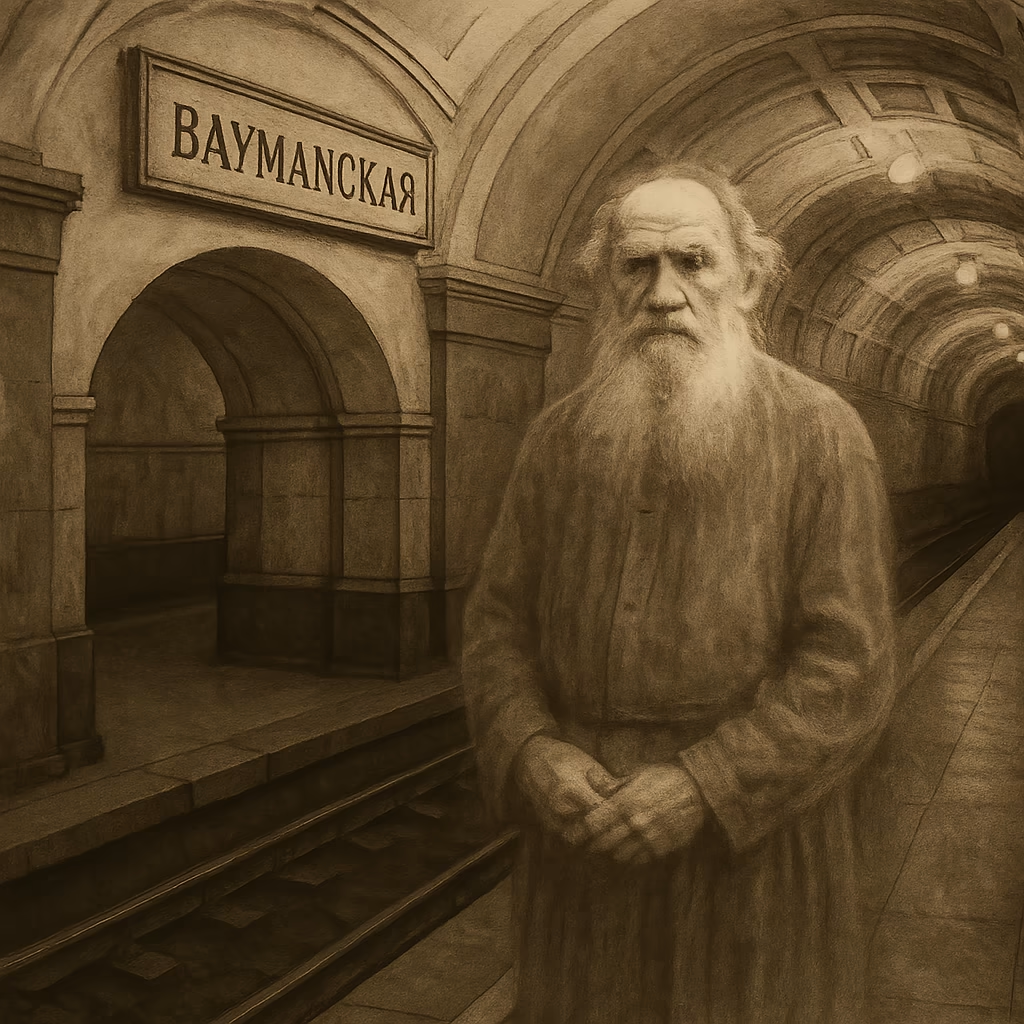
In the labyrinths of the Moscow metro, at the station Baumanskaya, where each floor slab keeps the echo of the footsteps of thousands of passers-by, a story happened that is difficult to explain with logic. In the semi-darkness of the passage, where the flickering light of the lamps creates the illusion of infinity, a shadow suddenly appeared that could not be explained by either time or space. It was a ghost, and not just any ghost, but the most Leo Tolstoy.
Tolstoy, dressed in the clothes typical of his era, stood in the center of the station like a living statue. His figure, majestic and imperturbable, seemed alien to the modern world, but at the same time an integral part of it. It seemed that his presence was a bridge between the past and the present.
A small crowd had gathered around him, among which stood out a group of students discussing the results of the latest football match. One of them, not noticing the ghostly genius, loudly declared that his team was undoubtedly the best, and this was obvious even to those who had never been interested in football. At this point, Tolstoy, as if hearing the argument, turned his head and said with mild surprise: “Football? What kind of time machine is this, in which passions boil more than in literature?”
The crowd froze. The students, stunned by his sudden intervention, fell silent, not knowing how to react to meeting such an unusual interlocutor. One of them finally dared to ask: "Lev Nikolaevich, would you write about football?"
Tolstoy paused. His gaze wandered into the distance, as if he were seeing something beyond reality, something that connected time and space. “Football,” he began, “is a metaphor for life. A game where the rules seem simple, but true skill is hidden in the details, in every pass, in every attack. Perhaps it is worthy of a pen, if you look at it as a reflection of the human soul.”
The football debate that began among the students took on a philosophical tone, and conversations about tactics and strategies turned into discussions about life and its meaning. Tolstoy, like a wise mentor, guided the discussion, his words awakening in his interlocutors the idea that each match is a small life, with its victories and defeats.
When the train arrived and the doors opened, Tolstoy disappeared as suddenly as he had appeared, leaving behind a feeling of slight unreality and an inspiration that might change the destinies of those who witnessed this meeting.
***
Of course, this is a joke, and there is no real basis for this story - just a little imagination and for the sake of a smile! And if you are interested in real facts and events, we invite you to the excursions of the "Radius" bureau, where real history comes to life!